News Headline
Runs Reels and Revenue Knight Riders Boss Mysore Hits a Six at FICCI Frames

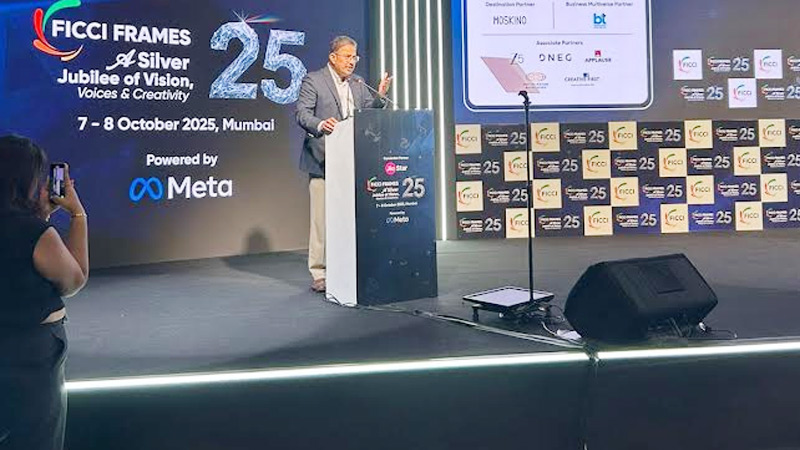
MUMBAI: If cricket and cinema are the twin gods of India, then Venky Mysore is their high priest. At the FICCI FRAMES 2025, the CEO of Knight Riders Group and Red Chillies Entertainment took the stage to lay out the playbook for India’s sports-entertainment juggernaut, mixing statistics, storytelling, and a dash of showbiz flair.
Mysore, reflecting on his journey across two industries, described himself as straddling India’s “two religions,” cricket and movies. “Live sports is unscripted spectacle,” he said, contrasting it with scripted films where even action scenes follow a pre-determined cut. That unpredictability, Mysore explained, is what keeps audiences riveted, game after game.
The numbers speak volumes. Celebrating 15 years with the Kolkata Knight Riders, Mysore revealed he has witnessed 228 matches with the franchise. The IPL alone commands an astonishing 165-169 million viewers on television, surpassing even the Super Bowl’s 155 million. “The real-time tension, the tribalism, the emotional stakes, it’s a thrill that no scripted entertainment can replicate,” he emphasised.

The magic of live sports extends beyond the pitch. From merchandising and ticket sales to broadcasting and sponsorship, Mysore highlighted the massive economic engine behind cricket. “We do economic impact studies for every city we play in from Kolkata to Trinbago to Abu Dhabi and now Los Angeles,” he said, pointing out the ripple effect on tourism, hospitality, and local businesses.
Mysore also gave a glimpse into the global ambitions of Knight Riders, noting the establishment of the L.A. Knight Riders and their stadium plans ahead of the 2028 Olympic Games. “Stadium naming rights discussions are already underway, which shows the value that live sports can create economically,” he added.
Entertainment, of course, is never far from cricket. Mysore explained how live events are being personalised for different audiences, citing innovations like multi-cam viewing, vertical video feeds, social gaming integrations, and interactive features mirroring the kind of bespoke content that digital platforms thrive on. “Every live moment can be a story, a connection, and a commercial opportunity,” he said, highlighting how AI, gaming, and the creator economy are poised to transform live sports in the next three to five years.
While cricket remains the anchor, Mysore is betting on expansion. “Other sports like kabaddi, tennis, golf, and football can adopt our model,” he said, citing Pro Kabaddi as a successful adaptation. Women’s cricket, too, is high on the agenda. “It’s about making the sport representative and inclusive. Young girls are now aspiring to play because of the WPL, and that’s a flywheel that will keep spinning,” Mysore noted, emphasising the cultural and social impact of sports beyond the commercial.
Mysore’s keynote also shed light on the convergence of sports, entertainment, and commerce. He noted how live spectacles like the IPL, Super Bowl, and Olympics attract diverse audiences through music, fashion, and celebrity appearances, creating a hybrid ecosystem where culture meets business. “Entertainment today isn’t just consumed, it’s experienced, shared, and lived,” he said, neatly summarising his vision for the future.
On valuations, Mysore remained measured yet optimistic. Comparing cricket franchises to US sports teams, he suggested India has only scratched the surface in terms of economic potential. “In LA, the lowest valuation for a sports team is over a billion dollars. Cricket has similar global appeal, and there’s huge investment yet to come,” he said.
From his high-octane reflections to the meticulous statistics, Mysore’s address offered a masterclass in the business and cultural power of sports. The underlying message was clear: cricket and entertainment are no longer just games or films, they are engines of connection, commerce, and culture, shaping the future of live experiences in India and beyond.







NEW DELHI: Hamdard Laboratories gathered a cross-section of India’s achievers in New Delhi on Friday, handing out the Hakeem Abdul Hameed Excellence Awards to figures who have left their mark across healthcare, education, sport, public service and the arts.
The ceremony, attended by minister of state for defence Sanjay Seth and senior officials from the ministry of Ayush, celebrated individuals whose work blends professional success with a sense of public purpose. It was as much a roll call of achievement as it was a reminder that influence is not measured only in profits or podiums, but in people reached and lives improved.
Among the headline awardees was Alakh Pandey, founder and chief executive of PhysicsWallah, recognised for turning affordable digital learning into a mass movement. On the sporting front, Arjuna Awardee and kabaddi player Sakshi Puniya was honoured for her contribution to the game and for pushing women’s participation onto bigger stages.
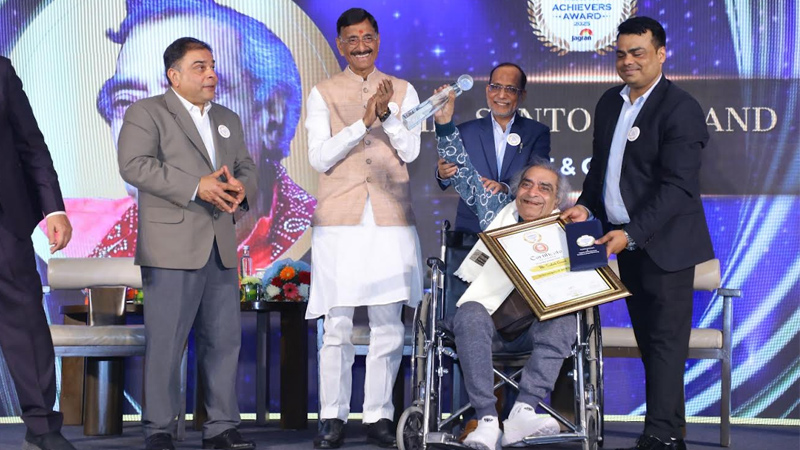
The cultural spotlight fell on veteran lyricist and poet Santosh Anand, whose songs have echoed across generations of Hindi cinema. At 97, Anand accepted the honour with characteristic humility, reflecting on a life shaped by perseverance and hope.
Healthcare honours spanned both modern and traditional systems. Manoj N. Nesari was recognised for strengthening Ayurveda’s place in national and global health frameworks. Padma shri Mohammed Abdul Waheed was honoured for his research-backed work in Unani medicine, while padma shri Mohsin Wali received recognition for his long-standing contribution to patient-centred care.
Education and social development also featured prominently. Padma shri Zahir Ishaq Kazi was honoured for decades of work in education, while former Meghalaya superintendent of Police T. C. Chacko was recognised for public service. Goonj founder Anshu Gupta received an award for his dignity-centred rural development initiatives, and the Hunar Shakti Foundation was honoured for empowering women and young girls through skill development.
The Lifetime Achievement Award went to former IAS officer Shailaja Chandra for her long career in public healthcare and governance, particularly in the traditional systems under Ayush.
Speaking at the event, Hamdard chairman Abdul Majeed said the awards were a tribute to those who combine excellence with empathy. “These awardees reflect Hakeem Sahib’s belief that healthcare, education and public service must ultimately serve humanity,” he said.
Minister Seth struck a forward-looking note, saying India’s young population gives the country a unique opportunity to become a global destination for learning, health and wellness by 2047.
The ceremony also featured the trailer launch of Unani Ki Kahaani, an upcoming documentary starring actor Jim Sarbh, set to premiere on Discovery on 11 February.
Instituted in memory of Unani scholar and educationist Hakeem Abdul Hameed, the awards have grown into a national platform that celebrates those building a more inclusive and resilient India. For one evening at least, the spotlight was not just on success, but on service with substance.






