Cable TV
Rohtak Cable DAS III extension case dismissed; eight posted for 7 Dec

NEW DELHI: While the case by Rohtak Cable Operators’ Association challenging the deadline set for Phase III of digital addressable systems (DAS) was dismissed, the Delhi High Court today directed that it would hear the other cases on 7 December 2016.
The division bench comprising the chief justice G Rohini and justice Sangita Dhingra Sehgal said it would pass orders in some of the matters on that date and would complete hearing in others.
The division bench is taking cognizance only of cases relating to the DAS Phase III which challenge constitutional provision, while other matters are pending before a single bench.

The cases that came up yesterday included those by Om Systems of Mumbai, Digiana Projects Pvt. Ltd., Ortel Communications Ltd., Moon I.T. Service Pvt Ltd, Allahabad Cable T.V. Operator Welfare Society, Agile Broadband Private Ltd., Ganpati Digital Network Association, and Sree Devi Digital Systems.
Earlier, on 26 September 2016, the diision bench of the chief justice G Rohini and justice Sangita Dhingra Sehgal held that two matters filed by IndusInd Media & Communication Ltd and Bhima Riddhi Digital Services were challenging the challenge to the constitutional validity of certain provisions of the Maharashtra Entertainment Duty Act, 1923, as amended by the Maharashtra Entertainment Duty (Amendment and Continuance) Act, 2014 and not the validity of the Telecommunication (Broadcasting and Cable Services) Interconnection (Digital Addressable Cable Television Systems) Regulations 2012.
The Central Government counsel said appropriate steps would be taken before the Supreme Court to get these matters re-transferred to the respective high courts and so the cases were adjourned sine die.
The Supreme Court had, on 1 April, this year accepted the plea of the Central Government that “it would be just and proper for this court to transfer to Delhi High Court all the cases pending in different high courts, many of which had given injunction orders.”
A total of 62 cases had been filed by multi-system operators (MSOs) in various courts in the country for extension in the deadline of Phase lll. Of these 62 cases, 12 cases had been disposed of by respective courts and three had been withdrawn.
(The Bombay High Court had earlier this year made a reference to the Kusum Ingots case which had said that, if one high court gives an order, others can give similar orders if similar circumstances exist. indiantelevision.com had reported in January this year that the MIB had told the Punjab and Haryana High Court that it had “decided not to press the requirement of having a STB as for now till the decision of the cases which are pending before various other high courts”).






Cable TV
Hathway Cable appoints Gurjeev Singh Kapoor as CEO
Leadership change comes as cable TV faces shrinking subscriber base and modest earnings pressure
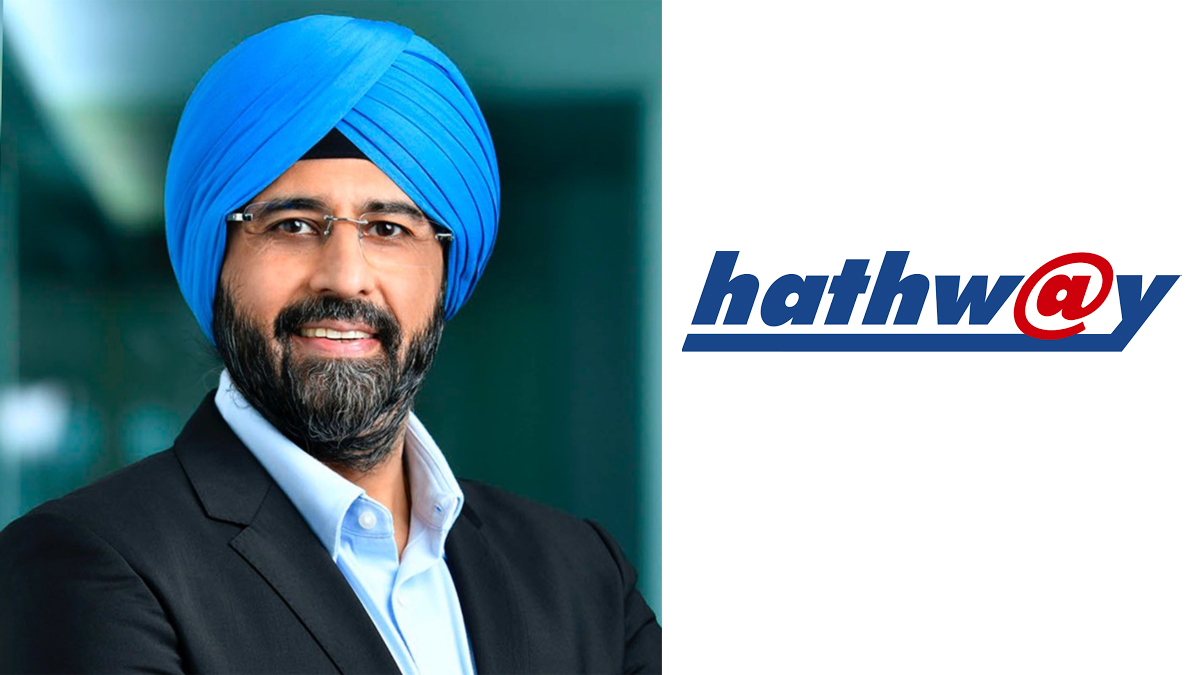
MUMBAI: Hathway Cable and Datacom has tapped industry veteran Gurjeev Singh Kapoor as chief executive officer, marking a leadership pivot at a time when India’s cable television business is under mounting strain.
Kapoor will take over from Tavinderjit Singh Panesar, who is set to retire in August after a long innings with the company. Panesar, chief executive since 2023, has held multiple leadership roles at Hathway, including his latest stint beginning in 2022.
Kapoor brings more than three decades of experience in media and entertainment. He most recently led distribution at The Walt Disney Company’s Star India business, now part of JioStar. His career spans television distribution and affiliate partnerships, with stints at Sony Pictures Networks India, Discovery Communications and Zee Entertainment.
Panesar, with over three decades in the industry, has worked across strategic planning, distribution and business development in media, broadcasting and manufacturing. His past associations include ESPN Star Sports, Star India, Apollo Tyres and JK Industries.
The transition lands as the cable sector grapples with structural disruption. Traditional operators are losing ground to streaming platforms, while telecom and broadband players tighten the squeeze with bundled offerings.
An EY report estimates India’s pay-TV base could shrink by a further 30 to 40 million households by 2030, taking the total down to 71 to 81 million. The slide follows a loss of nearly 40 million homes between 2018 and 2024, a contraction that has already wiped out more than 37,000 jobs in the local cable operator ecosystem.
Hathway’s numbers reflect the strain. The company reported a consolidated net profit of Rs 93 crore for FY25, down from Rs 99 crore a year earlier. Revenue inched up to Rs 2,040 crore from Rs 1,981 crore. As of December 2025, it had about 4.7 million cable TV subscribers and roughly 1.02 million broadband users.
Kapoor steps in with a familiar brief but a shrinking playbook. In a market where viewers are cutting cords faster than companies can reinvent them, the new chief executive inherits a business fighting to stay plugged in.







