I&B Ministry
Roadmap soon on converting IIMC into Communication University: Javadekar

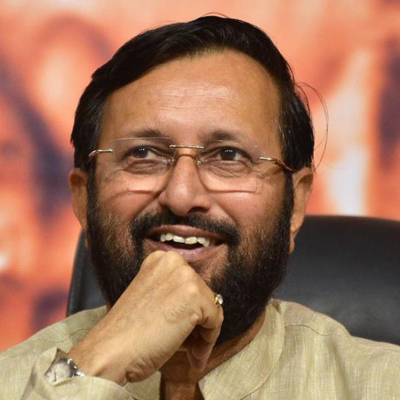
NEW DELHI: Information and Broadcasting Minister Prakash Javadekar has said steps are being initiated shortly to upgrade the Indian Institute of Mass Communication into a ‘Communication University.’
A roadmap would be prepared soon by the Ministry, he said, inviting suggestions from the public especially the young generation.
Javadekar said a specific corner would be developed on the I&B Ministry’s website for these suggestions to be placed for the perusal of the Ministry. The entire process was part of the Prime Minister’s Communication Vision which laid emphasis on ‘Participative Communication’- a process which linked the key stakeholders including the media fraternity.
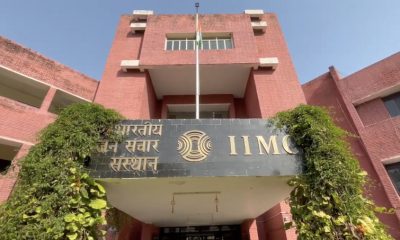
The Minister stated this while delivering the address at the 47th Convocation Ceremony of the Indian Institute of Mass Communication and the launch of the Golden Jubilee Celebrations of the Institute in Delhi.
Javadekar said press freedom came with an element of responsibility. Throughout history, the responsibility of the press had been flagged on different occasions. He exhorted the students who were conferred diplomas to avoid sensationalism at all costs and fight the menace of paid news. A young journalist ought to work with passion, compassion in a mission mode without commission. He called upon the students to balance information taking into account the sourcing of information from different media sources which included new and traditional media streams. These aspects would lay down the architectural framework for ethical journalism in the future.

He called upon the IIMC to undertake studies to understand the different aspects of elections related to the communication process and the electoral system. The Minister also unveiled the new logo to commemorate the golden jubilee celebrations of IIMC. He inaugurated the new bilingual website of IIMC.
IIMC has the distinction of being universally recognised as a centre of excellence in the field of journalism, media and mass communication teaching, training and research. A total of 341 students were conferred with their Diplomas at this Convocation which included students from six Centres of IIMC, at New Delhi and Dhenkanal, as well as at the newly opened Regional Centres at Aizawl in Mizoram, Amravati in Maharashtra, Jammu in J&K and Kottayam in Kerala. The PG Diploma courses were conferred in Journalism Hindi and English, Advertising& Public Relations, Oriya Journalism and Urdu Journalism. Special awards were also conferred in different categories to 31 students across all courses.


I&B Ministry
Digital radio, D2M tech set to reshape broadcasting and public messaging
Govt pushes next-gen delivery while TRAI tightens grip on spam ecosystem
NEW DELHI: India’s broadcasting and telecom landscape is undergoing a quiet but significant upgrade, with digital radio and Direct-to-Mobile (D2M) technologies emerging as powerful tools for mass communication, while regulators step up efforts to tackle spam calls.
According to the Ministry of Information and Broadcasting, digital radio and D2M are poised to transform how content reaches audiences by making more efficient use of spectrum. In simple terms, multiple channels can now be delivered over a single frequency, opening the door to a wider range of free-to-air content.
D2M technology takes this a step further by enabling video, audio and data to be broadcast directly to mobile handsets without relying on SIM cards or mobile data. The result is a resilient and cost-effective data pipe that can deliver everything from entertainment and education to critical emergency alerts, even in low-connectivity scenarios.
At the same time, the Telecom Regulatory Authority of India is tightening its grip on unsolicited commercial communication, better known as spam calls. The regulator has deployed a distributed ledger technology platform to bring transparency and accountability into the system.
Through this blockchain-based setup, consumers can register their preferences on receiving promotional messages, while businesses and telemarketers must also sign up and operate within defined rules. The platform also includes a complaint mechanism that allows users to report spam, with complaints shared across telecom operators for coordinated action.
The government’s broader push is being supported by infrastructure upgrades under the Broadcasting Infrastructure and Network Development scheme. Implemented through Prasar Bharati, the initiative focuses on modernising networks such as Akashvani and Doordarshan, including digitisation and adoption of next-generation broadcast equipment.
In a written reply in the Lok Sabha, Ministry of Information and Broadcasting minister of state for information and broadcasting L. Murugan said these steps are part of a larger effort to promote emerging technologies and strengthen the country’s broadcasting backbone. The response came to a query raised by member of Parliament Rao Rajendra Singh.
Together, these developments point to a dual-track strategy: expanding access to reliable, low-cost content while cleaning up the communication ecosystem. As digital pipes get smarter and spam filters sharper, India’s airwaves may soon feel a lot less noisy and far more useful.






