News Headline
Rise of Indian sports leagues: South India loves Kabbadi

BENGALURU: Broadcast Audience Research Council of India (BARC), in thelatest edition of its newsletter – THiNKreveals how sports other than cricket have gained popularity amongst television audiences in India. The newsletter has looked at six properties – two major global events in 2016 – RioOlympics and Kabaddi World Cup, inaddition to all Indian origindomestic leagues – Pro KabaddiLeague, Premier Badminton League,Indian Super League (Football), andHockey India League. Using its own data for the periodspanning week 01 to week 52 of 2016: All India; TG: Universe, BARChas attempted to demystify the new entrant on theviewership block – sports propertiesbeyond cricket.
Only live matches have been considered for analysis by BARC.
According to BARC,overall non-cricket properties contributeto 20 percent of the Live matches viewership.Within this, approx. 80 percent of theviewership contribution came from the 6 properties mentioned above.Kabbadi, played in two of the properties, was the most popular sport amongst the six properties considered by BARC, and South Indian markets loved kabbadi and sports. Read on…

Here are some conclusions revealed by the newsletter:
(1) Pro Kabaddi League is the most popular non-cricket propertywithashare of 61 percent,followedby Indian Super League.
(2) Indian Super League, with one of the bestImpressions/Reach ratio, has extremely high stickiness amongs itsviewers.Broadcasterscouldtargetadvertisers lookingfor engagement space.
(3) The popular properties-Pro KabaddiLeague, Kabaddi WorldCup2016 and Indian IndianLeague, haveacontributionshare from Female viewers and lower NCCSviewers.Broadcastercould safely havepopular FMCG brandsin these properties.
(4) Close to 80 percentof the Pro KabaddiLeagueviewershipfrom the telecaston Movie channels,and this share is increasing.
(5) Ad sectors targeting Females&Youthcan look at presenceon Pro KabaddiLeague given its relatively higherviewership baseon the property.
(6) Home matches see aviewership as comparedto theAway Awaymatches in theteam’s Home market. This might help regional advertisers.
The popularity of Kabbadi
Though Pro Kabaddi League was clearly the most popular property followed by Indian Super League, it must be noted that this was in part due to the fact that Pro Kabaddi League has had 2 seasons in 2016, Season 3 in January-February 2016 and Season 4 in June-July 2016. All the other properties have had only one season each.
Please refer to the figure below:

Based on the average viewership for each property, Pro Kabaddi League continued tolead. In addition to that, Kabaddi turned out to be the most popular sport with Kabaddi World Cup2016 overtaking Indian Super League for the second highest viewership spot.Conversely, Rio Olympics 2016 saw a drop in position when it comes to average viewership. Hockey India League had the lowest viewership within all these properties.
Please refer to the figure below:

Here are some colcusions drawn by the author based on BARC India data in its newsletter on which markets contributed to viewership:
Sports, and more so Kabbadi, are loved by audiences from the four Southern markets comprising of 5 states and one union territory- Andhra Pradesh/Telangana Karnataka, Kerala, Tamil Nadu/Pondicherry. They contributed to 50 percent of the viewership of the Pro Kabbadi League, with AP/Telangana contributing a lion’s share of 39 percent (the highest by any market in India) followed by Karnataka with 12 percent, Kerala with 5 percent and Tamil Nadu with 1 percent.
In the case of the Kabbadi World Cup 2016, the viewership share from the south was even higher – 61 percent. AP/Telangana contributed 39 percent (the highest by any market in India)followed by Karnataka with 15 percent, Kerala with 5 percent and Tamil Nadu with 2 percent.
Comparative data for the Indian Super League – the south contributed 39 percent to its viewership with Kerala contributing the largest viewership in the country– 30 percent followed by Tamil Nadu with 7 percent and Karnataka and AP/Telangana contributing 1 percent each. West Bengal contributed the second most viewership across all markets with 28 percent.
The South contributed 31 percent to the viewership of the Rio Olympics 2016 and the Premier Badminton League and 30 percent to the viewership of Hockey League India.





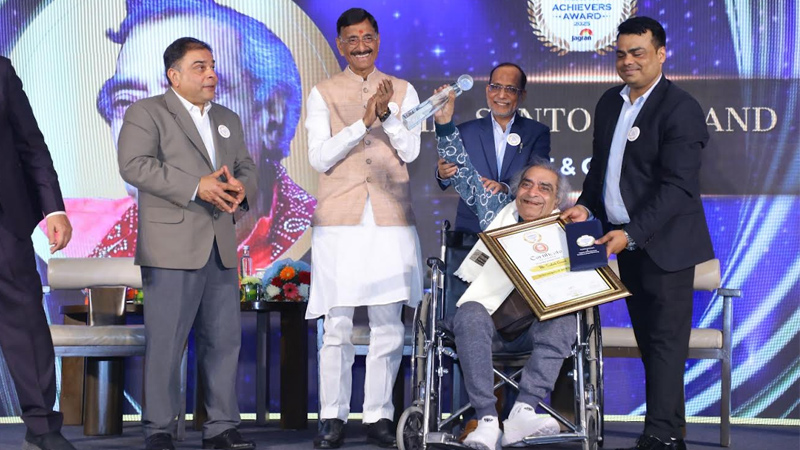
NEW DELHI: Hamdard Laboratories gathered a cross-section of India’s achievers in New Delhi on Friday, handing out the Hakeem Abdul Hameed Excellence Awards to figures who have left their mark across healthcare, education, sport, public service and the arts.
The ceremony, attended by minister of state for defence Sanjay Seth and senior officials from the ministry of Ayush, celebrated individuals whose work blends professional success with a sense of public purpose. It was as much a roll call of achievement as it was a reminder that influence is not measured only in profits or podiums, but in people reached and lives improved.
Among the headline awardees was Alakh Pandey, founder and chief executive of PhysicsWallah, recognised for turning affordable digital learning into a mass movement. On the sporting front, Arjuna Awardee and kabaddi player Sakshi Puniya was honoured for her contribution to the game and for pushing women’s participation onto bigger stages.
The cultural spotlight fell on veteran lyricist and poet Santosh Anand, whose songs have echoed across generations of Hindi cinema. At 97, Anand accepted the honour with characteristic humility, reflecting on a life shaped by perseverance and hope.
Healthcare honours spanned both modern and traditional systems. Manoj N. Nesari was recognised for strengthening Ayurveda’s place in national and global health frameworks. Padma shri Mohammed Abdul Waheed was honoured for his research-backed work in Unani medicine, while padma shri Mohsin Wali received recognition for his long-standing contribution to patient-centred care.
Education and social development also featured prominently. Padma shri Zahir Ishaq Kazi was honoured for decades of work in education, while former Meghalaya superintendent of Police T. C. Chacko was recognised for public service. Goonj founder Anshu Gupta received an award for his dignity-centred rural development initiatives, and the Hunar Shakti Foundation was honoured for empowering women and young girls through skill development.
The Lifetime Achievement Award went to former IAS officer Shailaja Chandra for her long career in public healthcare and governance, particularly in the traditional systems under Ayush.
Speaking at the event, Hamdard chairman Abdul Majeed said the awards were a tribute to those who combine excellence with empathy. “These awardees reflect Hakeem Sahib’s belief that healthcare, education and public service must ultimately serve humanity,” he said.
Minister Seth struck a forward-looking note, saying India’s young population gives the country a unique opportunity to become a global destination for learning, health and wellness by 2047.
The ceremony also featured the trailer launch of Unani Ki Kahaani, an upcoming documentary starring actor Jim Sarbh, set to premiere on Discovery on 11 February.
Instituted in memory of Unani scholar and educationist Hakeem Abdul Hameed, the awards have grown into a national platform that celebrates those building a more inclusive and resilient India. For one evening at least, the spotlight was not just on success, but on service with substance.






