Hindi
RIP, Farooq Sheikh

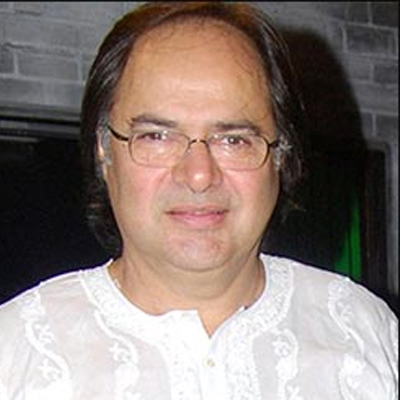
MUMBAI: The year has been a sad one for the Bollywood fraternity and the fans as well who had to bear with the loss of some of talents of the industry. And with one more legend leaving us, the end will end with a sad note.
The 65-year-old actor contributed to the new-age cinema, theatre and television. He started his career with theatre where he actively participated in plays with Indian People’s Theatre Association (IPTA). His play with Shabana Azmi Tumhari Amrita was appreciated by audiences the world over for 12 years till 2004. The play completed its 20 year run on 26 February 2012. A sequel to this play was staged in India in 2004 titled Aapki Soniya with Farooq Sheikh and Sonali Bendre as main leads.

His Bollywood career started with Garam Hawa (1973) where he played a supporting role. Farooq Sheikh best known for his roles in Shatranj Ke Khiladi, Chashme Buddoor, Kissi Se Na Kehna and Noorie, passed away in Dubai after suffering a heart attack. He was last seen in Club 60.
In the late 90s, he acted in a number of television serials. Chamatkar on Sony and Ji Mantriji on Star plus are among the few. He also worked in a TV serial Shrikant which aired on Doordarshan from 1985 to 1986.
Before Koffee with Karan became a household name, it was Jeena issi ka naam hai which was one of the most talked about chat show. The show, hosted by Sheikh, aired on Zee where he interviewed many Bollywood celebrities. His sense of humour and direct humble approach was the USP of the show.







Hindi
Dhurandhar the revenge storms past Rs 1,000 crore in a week, rewrites box office records
Aditya Dhar’s spy thriller sets fastest run to Rs 1,000 crore with record-breaking weekday hold

MUMBAI: The box office has a new juggernaut—and it is moving at breakneck speed. Dhurandhar the revenge has smashed past the Rs 1,000 crore mark worldwide in just a week, clocking a staggering Rs 1,088 crore and resetting the rules of the blockbuster game.
Backed by Jio Studios and B62 Studios, and directed by Aditya Dhar, the spy action sequel opened to the biggest weekend ever for an Indian film globally—and then refused to slow down. Unlike typical tentpole releases that taper off after Sunday, this one powered through the weekdays with rare muscle, posting Rs 64 crore on Monday, Rs 58 crore on Tuesday, Rs 49 crore on Wednesday and Rs 53 crore on Thursday.
The numbers stack up to a formidable first-week haul. India collections stand at Rs 690 crore nett and Rs 814 crore gross, while overseas markets have chipped in Rs 274 crore, taking the worldwide total to Rs 1,088 crore in just eight days.
The film’s opening weekend alone delivered Rs 466 crore, laying the foundation for what is now being billed as the fastest climb to the Rs 1,000 crore club in Indian cinema. Every single day of its first week has set fresh benchmarks, from the highest opening weekend to the strongest weekday hold—metrics that typically separate hits from phenomena.
A sequel to the earlier hit Dhurandhar, the film has not just built on its predecessor’s momentum but obliterated previous records, emerging as the biggest global blockbuster run by an Indian film to date.
At this pace, the film is not merely riding a wave—it is creating one.








