Hindi
Reviving cinema culture: Why National Cinema Day needs a rethink


National Cinema Day, a day ostensibly designed to promote the cinematic experience, has become a hollow gesture. While the intent is noble—to encourage more people to experience the magic of the big screen—it’s a misguided approach that’s actually hurting the industry.
The concept is simple: offer massive discounts for one day only to entice audiences into theatres. But this artificial boost in attendance numbers is a temporary fix that masks a deeper problem: audiences are losing interest in cinema. The reason isn’t a lack of affordability; it’s a lack of value.
Reducing ticket prices inadvertently reinforces the notion that cinema is a cheap commodity. It’s as if the industry is saying, “We know our product isn’t worth much, so we’ll give it to you at a discount.” This is a self-defeating strategy that undermines the very essence of cinema.

Instead of resorting to gimmicks to artificially inflate attendance numbers, the industry should focus on creating engaging, high-quality content. Movies like Stree 2 demonstrate that good cinema can still draw crowds without the need for massive discounts.
National Cinema Day is a misguided attempt to address the decline of cinema attendance. Instead of relying on short-term gimmicks, the industry must focus on creating high-quality content, investing in the theatrical experience, and embracing innovative data. By doing so, we can ensure that cinema remains a vibrant and essential part of our culture.
The decline of cinema attendance
The decline in cinema attendance is a multifaceted issue with roots in both industry practices and societal shifts. According to some reports, Indian cinemas had been pulling in a tad over 1.4 billion footfalls before the pandemic.
The rise of streaming platforms has offered audiences a convenient and affordable alternative to the traditional theatrical experience. Blockbuster franchises, often prioritised over original content, have led to a sense of cinematic fatigue among audiences. The increasing cost of tickets, concessions, and transportation has also made going to the movies a less appealing option for many.
However, while streaming platforms offer convenience, the theatrical experience remains irreplaceable. The immersive power of the big screen, coupled with the shared experience of watching a film with an audience, creates a unique and unforgettable atmosphere. The film industry must invest in technologies and amenities that enhance the theatrical experience and make it a compelling choice for audiences.
The dangers of discount culture
National Cinema Day, with its promise of heavily discounted tickets, perpetuates a culture of discounting in the film industry. This culture sends a message to audiences that cinema is not worth its full price, eroding the perceived value of the theatrical experience. It also incentivizes studios to prioritise short-term gains over long-term sustainability.
The key to revitalising the film industry lies in a renewed commitment to quality content. Studios should focus on producing original, thought-provoking films that resonate with audiences on an emotional level. Diverse storytelling, featuring voices from different backgrounds and perspectives, can also help to attract a wider audience.
Recent reports acknowledge that the biggest hindrance to cinema-going is the sizable variance in the quality of the movies being created. Uncertainty about the quality of films, and the absence of a strong string of films as a given, prevents people from investing time, energy, and money in going to cinemas. Unless the movie industry tackles this challenge head-on, footfalls in cinemas are unlikely to increase.
Data: The missing piece of the puzzle
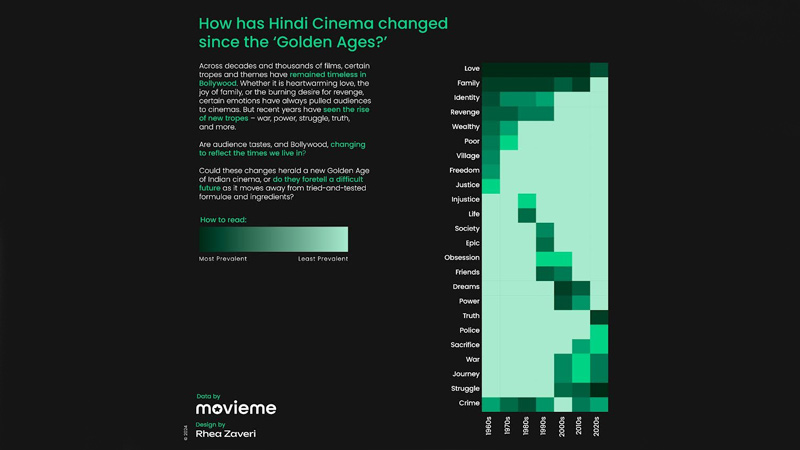
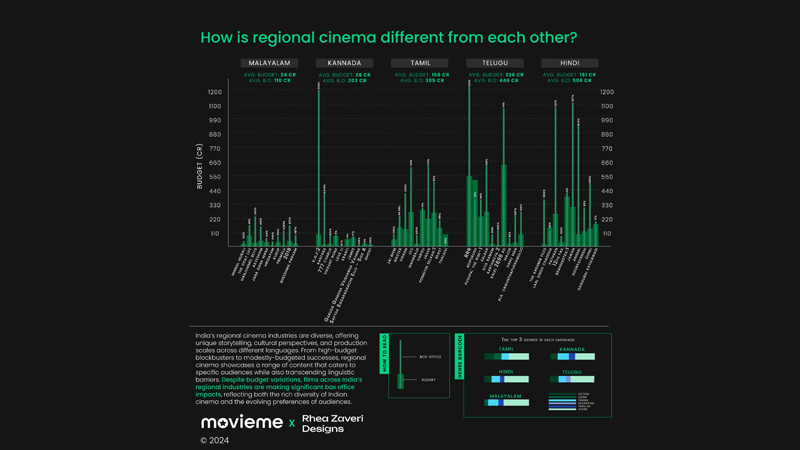
The film industry must embrace data analytics to better understand audience preferences and tailor content accordingly. By analysing audience behaviour, demographics, and social media trends, studios can identify emerging trends, identify gaps in the market, and develop films that resonate with specific audiences. Data analytics can also help optimise marketing campaigns, ensuring that films reach the right people at the right time.
National Cinema Day is a fake obituary for cinema. It’s a desperate attempt to keep the lights on in theatres, but it’s not a sustainable solution. The real cure lies in making movies that people actually want to see. It’s time to stop treating cinema as a commodity and start recognizing it as an art form.
The article has been authored by MovieMe founder & CEO Bhavesh Joshi.


Hindi
India’s telecom subscribers cross 1.32 billion in February 2026
Broadband base swells past 1.06 billion as Jio and Airtel tighten grip on the market.
MUMBAI: India’s telecom sector is ringing in steady growth once again adding millions of new connections every month while the race for broadband supremacy continues to heat up like a fiercely contested cricket match. According to the latest data released by the Telecom Regulatory Authority of India (TRAI) on 1 April 2026, the total telephone subscriber base in the country reached 1,321.31 million at the end of February 2026. This marked a net addition of 7.31 million subscribers during the month, translating into a monthly growth rate of 0.56 per cent.
Wireless subscribers (including mobile and Fixed Wireless Access) stood at 1,273.31 million, registering a net addition of 6.97 million and a growth rate of 0.55 per cent. Within this, urban wireless connections grew to 730.75 million (growth 0.70 per cent), while rural wireless subscribers reached 542.56 million (growth 0.35 per cent).
Wireline subscribers, though much smaller in scale, showed slightly faster growth. The total wireline base increased to 47.99 million, with a net addition of 0.34 million and a monthly growth rate of 0.70 per cent. Urban areas continued to dominate wireline connections with a share of 89.41 per cent.
Overall tele-density in India improved to 92.66 per cent. Urban tele-density stood at 150.68 per cent, while rural tele-density edged up to 60.02 per cent.
The broadband subscriber base crossed a significant milestone, reaching 1,059.05 million at the end of February 2026. This reflected a healthy net addition of 6.33 million subscribers and a monthly growth rate of 0.60 per cent from January’s figure of 1,052.72 million.
Segment-wise, mobile wireless access continued to drive the majority of growth with 996.52 million subscribers. Fixed Wireless Access (including 5G FWA) added 16.51 million, while wired broadband stood at 46.02 million.
Reliance Jio Infocomm Ltd. maintained its commanding lead with 519.64 million broadband subscribers. Bharti Airtel Ltd. followed with 364.14 million, Vodafone Idea Ltd. with 129.36 million, Bharat Sanchar Nigam Ltd. with 28.70 million, and Atria Convergence Technologies Ltd. with 2.38 million.
Together, these top five players command a massive 98.60 per cent share of the total broadband market.
In the wireless (mobile) segment, private operators continued to dominate with 92.59 per cent market share, leaving public sector undertakings (BSNL and MTNL) with just 7.41 per cent.
Out of the total 1,257.29 million wireless (mobile) subscribers, 1,177.60 million were active on the peak Visitor Location Register (VLR) date, representing an impressive 93.66 per cent activity rate. Bharti Airtel led in this metric with 99.42 per cent of its subscribers active.
Meanwhile, 14.47 million subscribers submitted requests for Mobile Number Portability (MNP) in February, indicating healthy competition and customer churn across zones.
While urban areas still lead in absolute numbers, rural connectivity is slowly catching up. Rural wireless tele-density stood at 59.46 per cent, compared with the much higher urban figure of 142.32 per cent.
Fixed Wireless Access using 5G technology also showed promising traction, growing to 11.93 million subscribers. Reliance Jio and Bharti Airtel are the primary players driving this segment.
The data paints a picture of a maturing yet still rapidly expanding telecom ecosystem. With total telephone subscribers now well past the 1.32 billion mark and broadband users comfortably above 1.06 billion, India continues to solidify its position as one of the world’s largest and most dynamic digital markets.
From bustling city streets to remote villages, more Indians are staying connected than ever before proving that when it comes to telecom, the country’s appetite for growth shows no signs of hanging up anytime soon.






