News Broadcasting
Reuters announces multimedia package for World Cup football


Reuters, the global information, news and technology group has announced ambitious multimedia plans for the 2002 FIFA World Cup. The event kicks off on 31 May in Korea and Japan.
Reuters is offering its clients a multimedia package of online football information products including detailed venue, team and player profiles, along with breaking news, pictures, interactive graphics and a live results service. Reuters will run its largest off-site editorial operation in Korea and Japan with over 165 editorial staff, including 135 journalists, photographers, TV journalists and graphic artists chipping in. Reuters will cover all 32 teams and, as a major component of its World Cup coverage, one photographer will shadow each of the top 17 teams during the tournament both on and off the pitch, with unrestricted access to the teams’ training grounds, hotels and free time.
According to an official release, the 1998 World Cup in France was viewed by over 3.7 billion people and created more online traffic than any other single media event. The official france98.com website received more than 13 million visitors and generated over 1 billion page impressions, claims Reuters.

The Reuters World Cup portfolio includes nine distinct media products. These include the Reuters World Cup News Service in English, which offers clients in-depth previews and analysis of matches, squad announcements and group-by-group analysis, team news and interviews of star players competing in the 2002 finals, and the Reuters World Cup news language variants which provide tailored coverage that addresses the needs and interests of the local audience. Services are available in French, German, Spanish, Portuguese, Arabic and Turkish.
The Reuters World Cup top news and picture gallery in Chinese and Japanese offers clients in-depth previews and analysis of matches, squad announcements and group-by-group analysis, team news and interviews of star players competing in the 2002 finals. The Reuters World Cup Interactive Graphic product is a once-off animated interactive online graphics package will provide illustrated explanations on key facts about the tournament, including the off-side rule, the timetable fixtures, the venues used in Korea and Japan and how the equipment has evolved. With an interactive format created in Macromedia Flash, football fans will enjoy delving into a multi-linked, visually rich information database that brings this major sports event to life.






News Broadcasting
News18 India launches Command Centre war explainer with Arya
New show shifts from debates to decoding global conflicts and impacts
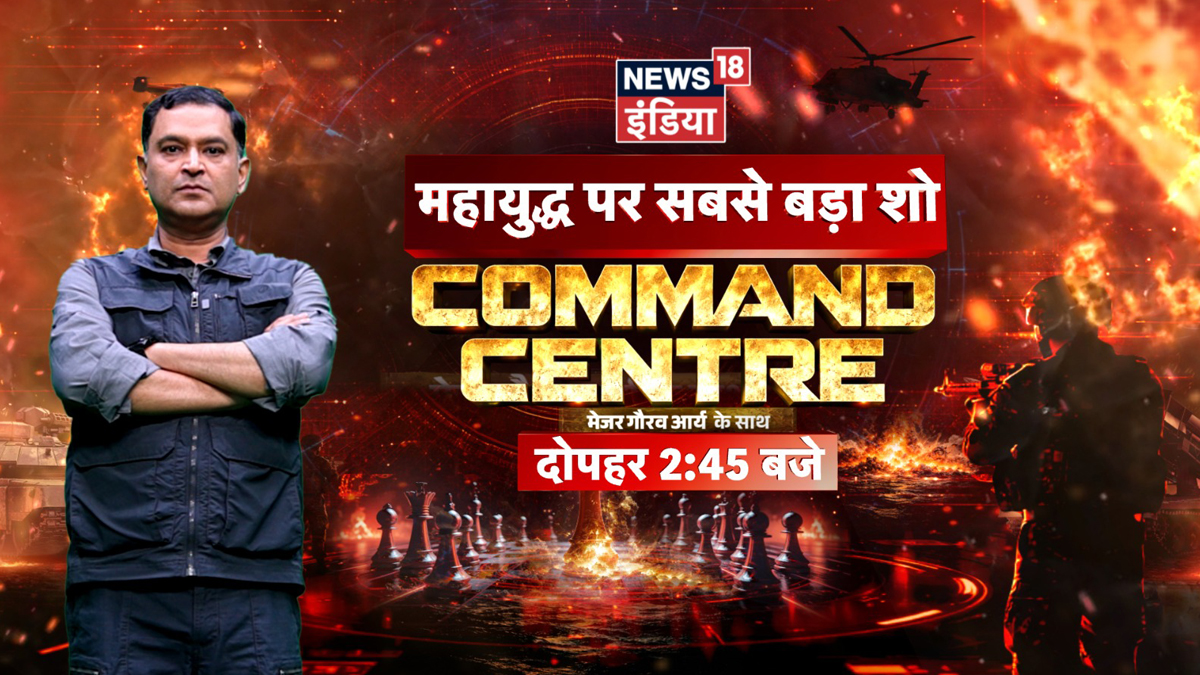
MUMBAI: News18 India has rolled out a new war-focused programme, Command Centre, featuring Gaurav Arya, as it looks to offer viewers a sharper, more grounded take on global conflicts amid rising tensions in West Asia.
Positioned as an “insider war room”, the show moves away from conventional panel debates and instead focuses on explaining military developments, decoding strategy and connecting global events to their everyday impact, from fuel prices to economic shifts.
The format leans heavily on visuals and data. The studio has been designed like a command hub, complete with large LED war maps, real-time graphics and an alert system to track developments as they unfold.
At the centre of it all is Arya, who brings his military background to simplify complex war strategies for viewers. His signature line, “Seedhi baat samjhiye”, anchors the show’s promise of clarity over noise.
News18 India managing editor Jyoti Kamal said, “Command Centre, featuring Major Gaurav Arya is designed to deliver accurate insights and a clear perspective on how evolving conflicts impact everyday life, from household budgets to national security. With expert voices analysing every development in real time, the show goes beyond headlines to decode what’s happening now, what it means, and what could come next.”
Echoing the intent, Gaurav Arya added, “In times of war, confusion is the biggest threat. With News18 India’s Command Centre, we are bringing viewers inside the war room, decoding strategies, tracking every escalation, and explaining, in the simplest terms, what it means for India and for every household. Seedhi baat samjhiye, this is where you understand not just what is happening, but what happens next.”
The weekday show will air in the afternoon slot and will also feature Gaurav Shukla, adding to its editorial depth.
With its mix of analysis, visuals and a clear focus on impact, the show reflects a broader shift in news consumption. Viewers are no longer just watching events unfold, they are looking to understand what those events mean for them.







