News Headline
#Retrace2021: 30-40 per cent of our investments will be in regional content: Manish Kalra

Mumbai: Outlining the vision for Zee4.0 at the company’s 39th AGM held prior to the Zeel-SPNI merger, CEO Punit Goenka had said that the roadmap for the next three years is going to be driven by digital. The focus on digital meant greater opportunity as well as challenges for team Zee5, particularly in terms of scaling up the content library and providing enhanced customer experience, as emphasised by Goenka.
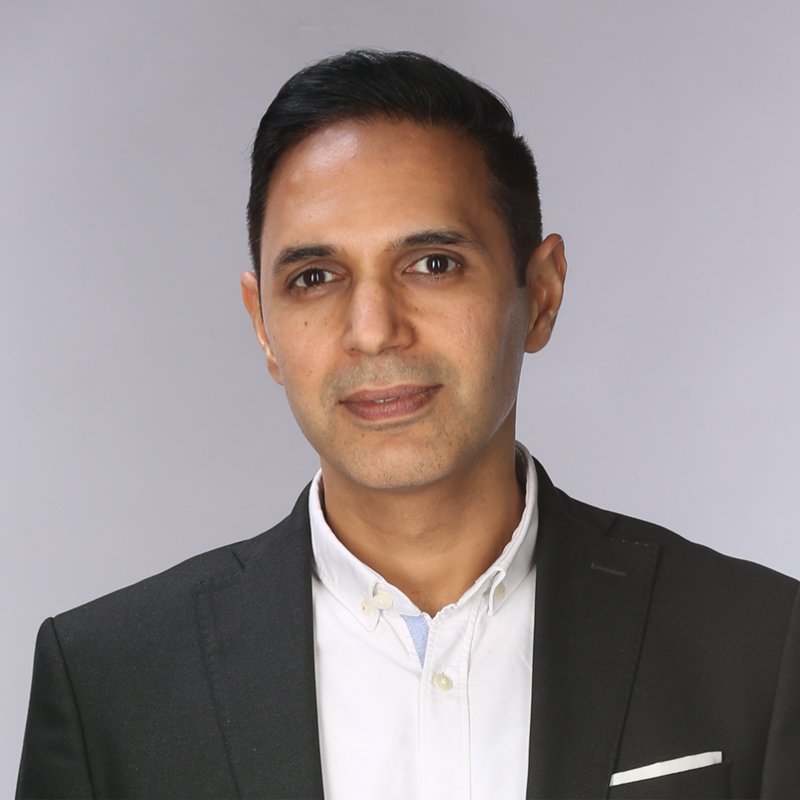
For Zee5 chief business officer Manish Kalra who leads the B2C business for India, the year 2021 was largely about aligning the platform’s content strategy with these tangible business outcomes. With rich experience in leadership roles at digital-first companies such as Amazon, Craftsvilla, and MakeMyTrip, he is now responsible for growing the overall revenue, viewership, and driving subscription numbers for Zee5.
Kalra strongly believes that successful businesses are built by teams with a great understanding of customer behaviour, which explains his zeal for the ‘customer-first approach’. Under his leadership, Zee5 placed the bet on ‘deeper regionalisation’ and TVOD services in an SVOD and AVOD-dominated market to build an expansive and diverse library of content comprising over 150 web series and over two lakh hours of on-demand content across 12 languages.

In Q2 FY22, Zee5 reported 93.2 million global monthly active users (MAUs) on the platform. On the back of the Punjabi content slate announced in the year’s second half, it witnessed 2X growth in active subscription numbers with the highest contribution from Punjab and neighbouring states like, Haryana Delhi NCR and Uttar Pradesh. The average watch time per viewer per month as on September stood at 186 minutes. Another significant development in 2021 was the launch of the Zee5 Intelligence Monitor – a fortnightly knowledge series for advertisers.
In this interaction with Indiantelevision.com, Manish Kalra talks about all these developments, and other happenings in 2021, and shares his plans for the year ahead.
Edited Excerpts:
On the content strategy for 2021 and going ahead
Content is one of the strongest pillars of Zee5’s growth strategy. 2021 has been a phenomenal year in terms of churning out compelling content as we endeavoured to develop a robust content slate that caters to the diverse needs of our consumers. Right from launching tentpole properties such as ‘Radhe’, ‘Friends: The Reunion’, ‘Break Point’, and ‘Rashmi Rocket’ to collaborating with TVF, and offering the Punjabi content slate ‘Rajj ke Vekho’, we’ve ensured having something for everybody at our content store.
In fact, with a concerted focus on ‘Deeper Regionalisation’, and a primary objective to drive ‘Entertainment Inclusion’, we also launched two successful campaigns – ‘Any Time Manoranjan’ and ‘Dekhtey Reh Jaogey’. Both these initiatives were aimed at democratising access to bespoke Indian entertainment for all, especially for markets that are new or underserved.
We foresee the next wave of growth coming from the Tier II and III cities that are looking for diversity in original content and genres. While the big cities will have a definite influence, the larger share of the pie will come in from smaller markets over time. Content will still be king across all, and the diversity of content is only going to grow. Regional content is our forte and we want to continue to be the multilingual storyteller for multiple entertainment seekers.
On the opportunities in regional and sports content
A major part of Zee5’s strategy is to convey realistic and original tales from the heartland. Coming from the legacy content powerhouse, Zee, we have established our dominance in the regional content space. Almost 50 per cent of our viewership comes from regional language content. In fact, we were the first home-grown streaming platform to have been launched in 11 Indian languages (Hindi, Bengali, Malayalam, Tamil, Telugu, Kannada, Marathi, Oriya, Bhojpuri, Gujarati, and Punjabi), offering access to one of the largest regional content libraries in the country.
Going forward, around 30-40 per cent of our content investments will be in the regional space, and we expect this percentage to increase as we further cater to untapped regions. After the recent foray into original Punjabi programming, our aim is to double our Telugu and Tamil originals by early 2022. Bengali is on the radar post that.
On the emergence of new business and subscription models
The pandemic made us rethink the way we operated and accelerated the process of innovation. Since people were confined to their homes OTT adoption accelerated resulting in a surge in viewership and watch-time. Consumers’ willingness to pay has also increased, resulting in SVOD revenues growing at a higher rate than AVOD revenues globally for the first time ever in 2020. Zee5 being a hybrid video streaming platform saw an upsurge in traffic on both SVOD and AVOD. It was heartening to see how consumers sampled content on AVOD and further migrated to SVOD to enjoy uninterrupted content across genres and languages from our library.
That being said, we had to continuously reinvent ourselves to give our viewers the best experience and value for their investment. With this thought, we introduced our pay-per-view subscription model ‘ZEEPlex’ to bring the box office home to Indian audiences. With digital consumption being at an all-time high we are positive that the TVOD subscription model will prove to be a success in the coming days. The concept of subscriptions was also once new, but it has picked up today. We expect TVOD to meet the same fate.
On the evolution of movie business through 2021
The pandemic-induced lockdown resulted in two trends – consumers stayed at home to enjoy movies and other forms of entertainment, while studios and filmmakers had to go back to the drawing board and rework their distribution strategy. Since the advent of streaming has fundamentally altered how the audiences consume content, OTT became the natural choice for filmmakers for premiering their movies – be it low-budget movies or blockbusters, giving birth to the concept of direct-to-digital. The TVOD (pay-per-view) model also emerged as a viable option. In fact, India also witnessed an industry-first, hybrid release of the magnum opus ‘Radhe’ on Zee5 and ZEEPlex.
Now, even though the theatres have opened up, there are plenty of opportunities for both movie theatres and OTT platforms to leverage and co-exist in a profitable way. The way I see it is that movies will now first release in theatres and then come to our platform where viewers will have the flexibility to view them at their convenience. Both entities will have a synergistic relationship with each other.
At Zee5 we are geared up for 2022 with our pipeline comprising both originals and acquired content including movies such as ‘420 IPCC’, ‘Bob Biswas’, among many others. Over and above this, we have a list of direct-to-digital releases lined up. It will be unveiled gradually in the coming days.
On the road ahead; key focus areas for 2022
Our customer is at the heart of everything we do. Hence, our focus has always been to enhance our technology prowess and provide high-quality video and best-in-class content viewing experience across devices.
Moving forward, we want to focus on family entertainment along with regional content. Our aim is to make South-Asian content across languages popular, not only in India but also internationally. We aim to reach 50 per cent of the audience that is consuming content digitally. We will continue to offer differentiated shows and blockbuster movies and invest in content that is ‘real, relevant, and resonant’. These investments would drive our market share putting us in good stead going forward. In terms of content investments, it will be equally divided between original shows and acquisitions, primarily films and other shows.





NEW DELHI: Hamdard Laboratories gathered a cross-section of India’s achievers in New Delhi on Friday, handing out the Hakeem Abdul Hameed Excellence Awards to figures who have left their mark across healthcare, education, sport, public service and the arts.
The ceremony, attended by minister of state for defence Sanjay Seth and senior officials from the ministry of Ayush, celebrated individuals whose work blends professional success with a sense of public purpose. It was as much a roll call of achievement as it was a reminder that influence is not measured only in profits or podiums, but in people reached and lives improved.
Among the headline awardees was Alakh Pandey, founder and chief executive of PhysicsWallah, recognised for turning affordable digital learning into a mass movement. On the sporting front, Arjuna Awardee and kabaddi player Sakshi Puniya was honoured for her contribution to the game and for pushing women’s participation onto bigger stages.
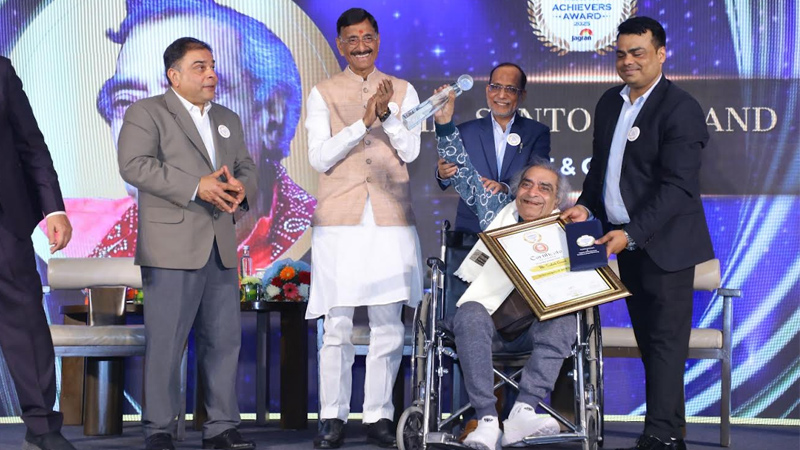
The cultural spotlight fell on veteran lyricist and poet Santosh Anand, whose songs have echoed across generations of Hindi cinema. At 97, Anand accepted the honour with characteristic humility, reflecting on a life shaped by perseverance and hope.
Healthcare honours spanned both modern and traditional systems. Manoj N. Nesari was recognised for strengthening Ayurveda’s place in national and global health frameworks. Padma shri Mohammed Abdul Waheed was honoured for his research-backed work in Unani medicine, while padma shri Mohsin Wali received recognition for his long-standing contribution to patient-centred care.
Education and social development also featured prominently. Padma shri Zahir Ishaq Kazi was honoured for decades of work in education, while former Meghalaya superintendent of Police T. C. Chacko was recognised for public service. Goonj founder Anshu Gupta received an award for his dignity-centred rural development initiatives, and the Hunar Shakti Foundation was honoured for empowering women and young girls through skill development.
The Lifetime Achievement Award went to former IAS officer Shailaja Chandra for her long career in public healthcare and governance, particularly in the traditional systems under Ayush.
Speaking at the event, Hamdard chairman Abdul Majeed said the awards were a tribute to those who combine excellence with empathy. “These awardees reflect Hakeem Sahib’s belief that healthcare, education and public service must ultimately serve humanity,” he said.
Minister Seth struck a forward-looking note, saying India’s young population gives the country a unique opportunity to become a global destination for learning, health and wellness by 2047.
The ceremony also featured the trailer launch of Unani Ki Kahaani, an upcoming documentary starring actor Jim Sarbh, set to premiere on Discovery on 11 February.
Instituted in memory of Unani scholar and educationist Hakeem Abdul Hameed, the awards have grown into a national platform that celebrates those building a more inclusive and resilient India. For one evening at least, the spotlight was not just on success, but on service with substance.







