News Broadcasting
Republic TV has 51.9% viewership in debut week: BARC gives data to paid subs despite NBA’s request

MUMBAI/BENGALURU: It’s a coup of sorts. The leader in the English news genre has been surprised by the newcomer — Republic TV. According to BARC India viewership data for week 19, Republic TV has got 2117 weekly impressions and Times Now lags with 1148. NDTV 24×7 (352), India Today Television (350) and CNN News18 (315) have respectively bagged the third, fourth and fifth positions.
The controversy-ridden Arnab Goswami-headed English News channel claims on its channel a 52 percent viewership in the very first week of operations which started on 6 May 2017 – this would be Broadcast Audience Research Council of India (BARC) week 19 (Saturday, 6 May 2017 to Friday 12 May 2017). The channel started mentioning this news around 11am today. BARC in normal course gives data to paid subcribers at 11am. It has done it is this time too despite NBA’s caution.

The channel says that the English News genre leader until week 18, Times Now could garner only 25 percent viewership. Comparative numbers for other channels mentioned by Republic TV are: CNN News 18 and NDTV 24 X 7 – 7 percent each and India Today Television 8 percent.

As reported by us earlier, the News Broadcaster Association (NBA) had written to BARC on 17 May urging it not to release Republic TV’s viewership data until Republic TV completely stopped the NBA alleged malpractice of being on multiple LCNs’/genres on several DPOs’ and MSOs’.
The channel has been running a special show – at the time of writing – on which it celebrated its leadership position, bringing in its representatives of its 14-odd news partners who could not praise Arnab, his style of journalism, and his achievement enough. As well as journalists, editors from its team in different parts of the country. Most of them talked about the fact that the channel was put together in a matter of three to five months, and that its pole position was attained in English news in just its first week. And they also patted each other on their back for the stories that the channel has been reporting on for the past 10-11 days.
“They have raised him to demi-god status,” says a media observer. “Or maybe God status. What will the establishment do now? And what will Arnab and his team do?”






News Broadcasting
CNN-News18 to host Fury in the Gulf conclave on West Asia crisis
Three-hour summit to unpack geopolitical fallout and impact on India
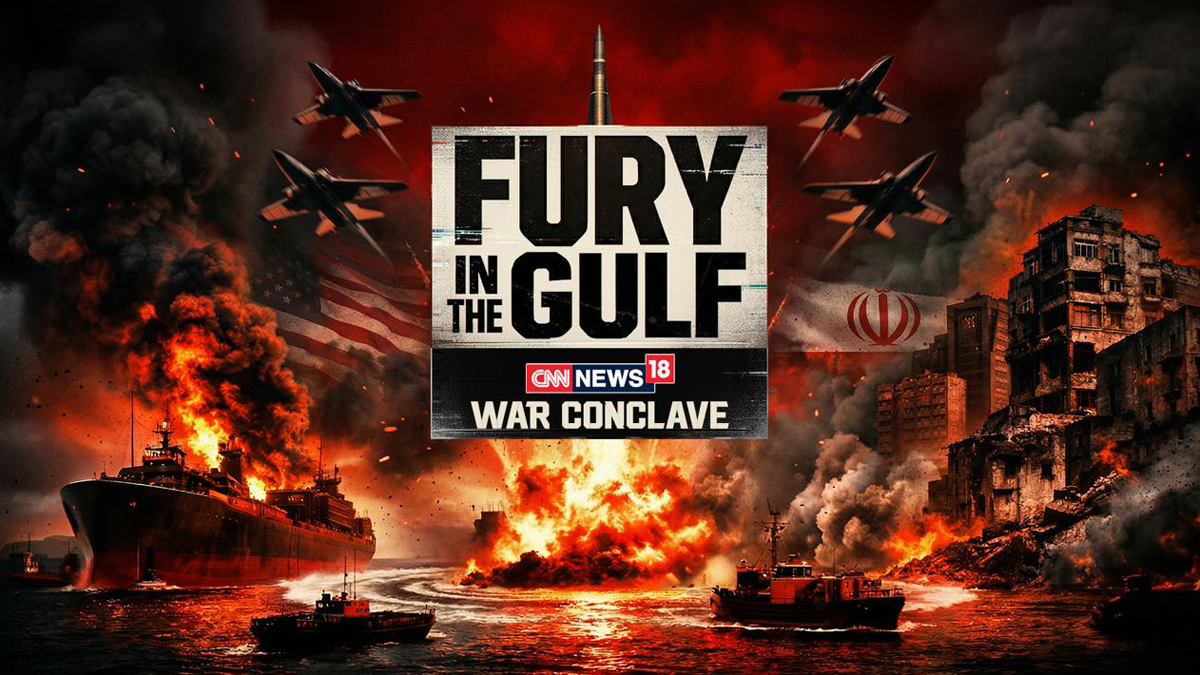
MUMBAI: CNN-News18 is set to host a special three-hour broadcast, Fury in the Gulf – War Conclave, on April 7, aiming to decode the escalating West Asia crisis and its far-reaching implications for India.
Scheduled from 4:00 PM to 7:00 PM, the conclave comes at a time when tensions between Iran and the United States are reshaping global geopolitics and triggering economic uncertainty. With India’s deep energy ties, trade links and large diaspora in the Gulf, the developments carry significant domestic relevance.
Built around the theme ‘Conflict, Consequences, and The Future,’ the programme will feature six curated sessions combining one-on-one interviews and panel discussions. The focus is to cut through the clutter and offer viewers a clearer understanding of the fast-evolving situation.
Key sessions include ‘Diplomacy in Times of War’ featuring Shashi Tharoor, and ‘World After the Iran Conflict’ with voices such as Ram Madhav, Reuven Azar, representatives from the European Union and the Iranian Deputy Envoy. Another session titled ‘Another Dunkirk?’ will bring together K. J. S. Dhillon and Jitin Prasada among others.
CNN-News18 editorial affairs director Rahul Shivshankar said, “In times of war, clarity becomes the most powerful tool. Fury in the Gulf – War Conclave brings together credible voices to address the questions and confusion that arise amid an overwhelming influx of information.”
He added that the initiative is aimed at delivering “facts, perspective, and insight” at a time when misinformation can easily cloud public understanding.
Echoing the sentiment, CNN-News18 CEO– English and business news Smriti Mehra said the conflict marks a defining global moment, with consequences that extend well beyond the region. She noted that the conclave seeks to present the crisis with “depth, nuance and responsibility” so audiences can better grasp its real-world impact.
As geopolitical tensions continue to dominate headlines, the conclave positions itself as an attempt to bring order to the noise, offering viewers a structured, insight-led look at a complex and rapidly shifting global situation.






