News Broadcasting
Report emphasises role of P2P Networks in video distribution

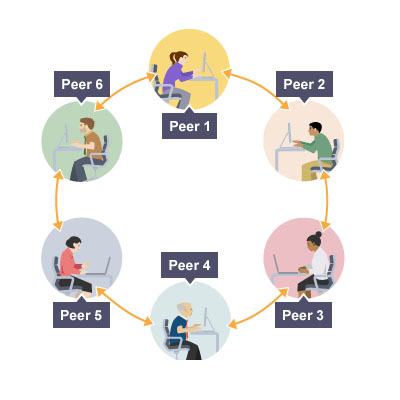
MUMBAI: Peer2Peer (P2P) Networks mark a radical shift in the architecture and availability of broadcast video assets. It is also severely reducing competitive entry barriers for video distribution.
This is one of the key findings in Breakthroo’s report- Broadcast TV and Broadband Video: Collision and Disruption. The UK based Breakthroo helps brands better identify and create digital products and services, assess opportunities and undertake bespoke research, in order to find new business growth.
The report examines the collision between broadcast TV and broadband video. The report makes sense of: what new – and potentially disruptive – innovations are at play for scheduling or distributing video; what it means for the existing value net structure and incumbents, how the competitive pressures are increasing; and what the shifting of time, place and media (via P2P) trends mean.

The report notes that by using P2P networks, both video creators/producers (that create and fund content) and content packagers (that commission and aggregate it) can reach and sell to end users directly. The former disintermediates the entire value web, while the later disintermediates traditional distributors.
However, instead of P2P being framed as an alternative to broadcast TV, it s more likely an augmentation, an additional route to market; albeit, one with the potential to disrupt a fragmenting TV viewing constituency. It will enable firms and amateurs alike to become asset creators/producers/distributors.
An increasing array of TV platforms and end devices affords users real diversity in how they choose to consume and/or create video.
The current state of broadband video: High-level convergence of media, telecoms and datacoms, where any TV/video service can be sent across any network (fixed/cellular/wireless), is fragmenting the distribution market. It is also increasing competition and speeding commoditisation.
Channel packagers have additional distribution options, creators can bypass packagers and distributors, and users have more video access and control (push, pull, P2P). Intelligent edge devices enable user generated video, and faster than real-time file distribution via efficient, swarming P2P networks; further augmenting millions of concurrent P2P users. Residential gateways that control data access and services, and multi-purpose flat-panel displays, are the eye of the home environment storm between multiple markets.
Meanwhile the broadcast value net will continue to grow. It will feature far more segments and increased complexity, from iTV to IPTV, from channel packagers to distributors. New entrants and substitutes will threaten incumbent business models and put aggressive pressure on margins, and innovative new products they diffuse into markets will change technology performance dimensions and customer buying criteria.
Firms will need to embrace new offerings in order to find new growth and remain competitive. They will have to explore ever more niche content demands, i.e. look to the margins, to aggregate higher volume, more personal, smaller transactions.
P2P will enable new firms to threaten distributors which fail to compete on content granularity, volume of sources, and cost. The ability to media shift may be one characteristic customers use in adopting P2P-based video services. New P2P video distributors will force the broadcast value net structure to expand, and increasing competition margin pressure.
As sustaining innovations,digital video recording systems will reside within incumbent services or as augmented features of STBs, online video on demand providers, etc. Commoditisation of basic features will be accelerated by multiple, competing value players rushing to diffuse them. This will force some players towards evolved features, premium markets, and modularisation of previously interdependent interfaces within the value net.
Freeing users from the TV/home constraint will be achieved with place shifting solutions via streams, downloads and device transfers. Adoption characteristics will differ to iTunes/iPod, as video place shifting requires a users total attention, most appropriate for nomadic scenarios; of which a manifestation may be a preference for short bite size video clips. End-to-end systems with rich content libraries may prove difficult to negotiate and offer.
Media shifting and P2P blur the professional/amateur divide, making possible point-to-point distribution of video content and user-generated videos. In combination with the explosive popularity of blogging, syndication, and long tail economic models, will create a virtuous circle. Video professionals and niche markets now have a viable distribution alternative to broadcast, providing them with a direct sales route and zero costs.







News Broadcasting
CNN-News18 to host Fury in the Gulf conclave on West Asia crisis
Three-hour summit to unpack geopolitical fallout and impact on India

MUMBAI: CNN-News18 is set to host a special three-hour broadcast, Fury in the Gulf – War Conclave, on April 7, aiming to decode the escalating West Asia crisis and its far-reaching implications for India.
Scheduled from 4:00 PM to 7:00 PM, the conclave comes at a time when tensions between Iran and the United States are reshaping global geopolitics and triggering economic uncertainty. With India’s deep energy ties, trade links and large diaspora in the Gulf, the developments carry significant domestic relevance.
Built around the theme ‘Conflict, Consequences, and The Future,’ the programme will feature six curated sessions combining one-on-one interviews and panel discussions. The focus is to cut through the clutter and offer viewers a clearer understanding of the fast-evolving situation.
Key sessions include ‘Diplomacy in Times of War’ featuring Shashi Tharoor, and ‘World After the Iran Conflict’ with voices such as Ram Madhav, Reuven Azar, representatives from the European Union and the Iranian Deputy Envoy. Another session titled ‘Another Dunkirk?’ will bring together K. J. S. Dhillon and Jitin Prasada among others.
CNN-News18 editorial affairs director Rahul Shivshankar said, “In times of war, clarity becomes the most powerful tool. Fury in the Gulf – War Conclave brings together credible voices to address the questions and confusion that arise amid an overwhelming influx of information.”
He added that the initiative is aimed at delivering “facts, perspective, and insight” at a time when misinformation can easily cloud public understanding.
Echoing the sentiment, CNN-News18 CEO– English and business news Smriti Mehra said the conflict marks a defining global moment, with consequences that extend well beyond the region. She noted that the conclave seeks to present the crisis with “depth, nuance and responsibility” so audiences can better grasp its real-world impact.
As geopolitical tensions continue to dominate headlines, the conclave positions itself as an attempt to bring order to the noise, offering viewers a structured, insight-led look at a complex and rapidly shifting global situation.






