News Headline
Regulations skewed against broadcasters: Star India counsel Dwivedi


NEW DELHI: Noting that the Telecommunications (Broadcasting and Cable) Interconnection (Digital Addressable System) Regulations 2012 ‘are skewed’ against the broadcaster in every respect’, Star counsel Rakesh Dwivedi said today that there are provisions only for ‘must provide’ and not ‘must carry’.
Thus, the broadcaster does not get paid by a multisystem operator (MSO) for providing the channels, but only when a subscriber wants to take it from the MSO.

Furthermore, Clause 5 is clear that no broadcaster can compel a MSO to provide his channel to the subscriber and gives an option to the subscriber to choose the channel he wants, Dwivedi said in the ongoing hearing before the Telecom Disputes Settlement and Appellate Tribunal in the cases linked to Taj TV signals for Turner and Zee TV.
The Regulations also say that if a broadcaster insisted on a placement of his channel, it would amount to unreasonable terms. The same applied to creation of bouquets by the broadcaster.
Referring to the charge that the RIO does not mention bouquet, Dwivedi said there is no question of a bouquet, adding that there would be no point in creating bouquets if the MSO has the right to unbundle it.
Furthermore, offering all the channels of the broadcaster does not amount to a bouquet, because even the dictionaries define ‘bouquet’ as an assortment out of which the subscriber can choose.
Even in the case of MediaPro, Dwivedi said no bouquets had been offered and if MediaPro on its own offered any channels in the form of bouquets, it said so.
Referring to the arguments advanced on behalf of the MSOs, he said there was no reference to being reasonable in clause five which was confined to mutual negotiations and this reference was only with reference to the Reference Interconnect Offer.
He said that it was also necessary to understand that an RIO was only an offer and not an agreement or contract and therefore ‘cannot be judged on the anvil’.
Even otherwise, the MSOs had not challenged the RIO but that it should have been brought in only after negotiations fail.
At the outset, Dwivedi said the charge against Star and Zee was that they were conspiring with other MSOs because of the closeness to Den and to drive the petitioner MSOs out of business. He also denied the contentions made by the petitioner MSOs that certain other MSOs were being given greater discounts.





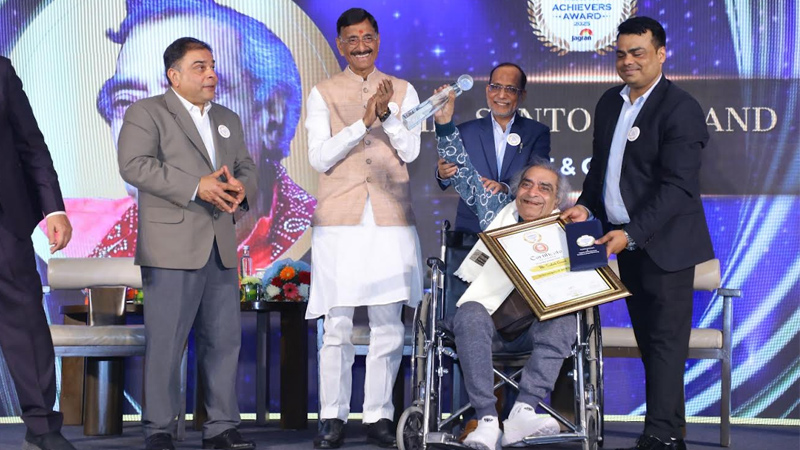
NEW DELHI: Hamdard Laboratories gathered a cross-section of India’s achievers in New Delhi on Friday, handing out the Hakeem Abdul Hameed Excellence Awards to figures who have left their mark across healthcare, education, sport, public service and the arts.
The ceremony, attended by minister of state for defence Sanjay Seth and senior officials from the ministry of Ayush, celebrated individuals whose work blends professional success with a sense of public purpose. It was as much a roll call of achievement as it was a reminder that influence is not measured only in profits or podiums, but in people reached and lives improved.
Among the headline awardees was Alakh Pandey, founder and chief executive of PhysicsWallah, recognised for turning affordable digital learning into a mass movement. On the sporting front, Arjuna Awardee and kabaddi player Sakshi Puniya was honoured for her contribution to the game and for pushing women’s participation onto bigger stages.
The cultural spotlight fell on veteran lyricist and poet Santosh Anand, whose songs have echoed across generations of Hindi cinema. At 97, Anand accepted the honour with characteristic humility, reflecting on a life shaped by perseverance and hope.
Healthcare honours spanned both modern and traditional systems. Manoj N. Nesari was recognised for strengthening Ayurveda’s place in national and global health frameworks. Padma shri Mohammed Abdul Waheed was honoured for his research-backed work in Unani medicine, while padma shri Mohsin Wali received recognition for his long-standing contribution to patient-centred care.
Education and social development also featured prominently. Padma shri Zahir Ishaq Kazi was honoured for decades of work in education, while former Meghalaya superintendent of Police T. C. Chacko was recognised for public service. Goonj founder Anshu Gupta received an award for his dignity-centred rural development initiatives, and the Hunar Shakti Foundation was honoured for empowering women and young girls through skill development.
The Lifetime Achievement Award went to former IAS officer Shailaja Chandra for her long career in public healthcare and governance, particularly in the traditional systems under Ayush.
Speaking at the event, Hamdard chairman Abdul Majeed said the awards were a tribute to those who combine excellence with empathy. “These awardees reflect Hakeem Sahib’s belief that healthcare, education and public service must ultimately serve humanity,” he said.
Minister Seth struck a forward-looking note, saying India’s young population gives the country a unique opportunity to become a global destination for learning, health and wellness by 2047.
The ceremony also featured the trailer launch of Unani Ki Kahaani, an upcoming documentary starring actor Jim Sarbh, set to premiere on Discovery on 11 February.
Instituted in memory of Unani scholar and educationist Hakeem Abdul Hameed, the awards have grown into a national platform that celebrates those building a more inclusive and resilient India. For one evening at least, the spotlight was not just on success, but on service with substance.