News Headline
Regional GECs on an upward growth trajectory

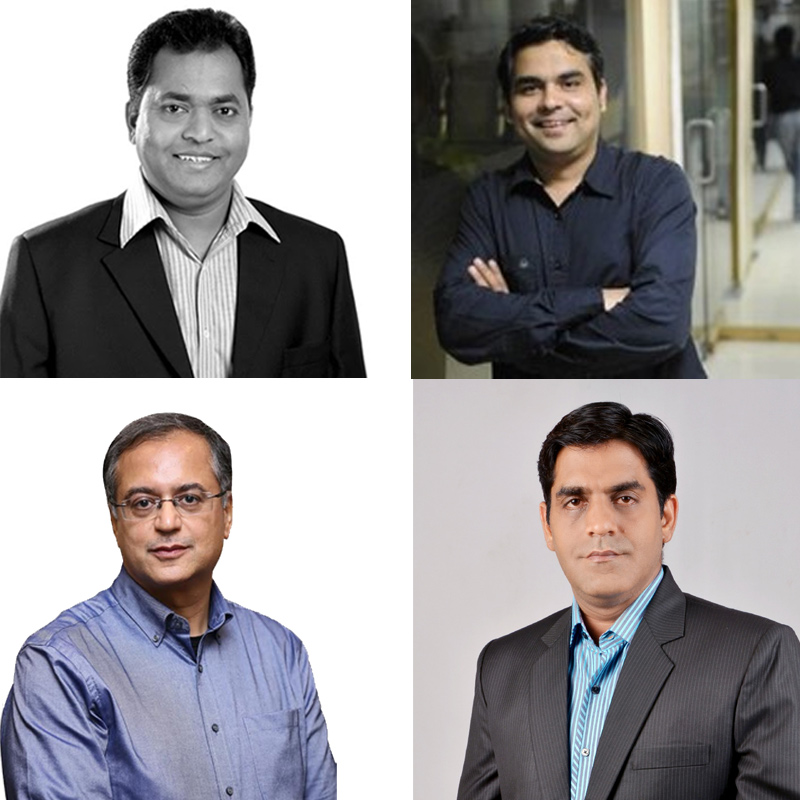
MUMBAI: In the last four to five years, the regional television market witnessed a significant growth in viewership. Even the ad spend in the regional market has grown by 20 to 25 per cent in 2019 with more and more brands aiming to reach specific audiences. So how has the ROI improved for the regional channels? National broadcasters are expanding their footprints and businesses in the regional market by investing more on regional content and even brands are focussing more on the regional channels to reach specific markets.
Carat India executive VP Mayank Bhatnagar says, “The overall growth of regional channels is healthy and all the key regional channels have grown. In fact, some of them have witnessed a healthy growth in ad revenue. The overall ad spends this year (2019) on regional channels have increased by 20 to 25 per cent.”
As per BARC data, over a period of four years, regional viewership has grown to 30 – 35 per cent for languages such as Marathi, Gujarati, Bhojpuri, Odiya and Assamese. South continued to grow at around 9 to 10 per cent on an average. Hindi grew at about 7 to 8 per cent.

Viacom18 Regional TV Network head Ravish Kumar says, “Regional channels have always offered great value to their advertisers and prioritised innovation, fresh concepts and new talent while perfecting the art of great storytelling. With their rich repository of theatre, literature, culture and music, regional content is making waves across mediums, screens and languages. So, the ROI on regional channels continues to be as strong as ever earning it an outperform rating in today’s value-seeking markets.”
He further says: “Brands today have understood the reach a regional channel can give them. In addition to regional brands seeing value in our offerings, national advertisers too are understanding the importance of regional markets. While FMCG, auto, handset manufacturers continue to invest, there are newly emerging sectors such as education and gaming which are ramping up their advertising spends.”
Joel Multimedia founder-CEO Varghese Thomas, however, believes that all regional players are not breaking even as content acquisition is an expensive affair and it takes time to recover the cost incurred in a highly competitive market environment like today.
Regional channels also help brands to get the reach within a lower budget. “If we want to do a small campaign, these regional channels will help to drive efficiency. Regional will continue to grow as it is more efficient and help us to build the reach at much lesser cost as compared to HSM,” says Bhatnagar.
Other major reasons for the growth of regional content are enhanced data bandwidth, cheap tariff and increased smartphone penetration that has resulted in digital explosion and accelerated digital adoption by audience due to which they started consuming content across screens. This resulted in regionalisation of the content from both production and consumption perspectives.
Omnicom Media Group India Investment & Enterprise national head Yatin Balyan says, “For a national broadcaster mainline Hindi GEC continues to drive maximum business. However, regional channels are contributing more towards business growth for the network. Networks try to increase volume share with Hindi GEC as well as grow the business on the back of regional channels. National broadcasters investing in regional content also have to create a content bank for their respective OTT platforms.”
He also believes that regional channels have seen a gradual increase in business coming from regional or retail advertisers. He says, “There is a prominent shift in how regional channels are being considered from a campaign planning perspective. Campaigns for regional markets are being planned with far more focus as advertisers started considering all these markets as mini India within one Big India.”
Thomas is of the view that regional retail advertisers used to be the largest contributors of advertising revenue for the regional channels. But post demonetisation, the ad spends by retail business is on a downward trend and it has been really challenging to balance the revenue. Some of the players have come up with non-FCT ideas to cope with the challenges and it's paying off to an extent.
When broadcasters look at expanding their footprint and diversifying into non-core areas of business, regional markets emerge as an option to explore. Though most of the regions are already flooded with a bunch of players, broadcasters are exploring the possibility of adding another channel to their basket in order to be part of the regional success story. It is interesting to know that some of the recently-entered regional players are doing extremely well and they have already made their position in the top 5 channels and started contributing to the growth of the network.
Thomas says, “It's challenging for broadcasters to approach these markets with an innovative programming strategy. So, at times, they do an adaptation of their successful shows from their national channels. They also have an option to dub some of their super hit shows in to the regional languages where they are present.”
Balyan, however, believes that Hindi GEC still commands the maximum business share within a broadcaster networks and it would be incorrect to assume that Hindi GEC has come to a level of saturation. TV penetration in the Hindi hinterland, which is still not at 100 per cent, is primarily driven by Hindi GECs. I see scope of further growth in Hindi GEC business with increased scope of audience measurement.”
According to Kumar, from a macro perspective, 2019 was a challenging year for the entire broadcast industry, including regional, due to the impact of the new tariff order as well as the weak advertising and investing climate. However, he believes things are settling down now, and hopefully, this year will see a lot more buoyancy coming back in.
He says, “I believe that regional markets offer more opportunities than the challenges they present. Regional audiences have become increasingly aware and hence content that is being presented to them needs to be more relatable, rooted and relevant. There is a growing demand for disruptive content, both in fiction and non-fiction spaces. Viewers are looking for fresh content experiences and stories which have believable characters. This is a great opportunity for storytellers like us.”
Regional channels contribute significantly towards the overall growth and this will only continue to increase.






NEW DELHI: Hamdard Laboratories gathered a cross-section of India’s achievers in New Delhi on Friday, handing out the Hakeem Abdul Hameed Excellence Awards to figures who have left their mark across healthcare, education, sport, public service and the arts.
The ceremony, attended by minister of state for defence Sanjay Seth and senior officials from the ministry of Ayush, celebrated individuals whose work blends professional success with a sense of public purpose. It was as much a roll call of achievement as it was a reminder that influence is not measured only in profits or podiums, but in people reached and lives improved.
Among the headline awardees was Alakh Pandey, founder and chief executive of PhysicsWallah, recognised for turning affordable digital learning into a mass movement. On the sporting front, Arjuna Awardee and kabaddi player Sakshi Puniya was honoured for her contribution to the game and for pushing women’s participation onto bigger stages.
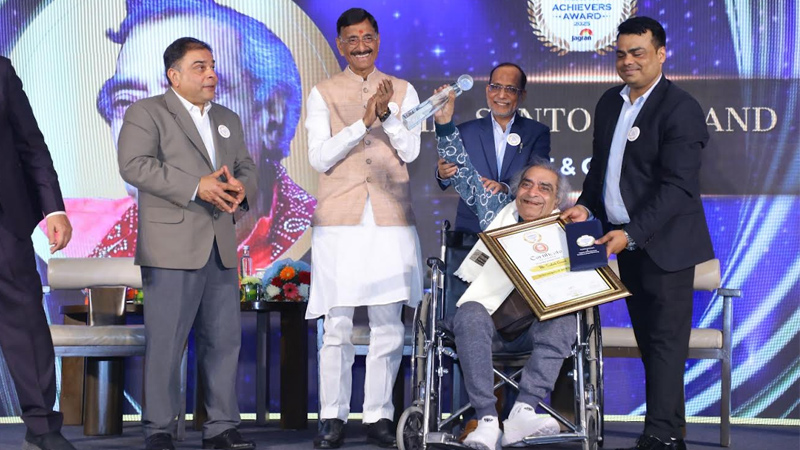
The cultural spotlight fell on veteran lyricist and poet Santosh Anand, whose songs have echoed across generations of Hindi cinema. At 97, Anand accepted the honour with characteristic humility, reflecting on a life shaped by perseverance and hope.
Healthcare honours spanned both modern and traditional systems. Manoj N. Nesari was recognised for strengthening Ayurveda’s place in national and global health frameworks. Padma shri Mohammed Abdul Waheed was honoured for his research-backed work in Unani medicine, while padma shri Mohsin Wali received recognition for his long-standing contribution to patient-centred care.
Education and social development also featured prominently. Padma shri Zahir Ishaq Kazi was honoured for decades of work in education, while former Meghalaya superintendent of Police T. C. Chacko was recognised for public service. Goonj founder Anshu Gupta received an award for his dignity-centred rural development initiatives, and the Hunar Shakti Foundation was honoured for empowering women and young girls through skill development.
The Lifetime Achievement Award went to former IAS officer Shailaja Chandra for her long career in public healthcare and governance, particularly in the traditional systems under Ayush.
Speaking at the event, Hamdard chairman Abdul Majeed said the awards were a tribute to those who combine excellence with empathy. “These awardees reflect Hakeem Sahib’s belief that healthcare, education and public service must ultimately serve humanity,” he said.
Minister Seth struck a forward-looking note, saying India’s young population gives the country a unique opportunity to become a global destination for learning, health and wellness by 2047.
The ceremony also featured the trailer launch of Unani Ki Kahaani, an upcoming documentary starring actor Jim Sarbh, set to premiere on Discovery on 11 February.
Instituted in memory of Unani scholar and educationist Hakeem Abdul Hameed, the awards have grown into a national platform that celebrates those building a more inclusive and resilient India. For one evening at least, the spotlight was not just on success, but on service with substance.






