iWorld
Regional content on ALTBalaji to constitute 15% of show hours


MUMBAI: The year 2017 has witnessed the phenomenal growth of regional languages, such as Tamil, Telugu, Malayalam, Gujarati, Marathi and Bengali, over Hindi and English. OTT players like ALTBalaji, Viu, Amazon, SonyLIV, Voot, Hotstar, Netflix, and YuppTV have taken a deep dive into offering regional content this year.
ALTBalaji CMO Manav Sethi observes that though English is a niche audience in India, most competitors aren’t focusing on originals beyond Hindi. “We realised that consumption from non-HSM has been growing where people watched these shows with subtitles. We have also noticed traffic coming from states and cities where these languages are predominant. Then we started to integrate the ‘potential’ universe from a marketing point of view to the ‘consumption’ universe and that is when interesting patterns and trends started to emerge. At that point, we started to invest in creating these stories in languages apart from Hindi as there is latent willingness to consume and pay for it, too.”
ALTBalaji has released its first Tamil show Maya Thirrai with 16 episodes. Not only did it get audiences from Tamil Nadu but even Tamil-speaking population from Singapore and Malaysia. Even the Bengali original Dhimaner Dinkaal’s trailer garnered traction from Dhaka. “In the next four to six quarters, we will launch originals in more languages. 15 per cent of our total show hours will be regional content and we are heavily investing in it,” adds Sethi.

ALTBalaji has already launched its comedy show Standup in various regional languages like Marathi, Gujarati and Punjabi. Now, it has announced dubbing of some of the most popular original shows like Karrle Tu Bhi Mohabbat, Dev DD, Bewafaa Sii Wafaa, Romil and Jugal and The Test Case in Malayalam, Telugu and Tamil languages for the regional audience.
OTT giants believe South Indian languages have the biggest growth possibility and revenue potential. Sethi ascribes the highest revenue potential to the Tamil market because it has a higher payment curve, affluent audiences who are also educated and the mobile uptake is more.
Viu is focusing on the Telugu-speaking regions with shows such as Cinema Pichollu, Pelli Gola and Pilla. Voot hasn’t tapped any new language yet but is working on three regional series. Amazon Prime has a line-up of many new Hindi originals that will be dub in multiple languages like Marathi, Tamil, Telugu and Bengali. It has already released some of the regional language blockbusters like Arjun Reddy, VIP2, Nene Raju Nene Mantri, Dhananjoy, Bhikariand others soon after their theatrical release. SonyLiv is also looking for an expansion in Marathi and Gujarati languages and it has started looking at south Indian and Bengali language now.






iWorld
Prime Video bets big on India with global originals, films and franchise expansion
Execs highlight scale, travelability and new IP bets as India anchors global strategy
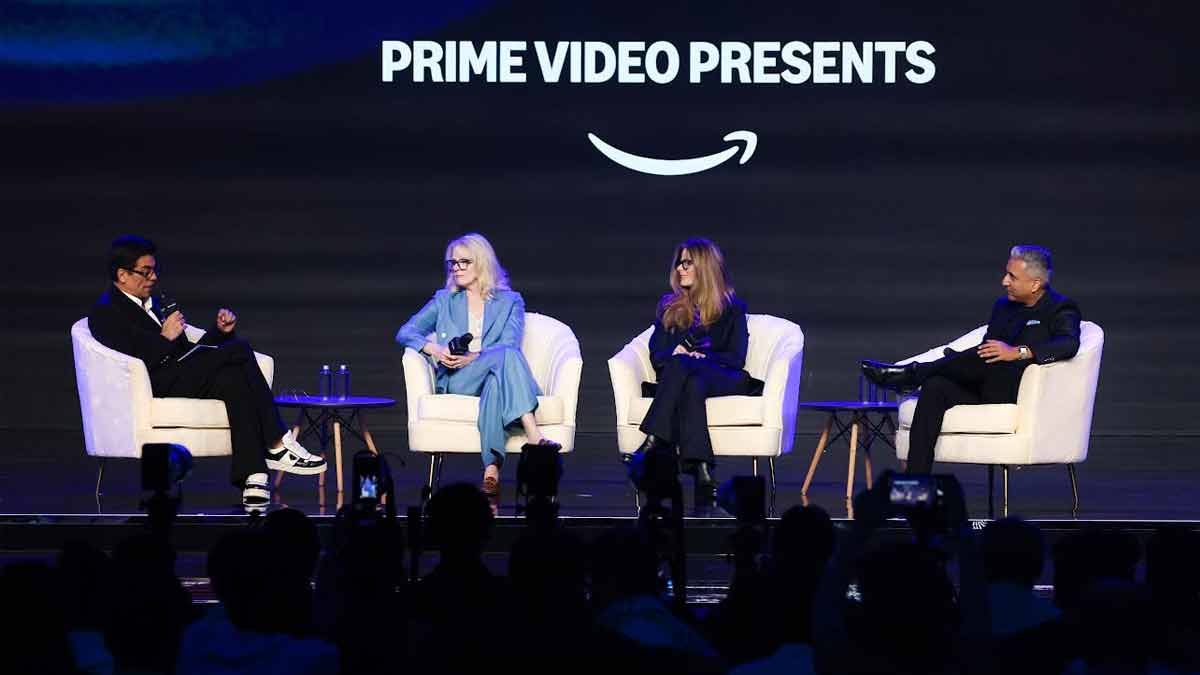
MUMBAI: At Prime Video Presents 2026, the message was clear and confident. India is not just part of the plan, it is central to it.
In a lively fireside chat hosted by filmmaker Karan Johar, Kelly Day, vice president of prime video and amazon mgm studios international, Nicole Clemens, vice president of international originals, and Gaurav Gandhi, vice president for Apac and Anz, laid out an ambitious roadmap. Think bigger stories, wider reach and a sharper focus on building franchises that travel.
Kelly Day, a regular visitor to India, set the tone early. Calling the country “one of the most important markets globally”, she pointed to the sheer scale and diversity of audiences as a driving force behind Prime Video’s growth. Indian Originals, she said, are not just local hits but global engines powering subscriptions and engagement.
That global appeal is already visible. According to Clemens, around 25 percent of viewership for Indian content now comes from outside the country. Shows rooted deeply in local culture are finding fans worldwide, proving that specificity, when paired with universal themes, travels well. From gritty dramas to sharp thrillers, Indian storytelling is increasingly crossing borders with ease.
Clemens, who joined recently to lead international originals, was particularly upbeat about India’s creative range. She highlighted a growing slate of over 100 shows in development and production, with more than 60 percent returning for multiple seasons. For her, the formula is simple. Authentic stories, told well, resonate everywhere.
Adding to the buzz, she teased new and returning titles, alongside a fresh superhero universe, the Kalyug Warriors. It signals a push into new genres while doubling down on familiar fan favourites.
If content is king, distribution is the clever courtier. Day outlined Prime Video’s layered business model in India, which blends subscription, rentals, add on channels and ad supported viewing through Amazon MX Player. The idea is straightforward. Give viewers choice, whether they want premium, free or pay per view.
India, she noted, has also become a testing ground for innovation. Tiered pricing, mobile only plans and language diversity have all been sharpened here before being exported to other markets. In many ways, the India playbook is now influencing global strategy.
For Gaurav Gandhi, the next chapter is about scale with intent. He outlined four priorities. Making Prime Video more accessible, pushing Indian content globally, building stronger franchises and supercharging the films business.
On films, the platform is moving beyond licensing into co productions and now theatrical releases in partnership with amazon mgm studios. These films will eventually stream on Prime Video, creating a full circle from cinema halls to living rooms across 240 countries.
Franchise building remains another key pillar. With hits like The Family Man, Mirzapur and Panchayat already enjoying multi season success, the focus is now on creating the next wave of enduring IP. Newer titles are already lining up for second seasons, signalling a steady pipeline.
What stood out through the conversation was a shared belief. Streaming in India is still in its early innings, and the runway is long. With a mix of local flavour and global ambition, Prime Video is betting that stories from India will not just stay at home, but travel far and wide.
Or as the executives seemed to suggest, the world is watching and India has plenty more to show.







