News Headline
‘Real fight between cable TV and DTH will start in 2006’


Hathway Cable & Datacom CEO K Jayaraman has been in the thick of things in the rapidly evolving Indian cable TV market. His network has in fact been at the forefront of a quiet digital transformation, which has seen MSOs going in for OFC and digital headends.
Hathway has recently also been dropping prices of its boxes in a bid to increase offtake, and also exploit digital cable’s advantage.
But with Tata Sky’s DTH service expected in 2006, he believes that cable TV’s hold over the top end of the market may get loosened, especially with DTH operators delivering a possibly better content offering. He adds that for digital cable to catch on, the last mile operators will have to be more supportive. In this commentative piece on the cable TV sector, Jayaraman tells I
What, however, sparked a bright note was the carriage or placement fee. As channels mushroomed and bandwidth clogged, broadcasters were willing to spend liberally on distribution. This helped a bit in offsetting losses from our analogue business. Cable internet also picked up. And the urgency among the multi system operators (MSOs) to drive digital cable grew, though very little was done towards this actually on the ground. We launched our digital services in Pune and Bangalore, adding to our presence in Chennai, Mumbai and Delhi.
In 2006, cable TV operators will have to really gear up to take on the ominous threat of direct-to-home (DTH) and other delivery platforms that are planning for launch. They can fight these new threats only with digital cable.
Even if some MSOs are ready with the system, the industry does not seem to be interested in any manner. Also, MSOs should have indulged in more aggressive marketing of digital cable in 2005. That hopefully will be corrected in 2006. Better marketing, cross selling, promotion and attractive pricing will have to be used to make digital cable acceptable.
We are moving in that direction. Towards the end of the year, we dropped prices of our digital set-top boxes (STBs) and introduced an easy instalment scheme to entice our subscribers to migrate from the analogue to the digital service. Subscribers can pay in equal instalments of Rs 100 spread over 24 months. They will have to make an upfront payment of just Rs 1,000. In 2006, other cable networks will also work out various consumer friendly packages.
There is very little time left to sit back and relax. The real fight between cable and DTH will start in the coming year with the launch of Tata Sky. By then, issues over interconnect and sharing of content will have sorted out. Full content will, thus, be available on both the platforms. The product on DTH will be no way inferior to cable.
We were lucky that this was not the case in 2005. Dish TV was not able to sew up content from the Star and Sony bouquet of channels. It got most of its subscribers from the non cable TV homes.
But once all the content issues are resolved, there is a huge market up for grabs. The top end of the market can be very slippery for us. A lot, though, depends upon the investments the DTH players make and how much they deploy to acquire customers. But one thing is sure: they will go to the urban and top-end markets, which they perhaps couldn’t in 2005 because of content issues.
DTH can be as successful as GSM mobile phone is in India today. DTH operators will offer attractive prices like deferred payment plans and one year subscription free to entice subscribers. Dish TV is already subsidising costs but does not have the full content offering yet. Besides, DTH service providers can offer various price packages by bundling channels.
Without conditional access system (CAS), there can be no addressability on cable TV. One big handicap cable operators face is this: we can’t offer consumers the option to select the channels they want to watch and pay for. In DTH, consumers can control their bills. As DTH platform providers can package their offerings, this will give them an edge. We can’t offer proper packaging and products to customers.
People will wait for DTH to come. They will compare the products before they take to digital cable.
MSOs have not been able to successfully push digital cable. There is no support from the last mile operators.
If digital cable has to catch on, the last mile operators have to be fully behind it. That is the only way we can secure our networks from DTH. Perhaps, the last mile support will be better once DTH arrives in its complete form. But we have to cover up the SEC A homes very fast. These subscribers are a natural choice to migrate; we have to keep them with us. The big challenge for cable operators is to convince the customers and the last mile operators about digital cable.
When DTH comes, we expect the regulator to let go of the price control on cable TV. Broadcasters can then increase prices to cable. We can’t compare with DTH which has a 100 per cent declaration of subscriber base. Cable prices are based on under-declaration. This can be another problem on hand. We will have to wait and see how it evolves. But if that happens, then DTH can use this to funnel lower prices to consumers. Part of that subsidy will be through that.
Broadcasters, in any case, will support DTH as it provides a new revenue stream. Besides, it is transparent and will bring in competition to cable. Also, prices can fall – like it did in the case of mobile phones. Too many players will bring down the pricing. Aggressive plans will be laid out for customer acquisition. Prices could fall or customers could get better proposition.
IPTV, perhaps, will take longer to set in. But if and when the platform comes, it will become a threat. The challenges will be different as IPTV can bundle voice, data and video services.
In the US, cable has fought back against DTH and the telecom players. Cable companies have invested heavily in digital cable, triple play and other value-added services. But in India if digital cable is going to be only in theory, then we can’t do anything.
For the analogue business, hopefully peace on the ground will stay. MSOs and other independent operators can’t afford to fight over territories; poaching local cable operators from rival networks will be an insane act, if it happens. For there is no guarantee on analogue wholesale business.
Despite DTH and other technologies next year, the carriage or placement fee phenomena will stay. In fact, it will go up marginally. Carriage fee is a story that will continue for at least another three years till the digital migration happens. But it will not generate a large enough corpus for us to offer customers subsidies on our digital service. We will have to look at our parent companies for supporting that.
Cable companies will have to push aggressively their broadband and digital services. There is tremendous potential to strengthen our revenues by driving growth in these segments.
Will DTH take away the market from cable? There are various estimates on how large the DTH subscriber numbers will be. But we will know the results only after the Test match starts. The game has not begun yet.






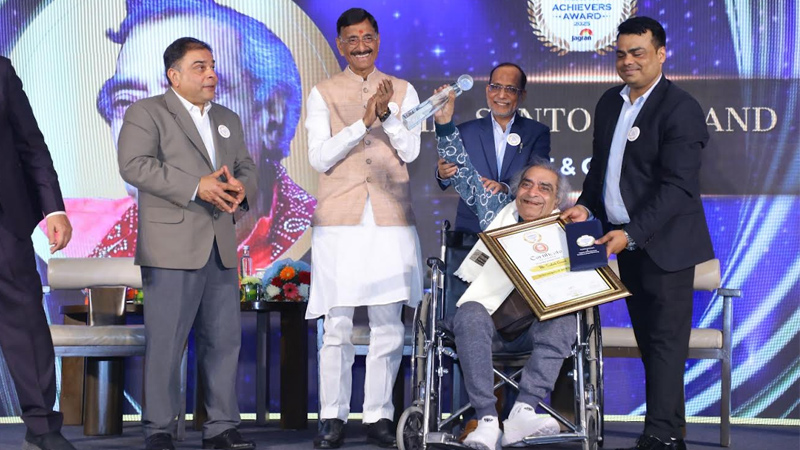
NEW DELHI: Hamdard Laboratories gathered a cross-section of India’s achievers in New Delhi on Friday, handing out the Hakeem Abdul Hameed Excellence Awards to figures who have left their mark across healthcare, education, sport, public service and the arts.
The ceremony, attended by minister of state for defence Sanjay Seth and senior officials from the ministry of Ayush, celebrated individuals whose work blends professional success with a sense of public purpose. It was as much a roll call of achievement as it was a reminder that influence is not measured only in profits or podiums, but in people reached and lives improved.
Among the headline awardees was Alakh Pandey, founder and chief executive of PhysicsWallah, recognised for turning affordable digital learning into a mass movement. On the sporting front, Arjuna Awardee and kabaddi player Sakshi Puniya was honoured for her contribution to the game and for pushing women’s participation onto bigger stages.
The cultural spotlight fell on veteran lyricist and poet Santosh Anand, whose songs have echoed across generations of Hindi cinema. At 97, Anand accepted the honour with characteristic humility, reflecting on a life shaped by perseverance and hope.
Healthcare honours spanned both modern and traditional systems. Manoj N. Nesari was recognised for strengthening Ayurveda’s place in national and global health frameworks. Padma shri Mohammed Abdul Waheed was honoured for his research-backed work in Unani medicine, while padma shri Mohsin Wali received recognition for his long-standing contribution to patient-centred care.
Education and social development also featured prominently. Padma shri Zahir Ishaq Kazi was honoured for decades of work in education, while former Meghalaya superintendent of Police T. C. Chacko was recognised for public service. Goonj founder Anshu Gupta received an award for his dignity-centred rural development initiatives, and the Hunar Shakti Foundation was honoured for empowering women and young girls through skill development.
The Lifetime Achievement Award went to former IAS officer Shailaja Chandra for her long career in public healthcare and governance, particularly in the traditional systems under Ayush.
Speaking at the event, Hamdard chairman Abdul Majeed said the awards were a tribute to those who combine excellence with empathy. “These awardees reflect Hakeem Sahib’s belief that healthcare, education and public service must ultimately serve humanity,” he said.
Minister Seth struck a forward-looking note, saying India’s young population gives the country a unique opportunity to become a global destination for learning, health and wellness by 2047.
The ceremony also featured the trailer launch of Unani Ki Kahaani, an upcoming documentary starring actor Jim Sarbh, set to premiere on Discovery on 11 February.
Instituted in memory of Unani scholar and educationist Hakeem Abdul Hameed, the awards have grown into a national platform that celebrates those building a more inclusive and resilient India. For one evening at least, the spotlight was not just on success, but on service with substance.








