News Broadcasting
Ready for the future or face customer desertion: Chandra


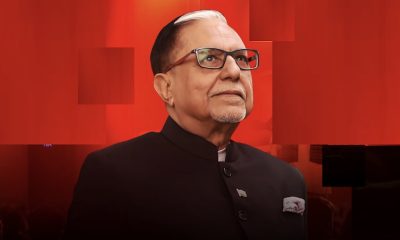
MUMBAI: “It’s the end of TV, the way we know it.” That was Zee group chairman Subhash Chandra introducing his keynote at the plenary session today – Digital Entertainment Living.
The thrust of Chandra’s presentation could be said to be the common strand running through most of the sessions on Day 2 of Ficci Frames 2006, which is that the future was the consumption of content would be according to individual requirements and on the go as it were – how you want it, when you want it, where you want it.
Chandra spoke of a five point agenda that his company had laid out as its course into the digital future.

These included the need for segmentation of content; innovation in pricing; experimentating with new content ideas; seamless delivery across various platforms; and fourthly, essentially extending the preceding points, the absolute need to prepare for the future if loyalty of consumers was to be preserved.
Said Chandra, “We have to segment our content. Segmentation will become very important. Content needs to be individualized, personalized.” He also pointed to the possibility that it would not just be programming that was customised but advertising as well. Advertising directed at individuals rather than a mass audience will become possible, the Zee head honcho averred.
Expanding on the point of seamless delivery across platforms, Chandra made a strong case for the need to move towards opens standards rather than focusing on proprietary control.
Chandra warned that it was essential that broadcasters “prepare for the future otherwise consumers will desert us.”
Chandra said that the huge effort that was currently on to digitise Zee’s entire content library (1,500 movies, 50,000 hours of TV) in partnership with IBM was part of that effort. Chandra estimated that it would be another year before the process was complete.
Another key initiative in that direction, announced earlier in the day in partnership with chip maker Intel, is a separate company Digital Media Convergence Ltd (DMCL) to be headed by Zee Telefilms president Abhijit Saxena, Chandra said. DMCL’s brief was to acquire, digitize and make available on various platforms, a wide variety of content, he pointed out.
Speaking to Indiantelevision.com on the sidelines of another session, Saxena said that DMCL would become fully functional only after Zee’s content offering had been completely digitised. The interim period (one year) would be spent in acquiring content from a variety of vendors across the globe, Saxena said.




News Broadcasting
CNN-News18 to host Fury in the Gulf conclave on West Asia crisis
Three-hour summit to unpack geopolitical fallout and impact on India
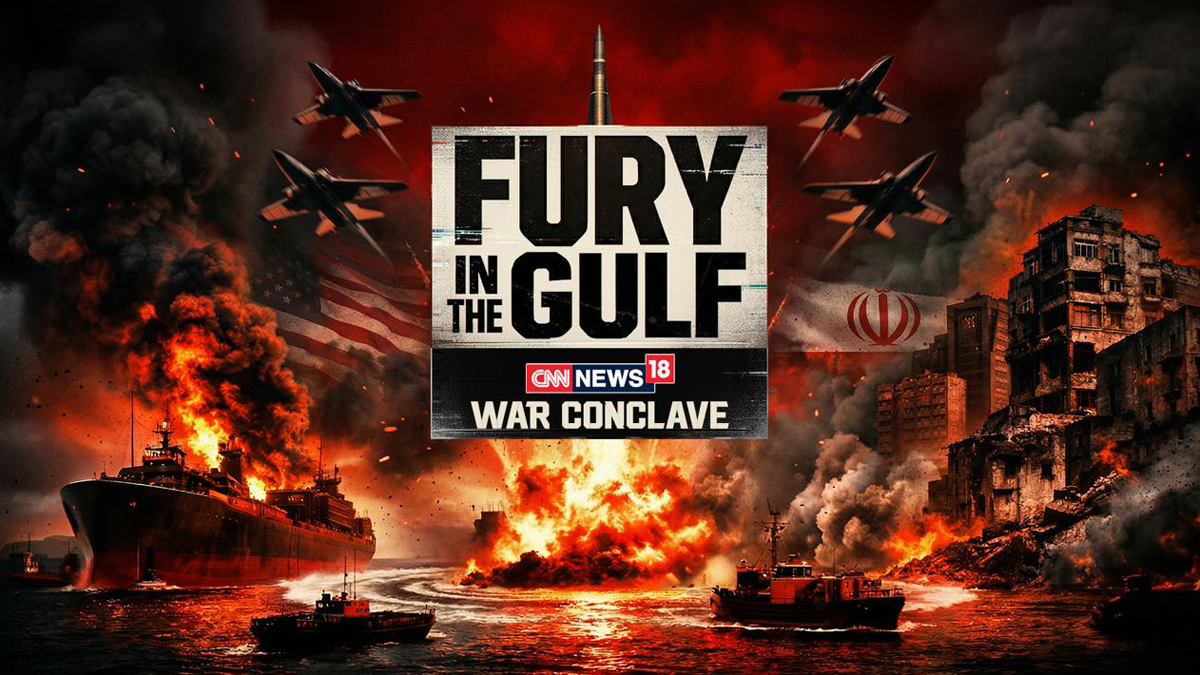
MUMBAI: CNN-News18 is set to host a special three-hour broadcast, Fury in the Gulf – War Conclave, on April 7, aiming to decode the escalating West Asia crisis and its far-reaching implications for India.
Scheduled from 4:00 PM to 7:00 PM, the conclave comes at a time when tensions between Iran and the United States are reshaping global geopolitics and triggering economic uncertainty. With India’s deep energy ties, trade links and large diaspora in the Gulf, the developments carry significant domestic relevance.
Built around the theme ‘Conflict, Consequences, and The Future,’ the programme will feature six curated sessions combining one-on-one interviews and panel discussions. The focus is to cut through the clutter and offer viewers a clearer understanding of the fast-evolving situation.
Key sessions include ‘Diplomacy in Times of War’ featuring Shashi Tharoor, and ‘World After the Iran Conflict’ with voices such as Ram Madhav, Reuven Azar, representatives from the European Union and the Iranian Deputy Envoy. Another session titled ‘Another Dunkirk?’ will bring together K. J. S. Dhillon and Jitin Prasada among others.
CNN-News18 editorial affairs director Rahul Shivshankar said, “In times of war, clarity becomes the most powerful tool. Fury in the Gulf – War Conclave brings together credible voices to address the questions and confusion that arise amid an overwhelming influx of information.”
He added that the initiative is aimed at delivering “facts, perspective, and insight” at a time when misinformation can easily cloud public understanding.
Echoing the sentiment, CNN-News18 CEO– English and business news Smriti Mehra said the conflict marks a defining global moment, with consequences that extend well beyond the region. She noted that the conclave seeks to present the crisis with “depth, nuance and responsibility” so audiences can better grasp its real-world impact.
As geopolitical tensions continue to dominate headlines, the conclave positions itself as an attempt to bring order to the noise, offering viewers a structured, insight-led look at a complex and rapidly shifting global situation.






