News Broadcasting
RBNL ex-CBO Khanchandani joins Arnab’s Republic


MUMBAI: : Vikas Khanchandani former RBNL chief business officer has joined Republic as the chief executive officer. With over two decades of working across ad sales, digital, television and media technology, Khanchandani will play an integral role to grow Republic as an independent media tech company.
Arnab Goswami has been recruiting for catalysts for his team who would make his new venture a comprehensive set up for the new media landscape. Republic will be an independent platform for journalists and content professionals. The venture aspires to create a movement that will put the power of journalism into the hands of the citizens, and will be India’s first footprint into global journalism.
Commenting on the same, Republic founder Arnab Goswami said, “We are delighted to welcome Vikas on board. He is a great leader and joins us with very strong industry experience across multimedia platforms. Together, we believe, we will create the No. 1 News Channel in India.’’

Khandchandani added, “I am looking forward to working with Republic as I believe in the core objective and vision of launching the first global independent media venture. I am certain we will change the media scenario in India”
Khanchandani is a senior media industry professional with nearly two decades of experience. After an initial stint of running his family business in Medium Enterprise Financing and Estate Management, he joined STAR TV as a key member of the Strategic Planning and Management team which worked on sales strategies for the entire bouquet of channels across multiple genres. After STAR TV, Khanchandani was part of the core leadership team which set up NDTV Media. As Senior Vice President – Advertising Sales in charge of the English and Hindi news channels of NDTV, he played an important role in helping the NDTV network optimally monetize its revenue potential. Apart from co-founding Aidem Ventures, he played the dual role of managing existing businesses of Aidem with his operational skills. For the next 5 years, he drove the various businesses with undying enthusiasm, raw energy and a keen sense of fair play and vision, expanding into Digital advertising in a major way.




News Broadcasting
Kamlesh Singh receives Haldi Ghati Award from MMCF
India Today Group editor honoured for three decades of journalism at Udaipur ceremony.
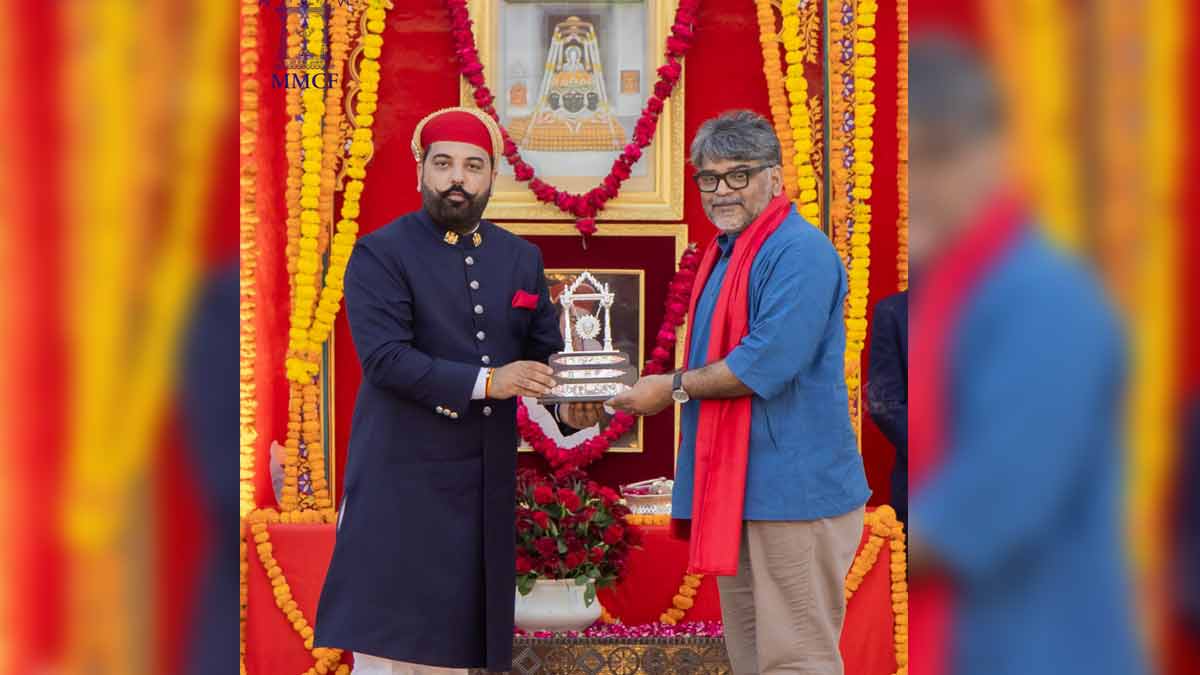
MUMBAI- Kamlesh Singh just turned a lifetime of sharp words into a shiny shield because when journalism wakes up a society, even the Maharana of Mewar wants to pin a medal on it.
The Maharana of Mewar Charitable Foundation (MMCF) conferred its prestigious Haldi Ghati Award on Kamlesh Singh, a senior editor at the India Today Group, during a ceremony in Udaipur on 15 March 2026. The national award, instituted in 1981-82, recognises “work of permanent value that initiates an awakening in society through the medium of journalism.”
Singh, who leads several editorial initiatives including Aaj Tak Radio, the Teen Taal community and The Lallantop, was presented the honour by Lakshyaraj Singh Mewar, Managing Trustee of MMCF. The citation highlighted his three decades of contributions to Indian media, innovations in digital journalism, mentoring young reporters, and his popular podcast persona “Tau” on Teen Taal, which fosters thoughtful public discourse.
The Haldi Ghati Award, named after the historic Battle of Haldighati symbolising valour and resilience, is one of four national awards given annually by MMCF. Past recipients include Tavleen Singh, Piyush Pandey and Raj Chengappa.
Other honourees this year included Padma Vibhushan Pt Hari Prasad Chaurasia, Vedamurti Devvrat Rekhe, Treeman of India Marimuthu Yoganathan, Vir Chakra Capt Rizwan Malik, and US-based researcher Molly Emma Aitken, who received the Colonel James Tod Award for contributions to understanding Mewar’s spirit and values.
In an era where headlines often shout louder than substance, the MMCF quietly reminded everyone that real journalism isn’t about noise, it’s about the quiet, persistent work that stirs society awake, one thoughtful story at a time.







