News Broadcasting
Ravi Shankar Prasad plans to create a digital ecosystem

NEW DELHI: Information technology minister Ravi Shankar Prasad today said social media has created a link between politicians and people in real time and 40 million users advise the prime minister Narendra Modi on social media everyday.
He said through steady and consistent monitoring, it became possible to create a more participatory system. In fact, the Swachh Bharat logo was created by Indian netizens. “I’m proud of social media. I support freedom of speech on social media. People criticise us, appreciate us and sometimes they blast us. But it’s always a pleasure to know their mind.”
Addressing the two-day India Today Conclave in Mumbai, he said creating a digital eco system for a population of 1.2 billion is by no means an easy task, and to make it one which is not just inclusive, but also economical is daunting, but necessary. The digital economy will grow to become a $1 trillion economy in the next 5 to 7 years, and there are 1.08 billion mobile phones and 350 million smartphones in India today.

The minster announced that Adhaar was developed at an impressive expenditure of $2 per day and the government authenticates 30 million transactions daily at no cost.
He said his Ministry was encouraging women — dalits, Kashmiris and more — to provide common services digitally at the click of a button. This is both empowering and important for India to develop and include in its journey the strata of society that require upliftment. He also spoke of poor farmers, initially with few opportunities and access to mandis, who now have 250 mandis available to them at the click of a mouse in order to more easily and effectively sell their ware. “I want to create a digital ecosystem for the country’s infrastructure,” he said.
“The Prime Minister has coined the term IT + IT = IT, which means, Indian talent plus information technology equals to India tomorrow.”
“The vision is to make India the biggest hub for technological manufacturing,” he said adding that India is fast becoming the biggest hub of electronic manufacturing. Prasad stated that from Rs 110 billion invested in the sector, the amount today stands at a whopping Rs 1270 billion.
Responding to President Donald Trump’s policy on visa restrictions in the United States, the Minister said an Indian presence in the IT sector abroad is indispensible not only for their country but also for India. Indian IT companies in America generate $200 billion plus tax. “America should know, Indians don’t steal jobs, they create them,” he said.
Prasad explained how campaigns such as Make In India, Start Up India and Stand Up India were designed to bridge the divide and make technology more accessible. “Digital India is more for the poor and underprivileged people,” he said.
The execution has thus far been successful, Prasad asserted. With the creation of Rs 270 million Jan Dhan accounts, linked to mobile phones and aadhar cards, subsidies on ration and other necessities go directly to people’s bank accounts. “We have saved Rs. 500 billion which used to be pocketed by fictional persons,” he said. Connecting and simplifying business for poor farmers has been a successful endeavour. “Today 250 mandis are available to poor farmers at a click of a button to sell their goods,” he said.
The Minister celebrated the ideas of Digi Gaons, engagement on social media and his impressive projection that the digital economy will grow to $1 trillion in the next five to seven years. “We don’t want to miss the Digital Revolution,” he said. “We request you to trust the enormous pull of technology.





News Broadcasting
DNPA names Puneet Gupt chairperson; Anant Goenka steps in as vice chairperson
Leadership reset comes as digital news grapples with AI-led disruption and policy battles
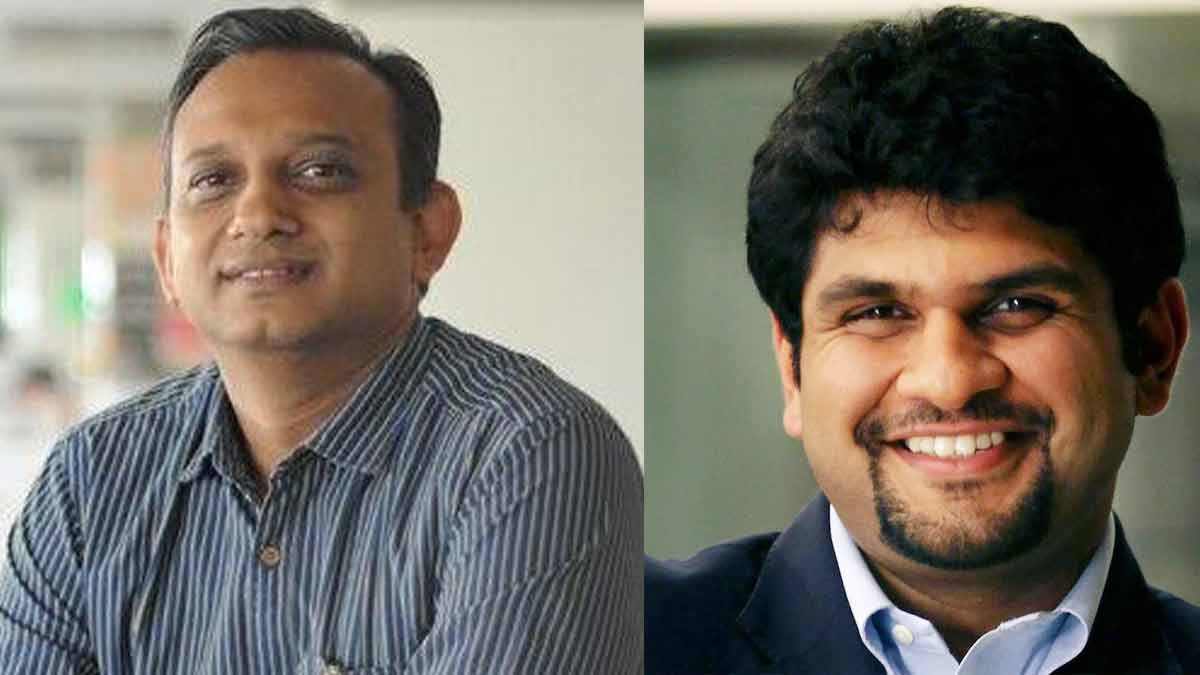
NEW DELHI: India’s digital news lobby has a new pilot at the helm just as the industry stares down its next big disruption. The Digital News Publishers Association (DNPA) has named Puneet Gupt, chief operating officer at Times Internet, as chairperson, succeeding Mariam Mammen Mathew at the end of her two-year term.
Gupt, who previously served as vice chairperson, steps into the top role with deep familiarity of the body’s agenda, ensuring a smooth transition at a time when publishers are recalibrating for an AI-shaped future. Anant Goenka, executive director at The Indian Express Group, has been appointed vice chairperson, while Dhruba Mukherjee continues as treasurer.
“Digital news publishers are navigating one of the most consequential shifts the industry has ever seen, from how content is discovered to how it is valued in an AI-driven world. DNPA’s role as a unified industry voice has never mattered more. My focus will be on ensuring that our members are not just responding to these changes, but actively contributing to the policy and industry frameworks around them,” said Puneet Gupt.
Goenka underscored the need for collective action as the sector evolves. “This is an important moment for DNPA and for the digital news publishing industry in India. There is real value in publishers coming together, sharing perspectives, and building a common understanding of the opportunities and challenges ahead. I look forward to contributing to that effort with DNPA members,” he said.
Outgoing chairperson Mariam Mammen Mathew called it a timely transition. “It has been a privilege to lead DNPA at such a pivotal time for the industry. I am confident that under Puneet’s leadership, DNPA will continue to grow in influence and impact. I wish the new team every success,” she said.
Sujata Gupta, secretary general and chief executive officer at DNPA, framed the shift as a springboard for the next phase. “This transition marks an exciting new chapter for DNPA. We have spent the last few years building the credibility, relationships, and frameworks that allow us to engage meaningfully on the issues that matter most to our members. With Puneet and Anant at the helm, we are well-positioned to translate that foundation into tangible outcomes, on policy, on fair commercial frameworks, and on ensuring that digital news publishing remains a sustainable and vital part of India’s information ecosystem,” she said.
The leadership rejig lands at a moment when digital publishers are battling shifting discovery patterns, platform power and the economics of AI. For DNPA, the message is clear: the next phase will be less about reacting and more about shaping the rules of the game.








