I&B Ministry
Rajya Sabha panel approves GST with minor changes, several parties attach dissent notes

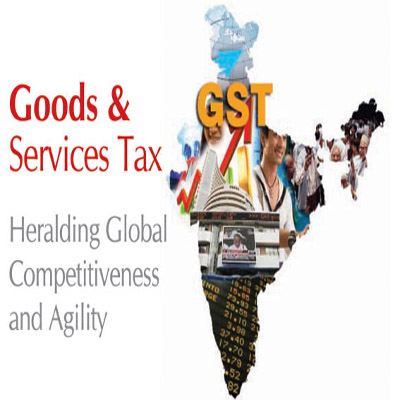
NEW DELHI: Even though the Rajya Sabha Select Committee on the Goods and Services Tax (GST) gave its green signal today, the going will not be easy in view of the fact that the opposition – which is in a majority in the house – may ultimately have its way.
The Committee endorsed almost all the provisions and also agreed to demands of parties like the Trinamool Congress for a five-year compensation to states.

Chaired by the Bharatiya Janata Party’s Bhupender Yadav, changes were suggested in some clauses pertaining to compensation, and levy of one per cent additional tax by the states on inter-state supply of goods.
The government plans to implement GST from April next year, which has been pending for several years with every Finance Minister making promises. The GST is expected to provide great relief as it will subsume within itself many other taxes being levied at present like excise, service tax, and local levies.
The report placed in the House today contains dissent notes from Congress, AIADMK and Left parties, which have expressed their opposition to the GST Constitution Amendment Bill in the existing form.
The GST Bill, which has already been approved by the Lok Sabha where the ruling party is in majority, will now be taken up by the Rajya Sabha for discussion. Being a Constitution Amendment Bill, it has to be approved by two-thirds of the members present and voting.
The Committee has suggested that the provision in the bill that provided Centre “may” compensate states for a period up to five years for any revenue loss be substituted by a commitment for compensation for five years.
In a clause relating to levy of one per cent additional tax by states, the committee suggested that the levy should only be on “all forms of supply made for a consideration.”
It, however, retained the representation of the Centre and States at the proposed level at one-third and two-third despite demand to reduce Centre’s representation to one-fourth.






I&B Ministry
MeitY proposes tighter rules for digital platforms and intermediaries
Fresh amendments aim to formalise government directions and expand content oversight.

MUMBAI: When the rulebook gets an upgrade, even the internet might need to sit up and pay attention because India’s digital regulators are clearly not scrolling idly. India’s technology regulators have proposed a fresh set of amendments to the country’s digital media and intermediary liability framework, seeking to expand oversight of online content and formalise the government’s authority to issue binding directions to platforms.
In a notice issued on 30 March, the Ministry of Electronics and Information Technology (MeitY) invited public comments on changes to the Information Technology (Intermediary Guidelines and Digital Media Ethics Code) Rules, 2021. The revisions are described as “clarificatory and procedural” but are clearly aimed at strengthening compliance and enforcement.
At the heart of the proposal is a significant shift in how intermediaries, including social media platforms, respond to government advisories. A newly inserted provision would make compliance with official “clarifications, advisories, directions, standard operating procedures and guidelines” a formal part of the due diligence obligations required for platforms to retain legal immunity under Section 79 of the Information Technology Act. This change effectively elevates government communications from guidance to enforceable obligations, tightening the regulatory loop between the state and digital platforms.
The amendments also expand the scope of content oversight under Part III of the rules, which governs digital media ethics. The proposed revisions clarify that the code will apply not only to publishers but also to intermediaries hosting news and current affairs content uploaded by users. This could bring user-generated news content more directly within the ambit of regulatory scrutiny, a move likely to raise questions about platform liability and editorial responsibility.
Further, the government has proposed broadening the mandate of the Inter-Departmental Committee, a key oversight body. The committee would no longer be limited to adjudicating complaints but could also take up matters referred directly by the ministry. This shift signals a more proactive regulatory posture, allowing authorities to initiate reviews without waiting for formal grievances.
The draft builds on an already expansive framework. The existing IT Rules impose detailed due diligence requirements on intermediaries, including obligations to remove unlawful content within tight timelines, maintain grievance redressal systems, and ensure traceability in certain cases. Recent amendments have also introduced provisions addressing synthetically generated content, requiring platforms to label such material and deploy technical measures to prevent misuse.
Officials framed the latest proposals as necessary to ensure an “Open, Safe, Trusted and Accountable Internet,” while improving “legal certainty” and the enforceability of regulatory directions.
Stakeholders have been invited to submit feedback by 14 April, setting the stage for what could become another consequential evolution in India’s digital governance regime.
In the fast-moving world of online content, these tweaks suggest the government is keen to keep the guardrails firmly in place – because when the internet grows wilder, even regulators feel the need to hit refresh on the rulebook.