DTH
Qualcomm announces finalists for its wireless reach Brew application funding programme

MUMBAI: Qualcomm a developer and innovator of code division multiple access (CDMA) and other advanced wireless technologies, has announced the selection of finalists for the company’s wireless reach Brew application funding programme.
As part of Qualcomm’s wireless reach initiative, the USD $ one million fund is designed to increase the availability of useful wireless applications in countries around the world.
Qualcomm’s wireless reach Brew application funding program has challenged companies to create the most innovative Brew public service application in one of five areas: healthcare; education; public safety; governance; and the environment.

Qualcomm will award five grants in varying amounts for up to a total of USD $500,000 for the most innovative proposals for Brew applications. The remaining amount will be used to put one or more of the winning proposals into action through new or existing wireless reach projects.
Finalists were selected based on a careful review of all applications and include 21 developers from 19 organisations in six countries (in alphabetical order):
– Activepackets – Copiague , New York, U.S.A
– Agrocom software technologies pvt.ltd IIT Bombay – Mumbai , India
– Astute systems technology pvt ltd – Indore , India
– Bandung institute of technology – Bandung , Indonesia
– Beijing InfoQuick SinoVoice speech techology Corp. – Beijing
– Beijing Justel technologies Co., ltd. – Beijing
– BeWell mobile technology, Inc. – Walnut Creek , California, U.S.A
– BookBox India pvt. ltd. – Pondicherry , India
– Digital Ignite – Vienna , Va. , U.S.A
– dotPhoto, Inc./DBA exclaim – West Trenton , New Jersey, U.S.A
– MOBSYS informatica ltda – Sao Paolo, Brazil
– MyFoodPhone – Quebec , Canada
– Spiral Jungle, LLC – Carlsbad , California, U.S.A
– SquareLoop, Inc. – Reston , Va. , U.S.A
– Tata consultancy services – Thane , India
– Tata consultancy services – Mumbai , India
– UC Berkeley – Berkeley , California, U.S.A
– UC Berkeley – Berkeley , California, U.S.A
– UCLA center for international emergency medicine/project HOPE/Konami digital entertainment – Los Angeles
– Zaxis technologies – San Diego
– ZMQ software systems – New Delhi
Qualcomm chief executive officer Paul E Jacobs said, “Qualcomm is proud to recognize these finalists on their dedication to creating Brew applications that will have a positive impact on people’s lives.”
“We are committed to helping increase the availability of useful Brew applications worldwide and we’re pleased to note that the applications we received are creative, inspiring and show a true consideration for the challenges that underserved communities face today. Our goal is to have wireless reach Brew applications from one or more of the grant recipients in action by the summer of 2007,” he added.
The 21 finalists have been contacted individually to submit a more in depth proposal by December 31 2006. From these proposals, Qualcomm will announce the recipients of the five individual grants by mid-February 2007.
Qualcomm’s wireless reach initiative seeks to connect communities that have limited or no telecommunications access through the use of 3G technologies.
Brew operators and their subscribers benefit from several offerings, which include: uiOne for fast access to high revenue services on wireless devices; deliveryOne for differentiated operator-managed support and delivery of advanced wireless data content and services; and marketOne for a quick-to-market, hosted, scalable content delivery service that includes media titles, flexible management and monetisation, content provider settlement and business intelligence services.




DTH
DD Free Dish e-auction revenue dips to Rs 642 crore as slot sales fall
Revenue dips as revised norms reshape bidding in 94th round
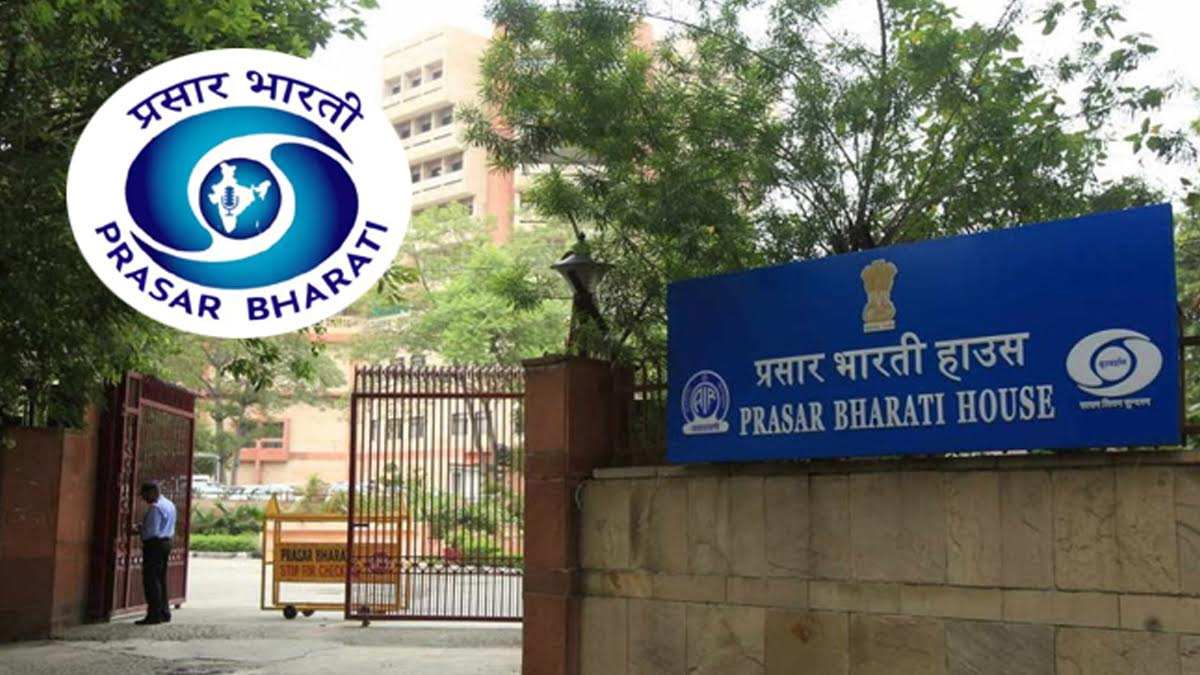
NEW DELHI: Prasar Bharati’s DD Free Dish has closed its 8th annual, and 94th overall, e-auction for MPEG-2 slots with total collections of Rs 642 crore for the period April 1, 2026 to March 31, 2027.
That is lower than last year’s Rs 780 crore haul, with 55 slots sold compared with 61 in FY25–26. The softer topline reflects both a slimmer inventory and a recalibrated auction framework.
This was the first auction conducted after amendments to the e-auction methodology, including tighter eligibility norms and a revised reserve price structure for MPEG-2 slots. The stated aim was greater transparency and more serious participation. The immediate outcome appears to be more measured bidding in certain categories.
Day one set the tone. Eight slots were sold, six in the premium Bucket A+ and two in Bucket A. The strong early action in A+, which typically houses Hindi GECs and movie channels, reaffirmed the enduring appeal of mass Hindi programming on the platform.
Among the broadcasters securing slots in the initial rounds were Zee Entertainment Enterprises, Sony Pictures Networks India, Viacom18’s Colors network, Sun Network and Shemaroo Entertainment. Their continued presence signals that, despite the pull of digital platforms, Free Dish remains a strategic must have for legacy networks chasing scale in price sensitive markets.
The final bouquet of 55 channels leans heavily towards Hindi news, movies, devotional fare, Bhojpuri and regional programming.
In Hindi news, familiar heavyweights such as Aaj Tak, ABP News, India TV, News18 India, Republic Bharat and Zee News made the cut. Entertainment and movie offerings include Colors Rishtey, Star Utsav, Dangal TV, Sony Pal, Shemaroo TV, Goldmines, B4U Movies and Zee Biskope. Devotional viewers will find Aastha, Sanskar and Sadhna Gold among the selected channels.
Regional representation includes Sun Marathi, Fakt Marathi, PTC Punjabi and GTC Punjabi.
Equally telling were the absences. Broadcasters such as Big Magic, Filamchi Bhojpuri, India News, Bharat Express, Movieplex Maithili, TV9 Marathi, Shemaroo Marathibana, Zee Chitra Mandir and Satsang did not participate. The pullback is particularly visible across Marathi, Bhojpuri, Maithili and spiritual programming. Industry observers point to the revised reserve prices, tighter eligibility norms and a reassessment of commercial viability as possible factors.
DD Free Dish continues to beam into over 40 million homes, largely in rural and semi urban India. For advertisers and broadcasters alike, it offers efficient access to Bharat markets where pay TV penetration remains uneven and OTT subscriptions are limited.
The moderation in revenue this year may be read as a pause rather than a retreat. Fewer slots, a reworked auction playbook and evolving broadcaster strategies have clearly shaped outcomes. Yet premium Hindi entertainment retains its pull, and the platform’s mass reach remains hard to ignore.
As the FY26–27 line-up settles in, the mix of winners and walkaways will define the private satellite channel landscape on DD Free Dish for the year ahead.








