iWorld
Projects are allotted to creators rather than the brand: Victor Tango founders Vaibhav and Tabassum Modi

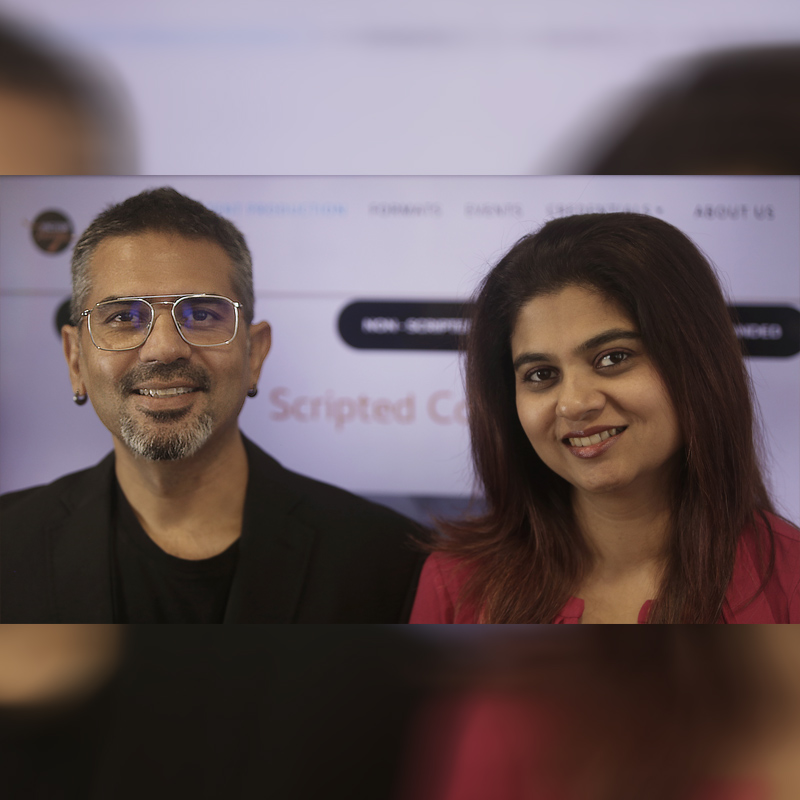
Mumbai: When someone says ‘Victor Tango’, what comes to mind? Some sort of American intelligence code? This Mumbai-based content creation duo is no less than any international intelligence agency when it comes to delivering the right content.
Victor Tango Entertainment, named after the founders’ initials Vaibhav and Tabassum Modi, has gone on to build profitable content businesses by producing original content, live events, collaborations, and adaptations of published works for the screen.
Victor Tango Entertainment is a content powerhouse with a stellar portfolio that includes scripted series, non-scripted format shows, branded content, events, and feature films.

Producer-writer-creator Vaibhav Modi has over two decades of experience in the media industry. His career has been highlighted by key leadership roles at media conglomerates such as Star India, Endemol Shine, Viacom 18, and Sony Entertainment Television. Tabassum Modi is a serial entrepreneur and business leader with 17 years of cross-functional experience in the media and education sectors. She is a multi-hyphenate who produces content, manages events, and considers business expansion.
Some of their popular work includes shows like Times of Music (MX Player), It’s Not That Simple (Voot), TVF Tripling (TVF), Grilled (Fox Life), Bekaaboo (Alt Balaji), The Story (Zee5), MTV Nishedh (MTV), amongst others. In the pipeline are a few film scripts, original series, and non-fiction formats, along with many projects in development with leading OTT platforms.
Victor Tango has a vast slate of wins to its credit, namely Filmfare OTT Awards, Asian Academy Creative Awards, EEMAX Global Awards, Wow Awards Asia and Global Event Awards. Victor Tango has successfully showcased its prowess by disrupting the digital, events, and broadcast spaces with quality innovations.
Their next ambitious outing is a period espionage drama, Mukhbir – The Story of a Spy, in association with Zee5. In conversation with Indiantelevision.com, Victor Tango’s co-founders Vaibhav Modi and Tabassum Modi shared the experiences of their journey, learning, business, and the future of OTT.
Edited excerpts:
On the birth of Victor Tango
Vaibhav: The inception was an intriguing type of integration. There was a time when I was primarily focused on commissioned content projects. And Tabassum was concentrating on short-format content and events. And we had our own areas of expertise. And we realised that these two businesses can be run in a very synergistic way, because at the end of the day, the front of the house in both businesses is ideas and creativity, and the back of the house is basically finance and production.
So one business cycle is actually supported by the cycle of the other. So you keep a pool of common resources that are used across projects because their bandwidth and skill sets are mostly in the same ballpark. As a result, we have x = x.
On the journey
Vaibhav: It’s very 360-degree because it spans across genres. We have worked with broadcasters and for broadcasters; with platforms, for platforms and for production companies; and we’ve been entrepreneurs. So there’s a multitude of roles that we’ve had and also in terms of the kinds of content we’ve created—it ranges from short films to long-form series in non-scripted and scripted. So versatile is a word that could summarise the experience. There was tonnes of learning and a lot of fun.
On the learning
Vaibhav: OTT is a comparatively young industry, and it’s almost like we have been in the thick of it, at the heart of the revolution. When OTT appeared on the horizon, the emphasis shifted to digital in a more refined manner. We made some very deliberate decisions to focus on OTT while maintaining our television experience, and in the last four to five years, we’ve had great opportunities that have kind of defined who we are, and some of our work has been really, really appreciated and critically acclaimed.
Incorporating the best practices we’ve learned from a variety of situations into our professions is one of the main aspects of where we’ve been. Another thing is that we have been able to learn the most efficient methods of doing things by working with some of the major companies in broadcast and content development.
Tabassum: We have great discipline when it comes to managing our money and making learning a constant process for us. Furthermore, despite our size, we are a successful business. And we’ve been profitable ever since we started, which is something not many people can claim with great pride.
The second factor is universality. As I mentioned, we produce both scripted and unscripted television, as well as live events. Because of our wide range of activities, we are able to consistently produce work in either stream. And one of the most important lessons we’ve learned along the way is that.
On the roles
Tabassum: We all have our strengths; thus, it is obvious that we don’t define roles in that way. Vaibhav is the expert when it comes to the creative aspect of the company, and I look into anything related to the business’ finances or finances in general. But when it comes to operations, I believe we are both equally involved. We support each other on the project, and we do what is necessary for the project. Thus, we are fairly flexible, and that’s how we manage the company.
Vaibhav: In our sector, projects are actually given to people rather than organisations because of a certain level of confidence in someone’s ability to come up with original ideas or carry them out. Unless you have a really strong brand around you, or around a large library of work or something, these things come from just knowing people. As a result, in this situation, we frequently wind up serving various clients and projects. One of us takes the initiative on the project, with the other serving as the house’s back. According to the nature of the project and occasionally who we are servicing, the same thing may be reversed on a different project. Therefore, our demarcations are not vertical.
On fiction vs non-fiction
Vaibhav: If I were to differentiate between scripted and non-scripted, non-scripted essentially arrives on a structure or skeleton, which we now refer to as a format. It defines the cornerstones of the content and within that you’re creating stories, as well as the format in which they are created.
And from the perspective of execution, what happens is that a long format or non-scripted series is basically the sum of a lot of people’s efforts; a lot of research; a lot of searching for talent; a lot of finding the stories outside; and then bringing them all in and putting them up in a certain interesting kind of storytelling with passion.
On the transition of content
Vaibhav: One significant change in our functioning that occurred in the last five years is that the majority of what we produce today is based on the brief, which can be very broad or very specific. Previously, it was always necessary to reach out to multiple broadcasters with multiple pitches, constantly adjusting what you had to offer, running like a bit of a catalogue. One big change is that people are spending one to three years in writers’ rooms and doing it like a proper process.
On the line-up
Vaibhav: We currently have two thriller shows in development, one of which is almost finished with the scripts and the other of which is under development with a platform and is at the 60 per cent mark.
A script that we are now developing in-house is a really promising film script.
We aim to create original material.
We are co-producers on a long-term project based on a graphic novel. It’s not in the immediate pipeline, but we’re working toward it because these are things where you break new ground and a lot of innovation goes in both creatively and commercially.
On regional content
Vaibhav: It is obviously on the radar. One of the reasons is my personal affinity for Malayalam cinema that I’ve developed over the last few years. I’ve been following it and have been astounded by the fearlessness of that industry.
It is only because of a different way of functioning that they have been able to come together to create things.
When it comes to the markets I consider, notably the Malayalam market, I humbly and without reservation refer to myself as a student. However, there are many other lessons that may be learned as well.
On short format
Vaibhav: It is not like a shorter format has come now on the horizon. For the last several years, it’s been around, and I’ve experienced working on short format at MTV in 2006-07. With available media, what the short format actually does is democratise the content.
You don’t need to be a producer to make content; it’s very personal and democratic. All you need is a great idea and a very ingenious plan to execute it. And we can actually see how it has given rise to a new ecosystem called influencers.
On the business of OTT
Tabassum: It is a very new market; it’s a very nascent industry. So it is still largely in an investment mode, and how deep the pockets are determines how much risk a platform is able to take in terms of the kind of value of the projects that are put out there.
All platforms are doing projects of different ticket sizes to just hedge out the risk as much as they can, but it’s in everyone’s interest that the business succeeds and eventually turns profitable so that there is good money flowing in terms of the kinds of stories they want to tell and how they want to produce.
Vaibhav: It is the nature of the risk. If I produce something in a commission kind of a model, the short term risk is mine, because I’m trying to manage my finances in such a manner that I remain profitable by the end of it and deliver a vision that has been jointly kind of defined by the platform. If you shift the risk to one side of the sections, then it creates absolute value.
We have a lot of entities to offer financing if we have a ready project. We are evaluating whether it makes sense to do so.
On the future of OTT
Vaibhav: Almost 15-20 years ago, when we began our careers, the same kind of concern was frequently expressed about print as well. People used to say that everything would go digital. Similar things are happening with televisions, but they are showing double-digit growth every year. OTT will undoubtedly continue to grow. Other mediums will also flourish alongside.
Tabassum: The future is very bright; it is a new medium and a fantastic opportunity. Not only for creators, but also for us to discover new talent and for youth to express themselves. There was no such opportunity when we started. Before, there was no such medium through which they could express themselves and be seen and heard. It’s now very simple for them to do so. It also allows us to identify a plethora of new challenges. Not only from an acting standpoint, but also from a technical standpoint.
You can see that many influencers and creators have moved on from short-format to long-format and vice versa. It’s not so much a threat as it is an opportunity for everyone to feed off of one another.
On the investment
Tabassum: We have started the business, run it on our own steam, brought it to a certain level, and are having some discussions about what the next step would be to take that leap in terms of growth. We have a solid portfolio of work and strong financials, we laid the groundwork and established the business.
I believe we’re ready for the next step in terms of how we’ll grow and expand, and I’ve been talking with people about how we can align with them to help in that next phase.
We are very open to such discussions with potential investors and companies are interested in the media as an investment opportunity. On the one hand, in terms of the current ecosystem, the changing business model that Vaibhav mentioned, is something that we are very actively exploring and there are many discussions and changes that are happening in the environment with the way things happen, the way things used to happen, and the way things happen now.
There’s a lot more openness, a lot more discussion, and a collaborative nature in the business of content and as a company, we are open to exploring those options.




iWorld
Samay Raina returns with Still Alive, confronts 2025 controversy in bold comeback special
Comeback set tackles controversy, blending humour with raw storytelling
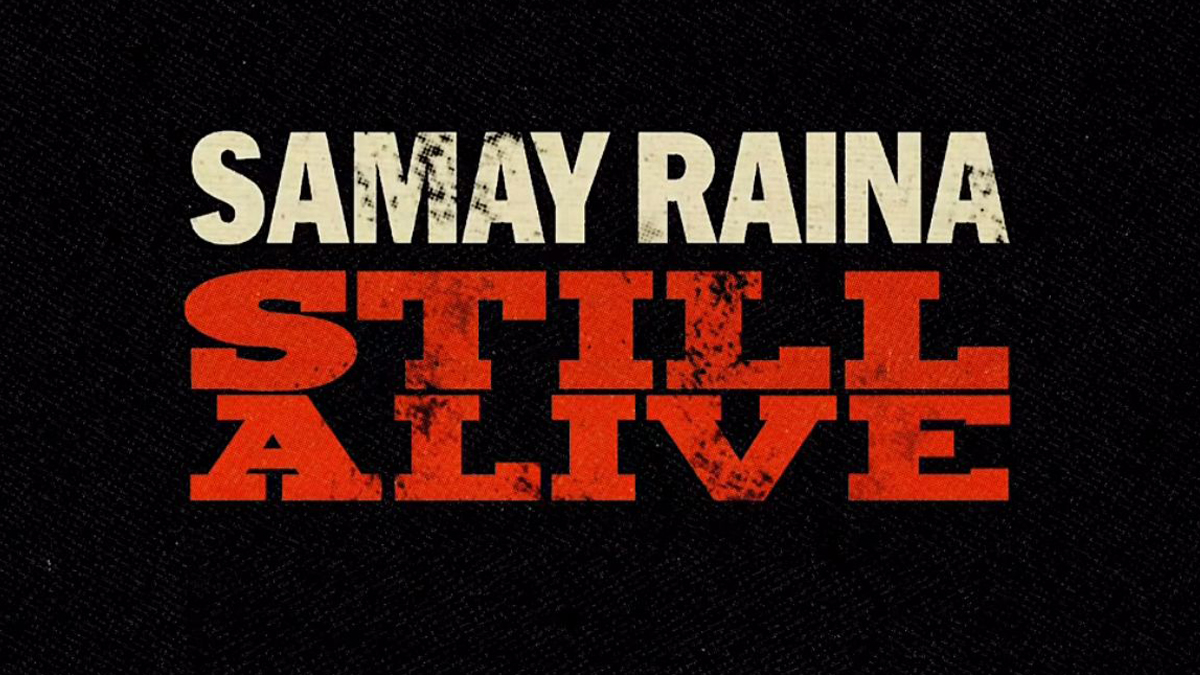
MUMBAI: Samay Raina is set to release his new stand-up comedy special, Still Alive, on YouTube on April 7, 2026, marking a high-profile return following a turbulent year.
The trailer for the special dropped on April 5, offering a glimpse into what Raina describes as a raw and unfiltered set that leans as much on honesty as it does on humour.
Positioned as a comeback of sorts, Still Alive draws heavily from the controversy surrounding his show India’s Got Latent in early 2025. The episode led to legal trouble, multiple FIRs, and a lengthy six-hour interrogation by the Maharashtra Cyber Cell, placing the comedian at the centre of intense public scrutiny.
Rather than sidestep the episode, Raina leans into it. The special reflects on the fallout and his personal journey through it, blending observational comedy with moments of emotional candour. Early audience feedback from live performances suggests the tone is less about rapid-fire punchlines and more about storytelling with bite.
The special was filmed during his global Still Alive & Unfiltered tour, which ran from August 2025 to early 2026. The tour saw Raina perform across major international venues, including the Madison Square Garden Theatre in New York, a milestone that places him among the youngest Indian comedians to take that stage.
The title itself signals resilience. “Still Alive” is a nod to navigating both legal and public backlash while choosing to remain unapologetically authentic, a theme that appears to anchor the set.
With the special set to premiere online, all eyes are now on how audiences respond to a performance that promises equal parts reflection and wit. For Raina, the message is clear. He is not just back, he is ready to be heard on his own terms.






