News Headline
Producers question DD’s decision to call of prime time slot auctions

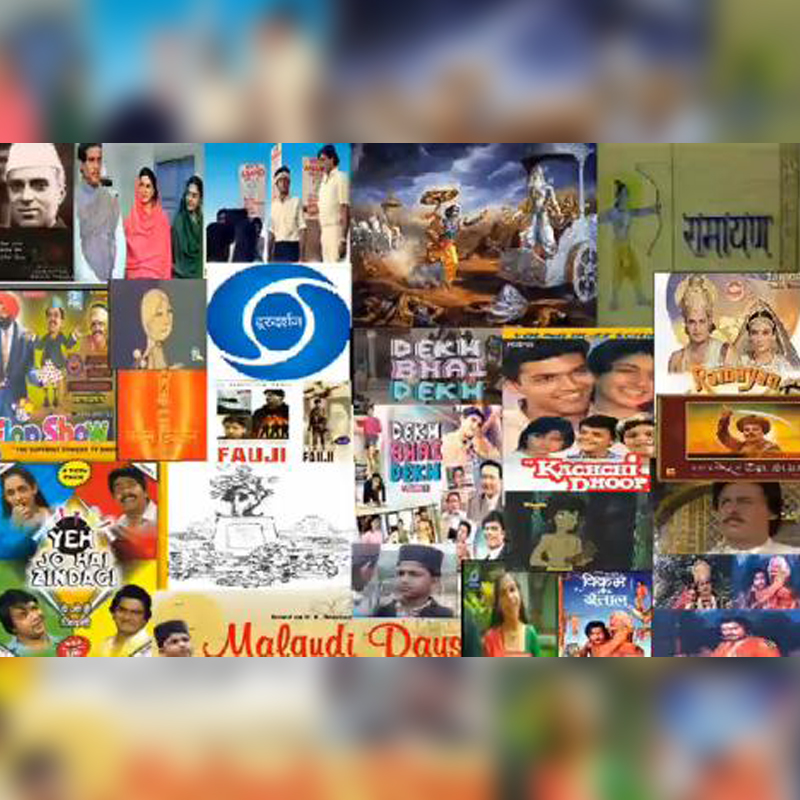
MUMBAI: When Prasar Bharati had announced that it would auction its prime time slots between 7 pm to 11 pm on Doordarshan, the leading production houses in the country had received it with enthusiasm. Here was a chance for them to expand their audience base through DD’s terrestrial distribution network and reach the rural market that so many brands are vying to address. Some of the big name production houses did send in their bids including Balaji Telefilms, Keylight Productions, and Shakuntalam Telefilms. And it seemed that DD was going to get back in the ratings game after all.
But then suddenly a couple of days later, the pubcaster once again announced that it was calling off the entire time slot privatization process after receiving applications for the bid scheduled on 17 and 18 July. DD’s move was met with much skepticism and disappointment.
“The auction being called off was very unfortunate. At the end of the day, these (channels under Prasar Bharati and its content) are all national assets that need to be taken care of in the best possible manner,” says one of the producers who had put in his bid. “If you initiate something like this, you would want the broadcaster to see it through its logical conclusion Though I am sure DD has had its reasons, and that the impact will be felt more on its part, I feel that it’s the nation’s loss.”

The reason for nixing the auction that DD gave was because several applications did not meeting its eligibility criteria, and many defaulted on the application fee of Rs 5000 for the bid — as reported by media. To this, many producers who had applied for the auction have raised their eyebrows.
“I really can’t ascertain the reason. The fact that top producers wanted to bid to enter the auction and be a part of the DD story was reason enough to qualify them. There was no reason to disqualify them on technical grounds. What is the point of having made all the effort and getting disqualified over a Rs 5000 entry fee? I find this reason baseless,” expresses another disgruntled producer.
It is to be noted that Prasar Bharati required eligible bidders to have logged a revenue of at least Rs 5 crore per annum in each of the past three financial years and to have produced at least 300 hours of Hindi general entertainment programming in the past two calendar years.
Undoubtedly, in a bid to ‘introduce fresh programming to get eyeballs back,’ DD had placed its bets high.
But were the promised returns from the said deal as lucrative for the production houses? “When I went through the request for proposals (RFP) document earlier, we found the proposal very unavailable at that point,” divulges a major contributor to India’s Hindi general entertainment channels who chose to opt out of the auctions after going through the particulars of the deal.
“I had personally requested for certain changes in the RFP document, to which DD had answered saying that it can’t be done. DD must have had its own point of view on the matter and I am not denying them of it. Having said that I am not surprised it was called off. The issue was more financial than creative, for that matter. We felt the producers should have been given more space on how to produce, what to produce and the terms of slot retention as well. Given the broadcaster’s parameters, it is best that DD maintained and ran its own prime time,” he further opines.
Seconding this opinion, another veteran producer of the television world (who had been approached to bid but declined) explained why the idea was dubious from the start.
“I knew that the entire process would be botched up right from the start,” he says. “The thinking in DD needs to change. When it is inviting private sector producers to produce content, then it needs to give them what private channels would do in exchange for air time barter deals. At one stage, DD could get by with its high demands from advertisers, and media agencies because it was the only player in the rural areas and had huge audiences. Now the scenario has changed and other broadcasters also have their share of the viewership.
“DD’s processes are bureaucratic and antiquated and it is not responsive to market demands like the private channels are. For us, it didn’t make economic sense to invest in the time slots and produce content for the channel without any guarantee of returns on them. Moreover there is no clarity to DD’s marketing and promotional strategy for the shows. It doesn’t have a system in place for cross promotional marketing between its shows, something very important and inherent to the current broadcast business. Then there is the issue of dealing with DD’s inhouse producers who are too scared and go only by the rules and some of them also misuse the rules.”
After this singular failure of the time slot auctions, observers wonder whether DD will be able to once again go down that street. And whether it will be able to gain the producers’ trust and confidence if it does make another try.
The new DD director general Supriya Sahu has her task out and she has to decide on whether the broadcaster should take the commercial route or stick to its knitting of public service broadcasting and forget about generating revenues. If it is the latter, then she needs to simply ask for more government funds and improve the quality of public service programmes by retraining its pool of existing in-house talent.
Industry is watching to see the path she chooses.
DD officials spoke to indiantelevision.com off the record after the story was published. This is what they said: “Those who sent in names for bidding were disqualified on some ground or other as they failed to fulfil the rules and regulations for the auctions. The auctions have not been cancelled, but suspended for the present.The Prasar Bharati Board will meet on 26 July where it will take further decisions on the matter – this may include some changes in rules and regulations.”
(Updated on 20 July 2016 3:26 pm)






NEW DELHI: Hamdard Laboratories gathered a cross-section of India’s achievers in New Delhi on Friday, handing out the Hakeem Abdul Hameed Excellence Awards to figures who have left their mark across healthcare, education, sport, public service and the arts.
The ceremony, attended by minister of state for defence Sanjay Seth and senior officials from the ministry of Ayush, celebrated individuals whose work blends professional success with a sense of public purpose. It was as much a roll call of achievement as it was a reminder that influence is not measured only in profits or podiums, but in people reached and lives improved.
Among the headline awardees was Alakh Pandey, founder and chief executive of PhysicsWallah, recognised for turning affordable digital learning into a mass movement. On the sporting front, Arjuna Awardee and kabaddi player Sakshi Puniya was honoured for her contribution to the game and for pushing women’s participation onto bigger stages.
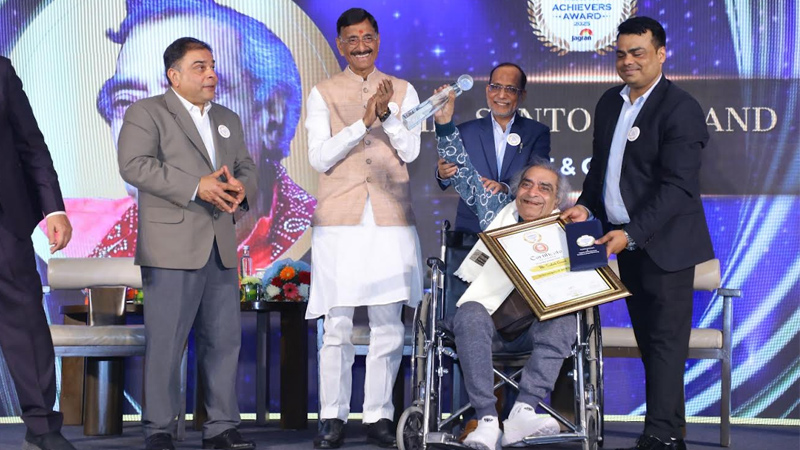
The cultural spotlight fell on veteran lyricist and poet Santosh Anand, whose songs have echoed across generations of Hindi cinema. At 97, Anand accepted the honour with characteristic humility, reflecting on a life shaped by perseverance and hope.
Healthcare honours spanned both modern and traditional systems. Manoj N. Nesari was recognised for strengthening Ayurveda’s place in national and global health frameworks. Padma shri Mohammed Abdul Waheed was honoured for his research-backed work in Unani medicine, while padma shri Mohsin Wali received recognition for his long-standing contribution to patient-centred care.
Education and social development also featured prominently. Padma shri Zahir Ishaq Kazi was honoured for decades of work in education, while former Meghalaya superintendent of Police T. C. Chacko was recognised for public service. Goonj founder Anshu Gupta received an award for his dignity-centred rural development initiatives, and the Hunar Shakti Foundation was honoured for empowering women and young girls through skill development.
The Lifetime Achievement Award went to former IAS officer Shailaja Chandra for her long career in public healthcare and governance, particularly in the traditional systems under Ayush.
Speaking at the event, Hamdard chairman Abdul Majeed said the awards were a tribute to those who combine excellence with empathy. “These awardees reflect Hakeem Sahib’s belief that healthcare, education and public service must ultimately serve humanity,” he said.
Minister Seth struck a forward-looking note, saying India’s young population gives the country a unique opportunity to become a global destination for learning, health and wellness by 2047.
The ceremony also featured the trailer launch of Unani Ki Kahaani, an upcoming documentary starring actor Jim Sarbh, set to premiere on Discovery on 11 February.
Instituted in memory of Unani scholar and educationist Hakeem Abdul Hameed, the awards have grown into a national platform that celebrates those building a more inclusive and resilient India. For one evening at least, the spotlight was not just on success, but on service with substance.






