News Broadcasting
Prior to elections, BBC’s ‘Hardtalk’ comes to India


BBC World’s flagship interview programme, HARDtalk, will have an Indian special starting 12 to 16 April. BBC's presenter Tim Sebastian will travel to India to meet key political and industry figures ahead of the nationwide general elections.
The Hardtalk in India guest details are as follows:
12 April: Arun Jaitley, Indian Law and Commerce Minister, Bharatiya Janata Party (BJP).
India is shining, according to India’s BJP-led coalition government. Growth is surging and the country’s IT industry is so successful in the “outsourcing” of jobs that it’s worrying politicians in the United States. Yet more than a quarter of Indians still live in poverty, in a nation that remains beset by corruption and poor infrastructure. India’s international image was also blighted by the riots in 2002 in the BJP-governed state of Gujarat, in which up to 2,000 Muslims died. Arun Jaitley is asked when will Muslims in Gujarat receive justice, and whether India is shining for all, or just for a lucky few.

13 April: Sheila Dikshit, Delhi Chief Minister, Congress Party
The Congress Party used to dominate Indian politics, ruling for 42 of the 57 years since independence in 1947. Yet, it was heavily defeated in 1998, and few observers predict anything other than a similar fate this year. Led by Sonia Gandhi, the wife of assassinated Prime Minister Rajiv Gandhi, Congress is struggling to combat the tide of good economic news for the BJP-led coalition government. Sheila Dikshit is a rare Congress success story, holding Delhi for her party in the recent round of state elections. Is Sonia Gandhi failing the party, and why don’t India’s burgeoning middle classes want to vote for Congress?
14 April: Vishnu Hari Dalmia, President, Vishwa Hindu Parishad (World Hindu Council)
The Vishwa Hindu Parishad is a Hindu nationalist organisation, affiliated to the governing BJP. It agitates for a Hindu agenda and its leaders regularly deliver inflammatory speeches, particularly regarding the violence in Gujarat in 2002, where up to 2,000 Muslims died in riots that followed the deaths of 58 Hindu pilgrims. International human rights groups accuse the VHP of organising the killings, and one VHP leader has even said that he “praises” Gujarat. Vishnu Hari Dalmia is asked whether his organisation is fomenting racial hatred in India.
15 April: Syed Shahabuddin, President, All India Muslim Majilis-e-Mushawarat
Syed Shahabuddin is a former MP, diplomat and journalist, and for a long time has been a leading voice for India’s Muslims. He has campaigned vigorously for Muslim rights, including the ability to observe personal and family laws that are different from those of non-Muslims. He has attacked the ruling BJP as the “enemy” of Muslims, even though the BJP says it’s trying to reach out to Muslims and is moving away from its hardline Hindu roots. Why does the Muslim community not have more effective political leadership and representation, and is Shahabuddin pursuing special privileges for India’s 150m Muslims?
16 April: Kiran Karnik, President, India’s National Association of Software and Service Companies (Nasscom)
Nasscom is the trade body for India’s IT industry, the success of which is gaining attention around the globe. It’s also worrying other countries, though – in the USA, the “outsourcing” of jobs to India has become a hot pre-election topic, with dozens of laws proposed to prevent further losses of employment. In the UK, unions are campaigning vigorously, claiming tens of thousands of posts are being transferred abroad. Kiran Karnik is asked if Indian IT is about to become the victim of its own success, and what Indian business wants from the country’s next government.




News Broadcasting
CNN-News18 to host Fury in the Gulf conclave on West Asia crisis
Three-hour summit to unpack geopolitical fallout and impact on India
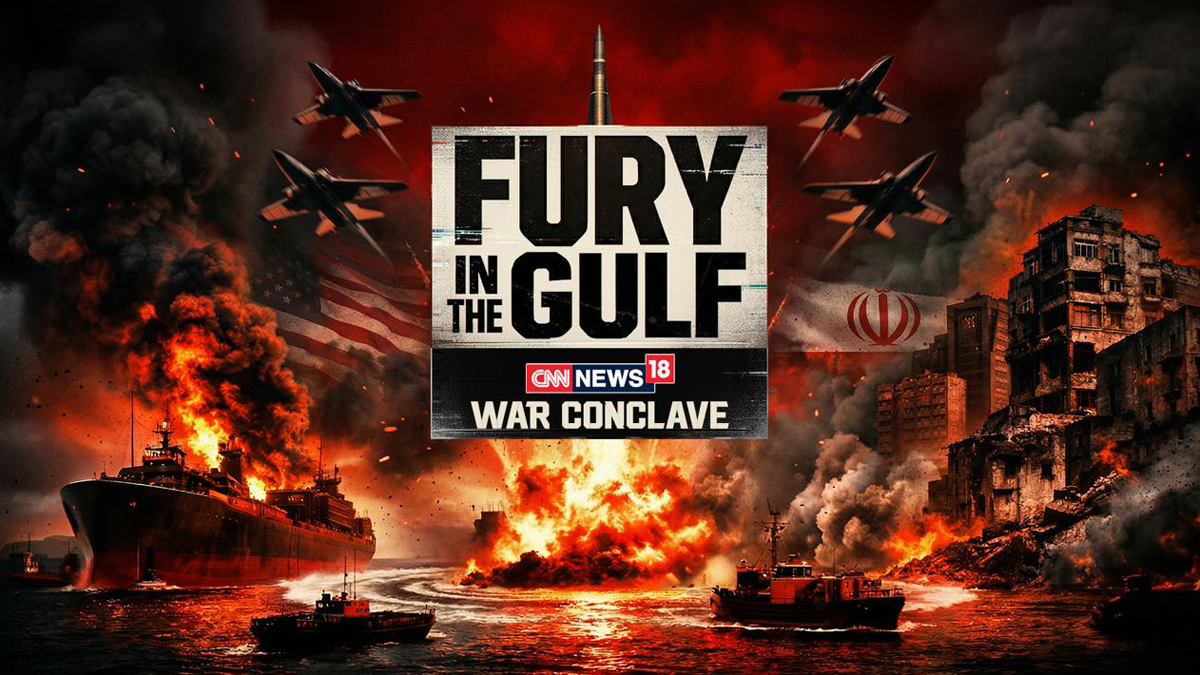
MUMBAI: CNN-News18 is set to host a special three-hour broadcast, Fury in the Gulf – War Conclave, on April 7, aiming to decode the escalating West Asia crisis and its far-reaching implications for India.
Scheduled from 4:00 PM to 7:00 PM, the conclave comes at a time when tensions between Iran and the United States are reshaping global geopolitics and triggering economic uncertainty. With India’s deep energy ties, trade links and large diaspora in the Gulf, the developments carry significant domestic relevance.
Built around the theme ‘Conflict, Consequences, and The Future,’ the programme will feature six curated sessions combining one-on-one interviews and panel discussions. The focus is to cut through the clutter and offer viewers a clearer understanding of the fast-evolving situation.
Key sessions include ‘Diplomacy in Times of War’ featuring Shashi Tharoor, and ‘World After the Iran Conflict’ with voices such as Ram Madhav, Reuven Azar, representatives from the European Union and the Iranian Deputy Envoy. Another session titled ‘Another Dunkirk?’ will bring together K. J. S. Dhillon and Jitin Prasada among others.
CNN-News18 editorial affairs director Rahul Shivshankar said, “In times of war, clarity becomes the most powerful tool. Fury in the Gulf – War Conclave brings together credible voices to address the questions and confusion that arise amid an overwhelming influx of information.”
He added that the initiative is aimed at delivering “facts, perspective, and insight” at a time when misinformation can easily cloud public understanding.
Echoing the sentiment, CNN-News18 CEO– English and business news Smriti Mehra said the conflict marks a defining global moment, with consequences that extend well beyond the region. She noted that the conclave seeks to present the crisis with “depth, nuance and responsibility” so audiences can better grasp its real-world impact.
As geopolitical tensions continue to dominate headlines, the conclave positions itself as an attempt to bring order to the noise, offering viewers a structured, insight-led look at a complex and rapidly shifting global situation.






