News Broadcasting
Prime time content on news channels needs to evolve

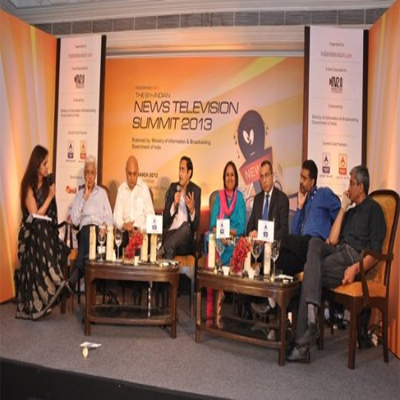
NEW DELHI: What would one expect when editorial heads from some of the premiere News Television channels in the country participate in a panel discussion? Riveting stuff is what comes to mind.
And that’s what unfolded when Barkha Dutt, Karan Thapar, Vivek Law, Rahul Kanwal, Sanjeev Srivastava, Deepak Chaurasia, Ashutosh, all joined in to discuss the issue of, “Differentiating Prime Time News TV Shows/ Content” at the 6th Indian News Television Summit 2013.

Session moderator BBC Global News COO India Preet Dhupar kick-started the session with a question to the panellists on prime time content and its impact on the ultimate stakeholders.
CNN-IBN’s Karan Thapar said, “Content during prime time is in a confused mess. It is all about multiplicity of screeching heads. Anchors instigate people to quarrel on their shows and the ultimate product is unsatisfactory. When news is governed by ratings, it becomes an issue. What is really needed is a structure based discussion; focus on current affairs based debate and bifurcation between news and entertainment.”
Doordarshan’s Sanjeev Srivastava while agreeing with Thapar, added that prime time content has become similar to edit pages of newspapers wherein the thoughts of the editor or the anchor are often reflected. But he also called for a ‘balance between forming opinions and proper dissemination of news.’
Also agreeing with Thapar, Bloomberg TV India Editor Vivek Law said that the concept of talking heads of channels was not new and it was possible that organisations were revolving business model around it.
NDTV Group Editor Barkha Dutt struck a cynical note by saying, “TV channels are stuck in a sluggish cycle. There is nothing interesting happening as channels have failed to tap appealing people who can talk sense. I don’t share too much optimism about prime time space.”
Headlines Today Managing Editor Rahul Kanwal, had a diverse opinion. “Well, I am very proud of what I do and I must state that TV channels have played a stellar role in making politicians accountable and voicing the fact that no one is untouchable.”
He also talked about the audiences’ demand for masala (adding juiciness) to news packaging.
The debate between Hindi and English News channels was sparked by IBN 7 Managing Editor Ashutosh who said that English channels were elitist in their approach and embarked on intellectualism whereas Hindi channels had larger and “many layered” audiences to cater to.
India News Editor-in-Chief Deepak Chaurasia observed, “News channels must understand that people have changed over the years. The environment and approach have also changed. One has to understand this to realise the confused state of affairs during the prime time slot.”
Chaurasia also stressed on the fact that renowned faces were reluctant to come for interviews and discussions on Hindi channels as compared to English ones. Disagreeing with Chaurasia, Kanwal said that he had interviewed many politicians on his Hindi show.
Other subjects that were touched upon in brief were budgetary cuts that production teams faced, the need for more reportage by anchors, whose reputations drew eyeballs to the show.
All the panellists agreed that prime time content should focus more on news which would educate the masses.




News Broadcasting
WITT Summit 2026 concludes in New Delhi
Babar Azam’s comical diving attempt goes viral as league introduces anti-dew measures.
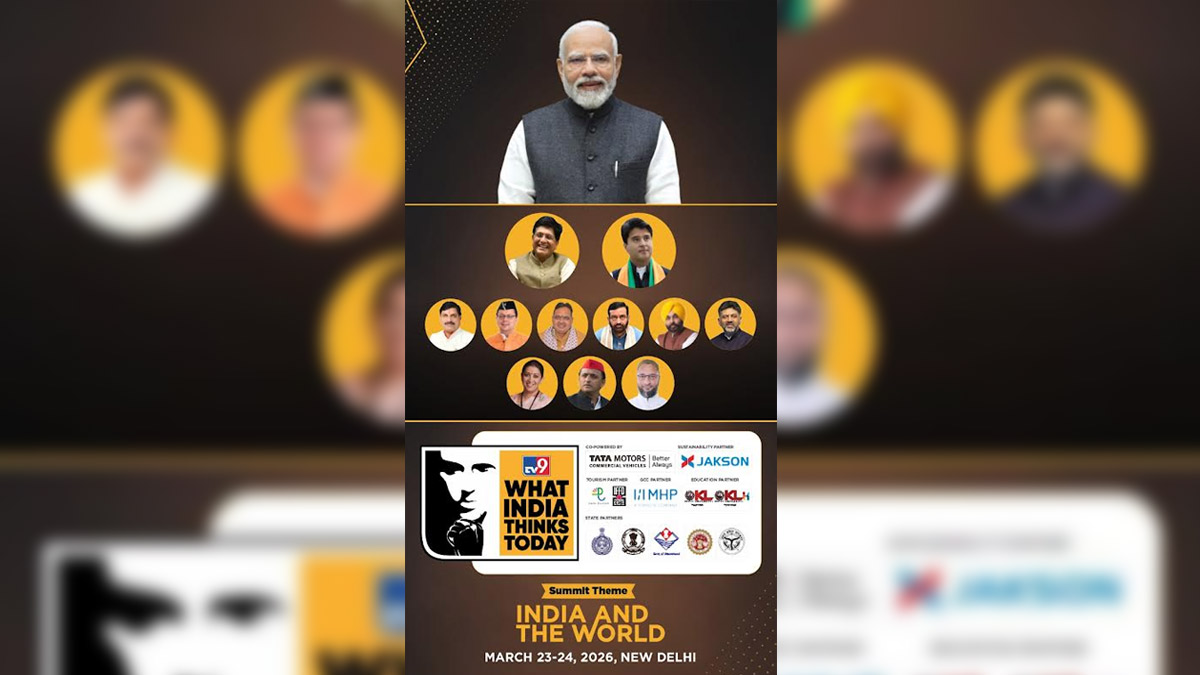
MUMBAI: The WITT Summit just wrapped up with enough big ideas to fill a policy playbook because when India’s leaders, thinkers and icons gather under one roof, even the conversations hit sixes. The eighth edition of TV9 Network’s flagship What India Thinks Today (WITT) Summit 2026 concluded on Saturday after two days of dynamic discussions at its New Delhi venue. India’s largest multi-domain public policy and culture summit brought together political leaders, policymakers, sports icons, artists and technology innovators to examine the forces shaping contemporary India and its global standing.
Prime minister Narendra Modi delivered the keynote address on the theme “India and the World” for the third consecutive year. In a wide-ranging speech, he addressed the ongoing conflict in West Asia, calling for restraint and compassion while highlighting India’s continued development trajectory despite global turmoil.
The summit featured candid conversations with state leaders. Telangana Chief Minister A. Revanth Reddy articulated a people-first governance model and contrasted it with other development approaches. Madhya Pradesh Chief Minister Mohan Yadav declared that Left-wing extremism had been effectively eliminated in his state and highlighted preparations for the upcoming Kumbh Mela. Punjab Chief Minister Bhagwant Mann defended his government’s record, citing the closure of 19 toll plazas and creation of the Sadak Suraksha Force. Karnataka Deputy Chief Minister D.K. Shivakumar expressed confidence in Congress prospects in Assam and addressed recent allegations against him.
On geopolitics and national security, Union Minister Jyotiraditya Scindia outlined India’s ambition to become a builder of trusted digital infrastructure for the world, citing the rapid 5G rollout and village-level 4G connectivity.
Cricket received significant attention. Former India captain Sourav Ganguly praised player freedom and trust as hallmarks of great leadership and named MS Dhoni as the greatest captain due to his World Cup successes. India women’s team bowling coach Aavishkar Salvi credited the BCCI and Women’s Premier League for building a pipeline of world-class talent behind the team’s recent ODI World Cup triumph.
The summit also hosted the inaugural AI² Awards 2026, celebrating the convergence of human creativity and machine intelligence in storytelling and content creation. Poet and kathavachak Kumar Vishwas delivered a nuanced take on India’s concept of Dharma and criticised the recent arrest of an 80-year-old Shankaracharya. Veteran lyricist Sameer Anjaan and storyteller Neelesh Misra reflected on changing music trends and artistic responsibility in the wake of a recent controversy involving Nora Fatehi.
In a country where conversations often run as deep as the Ganges, the WITT Summit proved once again that when leaders, thinkers and storytellers come together, the real winner is public discourse lively, layered and refreshingly unafraid to tackle the big questions shaping India’s tomorrow.








