I&B Ministry
Press regulation not called for, says Modi

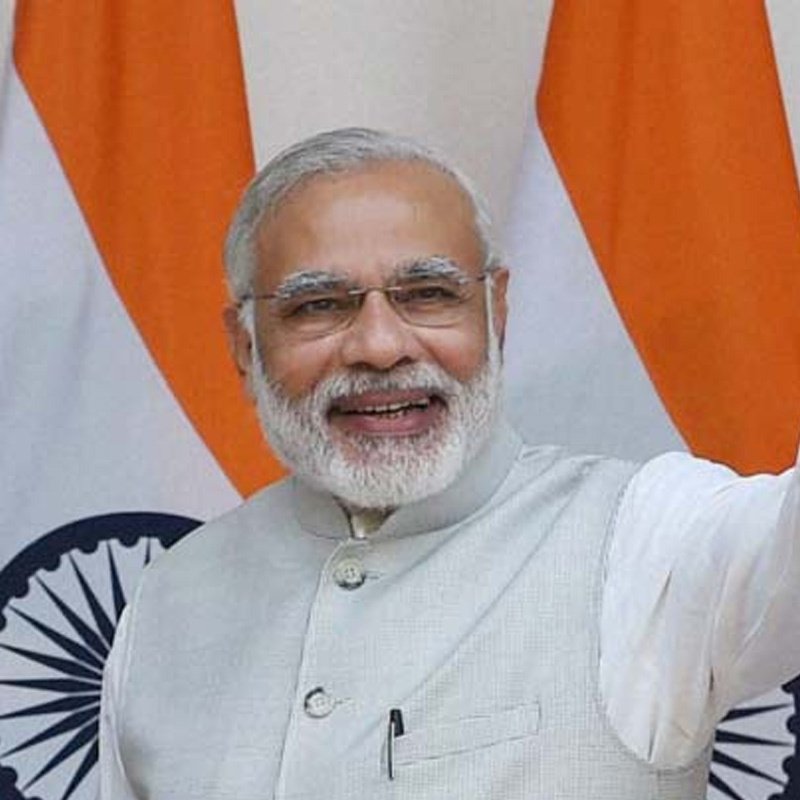
NEW DELHI: Prime Minister Narendra Modi has expressed concern over the recent killings of journalists in some parts of the country. He said journalists were losing their lives in the quest for telling the truth was an extremely serious development.
Modi emphasised the importance of freedom of press, and said press should self-regulate, adding that any external interference or regulation on the press was not called for. Modi was speaking at a function organised by the Press Council of India yesterday on the occasion of National Press Day. The occasion also marks the golden jubilee of the Press Council of India.
Speaking earlier, information and broadcasting minister M Venkaiah Naidu has said that self-regulation in the media space was the best practice which would uphold journalistic ethics and democratic ideals of the Nation.

The government does not believe in imposing ban on any medium of communication, but necessary restraint has to be exercised keeping in mind the protection of sovereignty and integrity of India, security of the nation, and law & order situation in the country, he added.
Naidu recalled that the electronic media coverage of Mumbai terrorist attacks had received a backlash from the Supreme Court, which said “any attempt to justify the conduct of the TV channels by citing the right to freedom of speech and expression would be totally wrong and unacceptable in such a terrorist situation.” He also mentioned the recent case of Pathankot coverage also highlighted how electronic media coverage while reporting could put civilians, armed personnel lives in danger.
Speaking about the role of the regional media, the minister said the media assumed importance at the regional level due to its proximity with local communities and local language which enhances the participatory potential of citizens. The regional media played an important role in building participatory democracy by reaching out to all the sections of the society and also created an informed citizenry. In a federal polity, regional media with its reach could help align the interests of states with that of the nation thereby enabling the prime minister’s vision of cooperative federalism.
Regarding the government’s new print media advertisement policy, Naidu said it promoted equity-based regional outreach by providing relaxation in empanelment procedure to provide special encouragement for regional language/dialects small and medium newspapers.
On the opportunities offered by social media, the minister said that it was a new tool of communication which was spontaneous and interactive. Such a medium was both an opportunity and a challenge. This mode of communication should be used judiciously for larger national and individual good.
Naidu said the media had a larger role to play in developmental agenda of the nation by proactively projecting flagship programmes of the government such as Swachh Bharat, Digital India, Jan Dhan Yojana, Skill India and Make in India as national programmes which have the potential to bring about change. The media needed to adorn the role of a stakeholder in the developmental process.
Minister of state Rajyavardhan Rathore and Press Council of India chairman Justice C. K Prasad were also present.
Eminent journalists and photo- journalists including Surendra Nihal Singh, Mrinal Pande, Raghu Rai, Renjith John, Arvind Kumar Singh, and Xavier Selva Kumar were awarded for excellence in Journalism.





I&B Ministry
IT Rules tweaks are clarificatory, not expansion of powers: MeitY
Govt signals flexibility as platforms push for clarity on user content rules
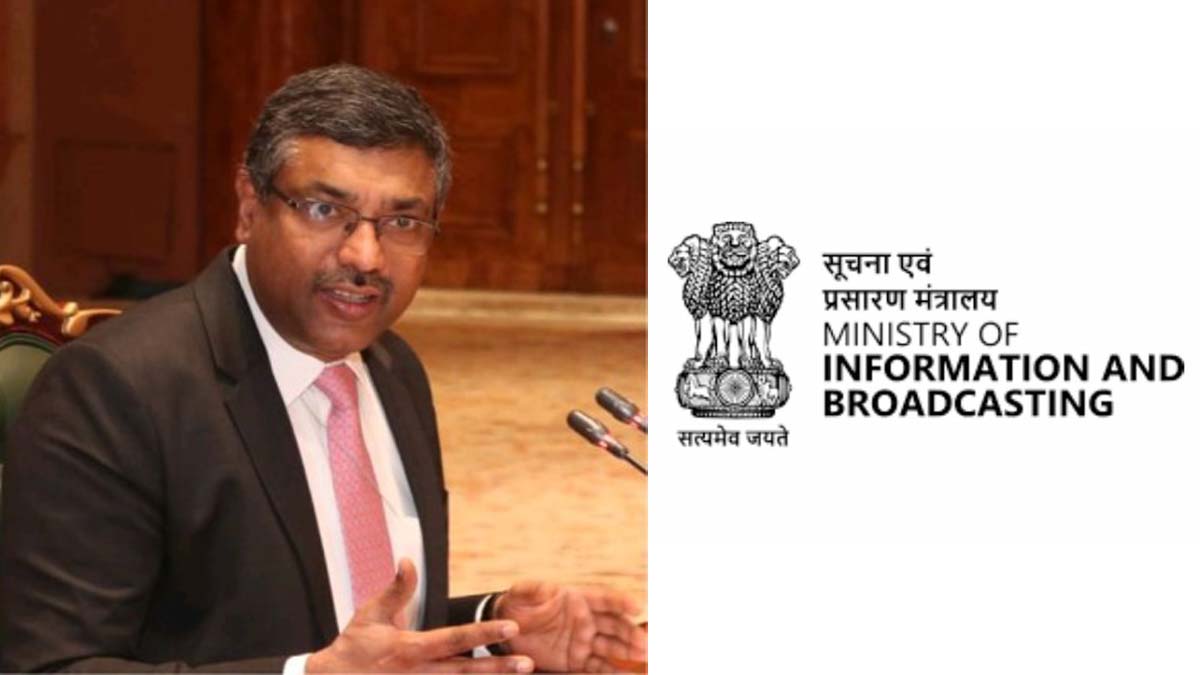
NEW DELHI: The Centre has sought to dial down concerns over its proposed amendments to the IT Rules, with Ministry of Electronics and Information Technology secretary S Krishnan asserting that the changes are intended as clarifications rather than an expansion of regulatory powers.
Pushing back against criticism from platforms and civil society, S Krishnan said the amendments “do not in any way actually give us wider powers” and are meant to remove ambiguity in how existing provisions are applied. He added that the trigger came largely from within the ecosystem, with intermediaries themselves seeking clearer guidance on compliance, takedowns and record preservation.
At the heart of the debate is the growing friction between platforms and policymakers over responsibility for user-generated content. Intermediaries have argued that they should not be treated on par with publishers, particularly when content is created and uploaded by users. Krishnan acknowledged this concern, noting that “a sharper distinction” between user content and publisher content is needed and is currently under examination.
The issue becomes more complex in enforcement scenarios. While registered publishers can be directly asked to modify or remove content, intermediaries often lack control over the original creator. “In such cases, the intermediary cannot direct those changes,” Krishnan explained, underlining the need for procedural nuance.
Another key proposal under discussion is to bring user-generated news and current affairs content within a more unified regulatory ambit, potentially under the Ministry of Information and Broadcasting. The move follows suggestions that a single authority should handle such content, regardless of whether it originates from a publisher or an individual user.
Even as the government frames the amendments as a tidy-up exercise, fault lines remain. Industry players have flagged concerns over compliance burdens, especially for smaller businesses, and questioned whether advisories could effectively become binding without explicit legislative backing. Krishnan said the government is mindful of these risks and is exploring ways to ease obligations, including possible relaxations under certain provisions.
The ministry is also considering consolidating multiple advisories and guidelines into a more structured framework, a step widely seen as addressing long-standing confusion over what platforms are expected to follow.
On takedowns, the government has reiterated that due process will remain unchanged. Krishnan stressed that actions will continue to be governed by established procedures, with reasons recorded and review mechanisms in place. He also pointed to the surge in deepfakes and synthetic media as a factor behind rising content disputes, calling it a “scale challenge” for regulators.
Interestingly, Krishnan also framed social media platforms as commercial entities rather than pure vehicles of free expression, hinting at a broader shift in regulatory thinking as platform economics come into sharper focus.
With stakeholders seeking more time and, in some cases, a rollback of the proposals, the government has kept the consultation process open-ended. Krishnan said further revisions remain on the table, signalling a willingness to adapt the draft based on feedback.
For now, the message from MeitY is clear: the rules may not be tightening in intent, but the effort to define them more clearly is well underway.






