I&B Ministry
Press regulation not called for, says Modi

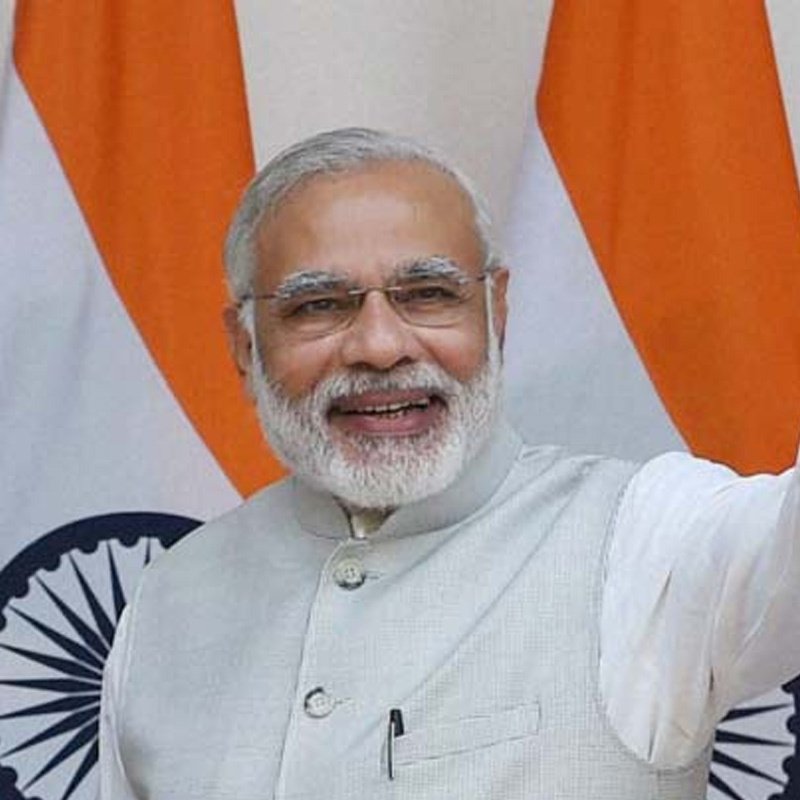
NEW DELHI: Prime Minister Narendra Modi has expressed concern over the recent killings of journalists in some parts of the country. He said journalists were losing their lives in the quest for telling the truth was an extremely serious development.
Modi emphasised the importance of freedom of press, and said press should self-regulate, adding that any external interference or regulation on the press was not called for. Modi was speaking at a function organised by the Press Council of India yesterday on the occasion of National Press Day. The occasion also marks the golden jubilee of the Press Council of India.
Speaking earlier, information and broadcasting minister M Venkaiah Naidu has said that self-regulation in the media space was the best practice which would uphold journalistic ethics and democratic ideals of the Nation.

The government does not believe in imposing ban on any medium of communication, but necessary restraint has to be exercised keeping in mind the protection of sovereignty and integrity of India, security of the nation, and law & order situation in the country, he added.
Naidu recalled that the electronic media coverage of Mumbai terrorist attacks had received a backlash from the Supreme Court, which said “any attempt to justify the conduct of the TV channels by citing the right to freedom of speech and expression would be totally wrong and unacceptable in such a terrorist situation.” He also mentioned the recent case of Pathankot coverage also highlighted how electronic media coverage while reporting could put civilians, armed personnel lives in danger.
Speaking about the role of the regional media, the minister said the media assumed importance at the regional level due to its proximity with local communities and local language which enhances the participatory potential of citizens. The regional media played an important role in building participatory democracy by reaching out to all the sections of the society and also created an informed citizenry. In a federal polity, regional media with its reach could help align the interests of states with that of the nation thereby enabling the prime minister’s vision of cooperative federalism.
Regarding the government’s new print media advertisement policy, Naidu said it promoted equity-based regional outreach by providing relaxation in empanelment procedure to provide special encouragement for regional language/dialects small and medium newspapers.
On the opportunities offered by social media, the minister said that it was a new tool of communication which was spontaneous and interactive. Such a medium was both an opportunity and a challenge. This mode of communication should be used judiciously for larger national and individual good.
Naidu said the media had a larger role to play in developmental agenda of the nation by proactively projecting flagship programmes of the government such as Swachh Bharat, Digital India, Jan Dhan Yojana, Skill India and Make in India as national programmes which have the potential to bring about change. The media needed to adorn the role of a stakeholder in the developmental process.
Minister of state Rajyavardhan Rathore and Press Council of India chairman Justice C. K Prasad were also present.
Eminent journalists and photo- journalists including Surendra Nihal Singh, Mrinal Pande, Raghu Rai, Renjith John, Arvind Kumar Singh, and Xavier Selva Kumar were awarded for excellence in Journalism.




I&B Ministry
MeitY extends deadline for feedback on digital media rules overhaul
Government gives stakeholders more time to respond to proposed changes in intermediary guidelines.
MUMBAI: When the rulebook gets a rewrite, even the internet needs a little extra time to read the fine print. Regulators have extended the deadline for public feedback on a proposed overhaul of India’s digital media and intermediary liability framework, giving stakeholders until April 29 to submit their views. In a notice issued on April 10, the Ministry of Electronics and Information Technology (MeitY) said it was extending the consultation period for draft amendments to the Information Technology (Intermediary Guidelines and Digital Media Ethics Code) Rules, 2021, following representations from several stakeholders.
At the heart of the proposals is a significant shift in how social media platforms and other intermediaries must respond to government communications. A new provision would make compliance with official “clarifications, advisories, directions, standard operating procedures and guidelines” a formal part of the due diligence obligations required to retain safe harbour protection under Section 79 of the Information Technology Act.
The amendments would also expand the scope of content oversight under Part III of the rules. The digital media ethics code would now apply not only to publishers but also to intermediaries hosting or transmitting user-uploaded news and current affairs content. This could bring user-generated news more directly under regulatory scrutiny.
Additionally, the Inter-Departmental Committee’s powers would be broadened, allowing it to take up matters referred directly by the ministry rather than waiting for formal complaints. This signals a more proactive approach to content monitoring.
The existing IT Rules already impose strict requirements on intermediaries, including timely removal of unlawful content, grievance redressal mechanisms, and traceability in certain cases. Recent updates have also introduced obligations around labelling synthetically generated content.
Officials have described the amendments as necessary to create an “Open, Safe, Trusted and Accountable Internet” while improving legal clarity and enforceability.
With the extended deadline now set for April 29, the government has given industry bodies, civil society, and digital platforms additional time to respond to changes that could significantly reshape how online platforms operate and are governed in India.
In the fast-scrolling world of digital regulation, a little extra time to read the small print might just prevent bigger headaches down the line.







