News Broadcasting
Prasar Bharati threatens legal action against defaulting producers

MUMBAI: Prasar Bharati is likely to initiate legal proceedings against defaulting production houses, which owe it dues amounting to nearly Rs 1450 million.
Prasar Bharati CEO K S Sarma said on Wednesday that the defaulters, who have so far been issued show cause notices in vain, could have winding up proceedings initiated against them, which would be followed by litigation. Production houses which may opt for the arbitration route after that will have to contend with a strict Prasar Bharati, Sarma said.
National Film Development Corporation (NFDC) leads the defaulters list, with dues of Rs 480 million. The corporation however, recently paid up Rs 200 million of its pending dues and interest thereon. Among the 45 to 50 defaulters, 10 defaulting production houses owe the pubcaster dues of more than Rs 50 million. Among the prominent names in the list are Dheeraj Kumar’s Creative Eye and Sanjay Khan’s Numero Uno Productions. Several others, like Ramanand Sagar, have offered software in lieu of payment, but Sarma says software potential evaluation is difficult in monetary terms. After waiting for nearly four years, the pubcaster has now decided to go the legal way, although Sarma says he would like to maintain amicable relations with the production houses as several of them have created valuable software for DD in the past.

Henceforth, all the defaulters would be dealt with by DD on an advance payment basis. The production houses would have to issue post dated cheques to DD and bank guarantees to ensure that they do not default on payment, he said.




News Broadcasting
Kamlesh Singh receives Haldi Ghati Award from MMCF
India Today Group editor honoured for three decades of journalism at Udaipur ceremony.
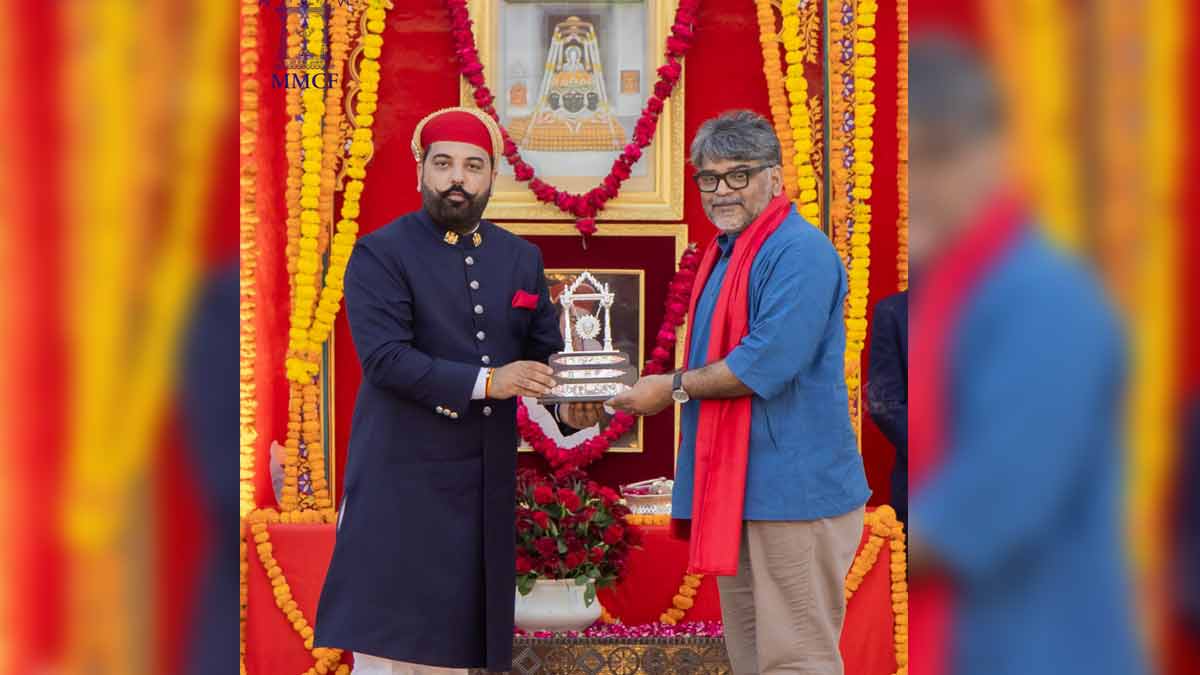
MUMBAI- Kamlesh Singh just turned a lifetime of sharp words into a shiny shield because when journalism wakes up a society, even the Maharana of Mewar wants to pin a medal on it.
The Maharana of Mewar Charitable Foundation (MMCF) conferred its prestigious Haldi Ghati Award on Kamlesh Singh, a senior editor at the India Today Group, during a ceremony in Udaipur on 15 March 2026. The national award, instituted in 1981-82, recognises “work of permanent value that initiates an awakening in society through the medium of journalism.”
Singh, who leads several editorial initiatives including Aaj Tak Radio, the Teen Taal community and The Lallantop, was presented the honour by Lakshyaraj Singh Mewar, Managing Trustee of MMCF. The citation highlighted his three decades of contributions to Indian media, innovations in digital journalism, mentoring young reporters, and his popular podcast persona “Tau” on Teen Taal, which fosters thoughtful public discourse.
The Haldi Ghati Award, named after the historic Battle of Haldighati symbolising valour and resilience, is one of four national awards given annually by MMCF. Past recipients include Tavleen Singh, Piyush Pandey and Raj Chengappa.
Other honourees this year included Padma Vibhushan Pt Hari Prasad Chaurasia, Vedamurti Devvrat Rekhe, Treeman of India Marimuthu Yoganathan, Vir Chakra Capt Rizwan Malik, and US-based researcher Molly Emma Aitken, who received the Colonel James Tod Award for contributions to understanding Mewar’s spirit and values.
In an era where headlines often shout louder than substance, the MMCF quietly reminded everyone that real journalism isn’t about noise, it’s about the quiet, persistent work that stirs society awake, one thoughtful story at a time.







