News Broadcasting
Prasar Bharati opens its content vault to boost reach and revenue

NEW DELHI: Prasar Bharati is tuning up its vast content library for a bigger audience and a better balance sheet. The public broadcaster has floated a draft Content Syndication Policy 2025, inviting public feedback on how its programmes can travel further, faster and more profitably, without losing their public service soul.
Put up for consultation on the Prasar Bharati website, the draft follows structured discussions with OTT platforms, TV broadcasters, radio networks, telecom firms, IPTV operators and content aggregators. The idea is simple: let Doordarshan and Akashvani content find new homes, from classic archives and regional gems to live coverage of government events, festivals and sport. Digital first shows on Prasar Bharati’s own OTT platform are also on the table.
The policy proposes flexible licensing options, including flat fees, revenue sharing and minimum guarantees with a share of upside. It also opens the door to monetising commissioned, co-produced and licensed content owned by the broadcaster, while encouraging tie-ups with Indian and international platforms to take Indian culture global.

The details were shared by minister of state for information and broadcasting L Murugan in the Lok Sabha, signalling a bid to let public broadcasting speak to the world, and earn a little along the way.







News Broadcasting
News18 India launches Command Centre war explainer with Arya
New show shifts from debates to decoding global conflicts and impacts
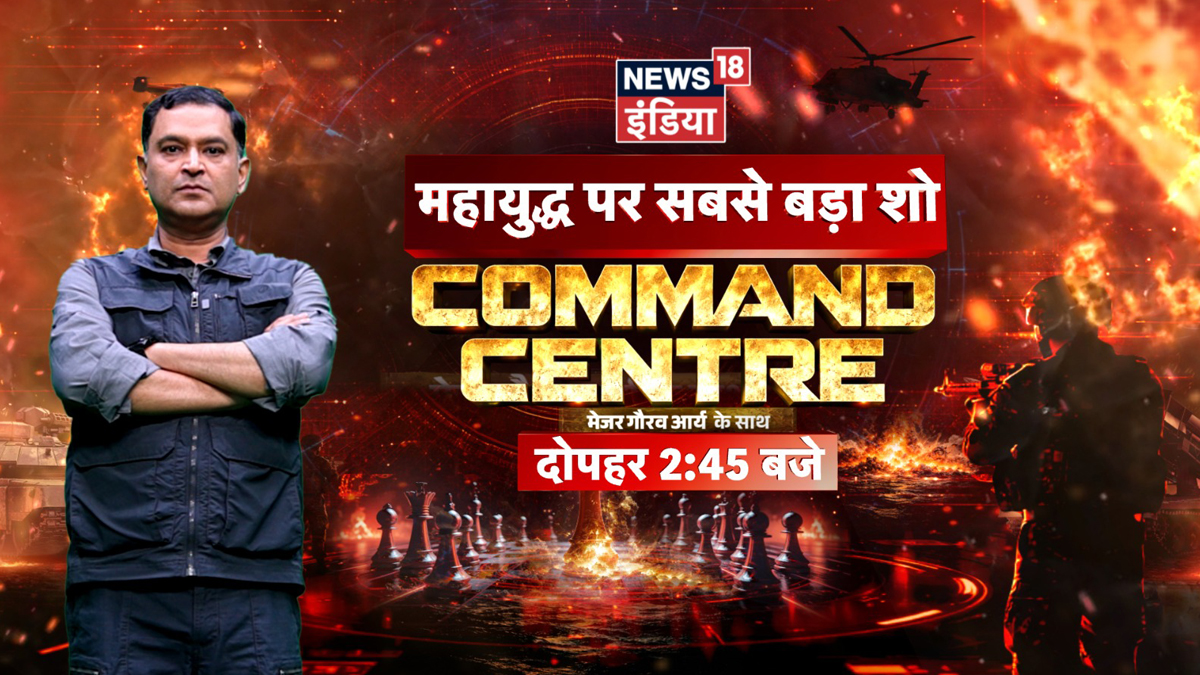
MUMBAI: News18 India has rolled out a new war-focused programme, Command Centre, featuring Gaurav Arya, as it looks to offer viewers a sharper, more grounded take on global conflicts amid rising tensions in West Asia.
Positioned as an “insider war room”, the show moves away from conventional panel debates and instead focuses on explaining military developments, decoding strategy and connecting global events to their everyday impact, from fuel prices to economic shifts.
The format leans heavily on visuals and data. The studio has been designed like a command hub, complete with large LED war maps, real-time graphics and an alert system to track developments as they unfold.
At the centre of it all is Arya, who brings his military background to simplify complex war strategies for viewers. His signature line, “Seedhi baat samjhiye”, anchors the show’s promise of clarity over noise.
News18 India managing editor Jyoti Kamal said, “Command Centre, featuring Major Gaurav Arya is designed to deliver accurate insights and a clear perspective on how evolving conflicts impact everyday life, from household budgets to national security. With expert voices analysing every development in real time, the show goes beyond headlines to decode what’s happening now, what it means, and what could come next.”
Echoing the intent, Gaurav Arya added, “In times of war, confusion is the biggest threat. With News18 India’s Command Centre, we are bringing viewers inside the war room, decoding strategies, tracking every escalation, and explaining, in the simplest terms, what it means for India and for every household. Seedhi baat samjhiye, this is where you understand not just what is happening, but what happens next.”
The weekday show will air in the afternoon slot and will also feature Gaurav Shukla, adding to its editorial depth.
With its mix of analysis, visuals and a clear focus on impact, the show reflects a broader shift in news consumption. Viewers are no longer just watching events unfold, they are looking to understand what those events mean for them.







