Hindi
Prasad Lab flooded with 3D offers after Raaz 3 success

MUMBAI: Post the release and huge success of Vishesh Films‘ Raaz 3, the 3D wave seems to be catching on Bollywood in a big way.
Prasad EFX, India‘s leading digital post production services company, has provided the complete range of 3D movie-making solutions for Raaz 3.
Since many producers are planning to make their films in the 3D format, Prasad Lab has been flooded with 3D offers. Prasad EFX has also provided Digital Intermediate (DI), VFX, Film Prints and Digital Cinema Prints for this mega hit film.

Vikram Bhatt, the director of Raaz 3, had himself confessed at the success party of his film that the 3D impact did wonders for the film and it played a big role to make the film a hit. So happy with the job of Prasad Lab, Vikram Bhatt and Mahesh Bhatt wrote special letters of thanks to the team of Prasad Lab.
Now Prasad Lab is busy with several 3D jobs that include director Remo Fernandes‘s ABCD- Any Body Can Dance and Rajnikant‘s super hit film Shivaji that is also being converted into 3D by Prasad Lab.
Said Prasad Lab Director Sai Prasad, “This is an exciting phase in our business as the world of cinema is moving towards 3D.There are number of 3D projects lined up at Prasad Lab to utilize our completely integrated package of 3D movie related services. Our association with international leaders and technology providers has given us an edge over other service providers in India.”
In the coming times, viewers of Hindi cinema will see many 3D films and the credit for this would go to Prasad Lab for bringing sea change in the domain of Hindi films.




Hindi
Zee5 and Applause Entertainment team up for whodunnit ‘Everybody Loves Sohrab Handa’
Rajat Kapoor directs star-studded murder mystery streaming from 10 April.
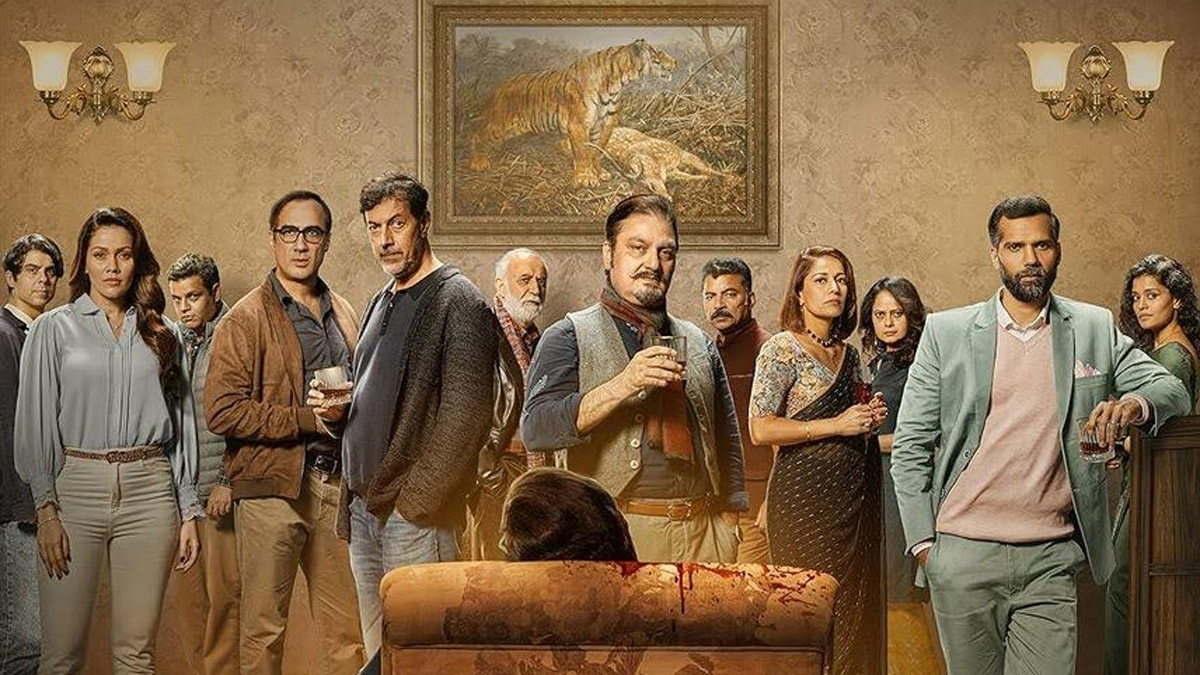
MUMBAI: Zee5 is serving up another killer collaboration and this time, the murder mystery comes with a generous side of dark humour and family dysfunction. The streaming platform has partnered with Applause Entertainment and Mithya Talkies to bring Everybody Loves Sohrab Handa, a fresh, twisted whodunnit written and directed by acclaimed filmmaker and actor Rajat Kapoor. The film will stream exclusively on Hindi Zee5 from 10 April.
The movie reimagines the classic murder mystery genre with a contemporary, darkly comic edge. It revolves around a group of friends and family who smile, drink, and celebrate together until the silence snaps and long-buried secrets spill out. The stellar ensemble cast includes Vinay Pathak, Ranvir Shorey, Waluscha De Sousa, Saurabh Shukla, Chandrachoor Rai, Neil Bhoopalam, Koel Purie, Palomi Ghosh, and Rajat Kapoor himself.
This latest offering continues the successful partnership between Zee5 and Applause Entertainment, which has previously delivered diverse hits such as Mithya, Bloody Brothers, and Jab Khuli Kitaab.
&TV Business Head of hindi Zee5 and chief channel officer Kaveri Das said, “Our collaboration with Applause Entertainment has consistently delivered distinct, high-impact storytelling. Everybody Loves Sohrab Handa is a natural progression, reinforcing our focus on genre-led content with a compelling whodunnit premise and a strong ensemble cast.”
Applause Entertainment business head for movies Sunil Chainani added, “This film adds yet another compelling layer to our slate with Rajat Kapoor’s unmistakable voice.”
Rajat Kapoor shared, “What interested me was not just the mechanics of a whodunnit, but the emotional violence that precedes physical violence. These are people who smile at each other, but there’s so much that is not said.”
The film promises razor-sharp writing, layered performances, and simmering tension, inviting viewers not just to solve the crime but to unravel the complex relationships at its heart.
If you love a good murder mystery served with wit and emotional depth, Everybody Loves Sohrab Handa looks set to be your next addictive watch. Mark your calendars, the whodunnit drops on Hindi Zee5 from 10 April.






