Hindi
Pran is film industry’s choice for Dadasaheb Phalke award

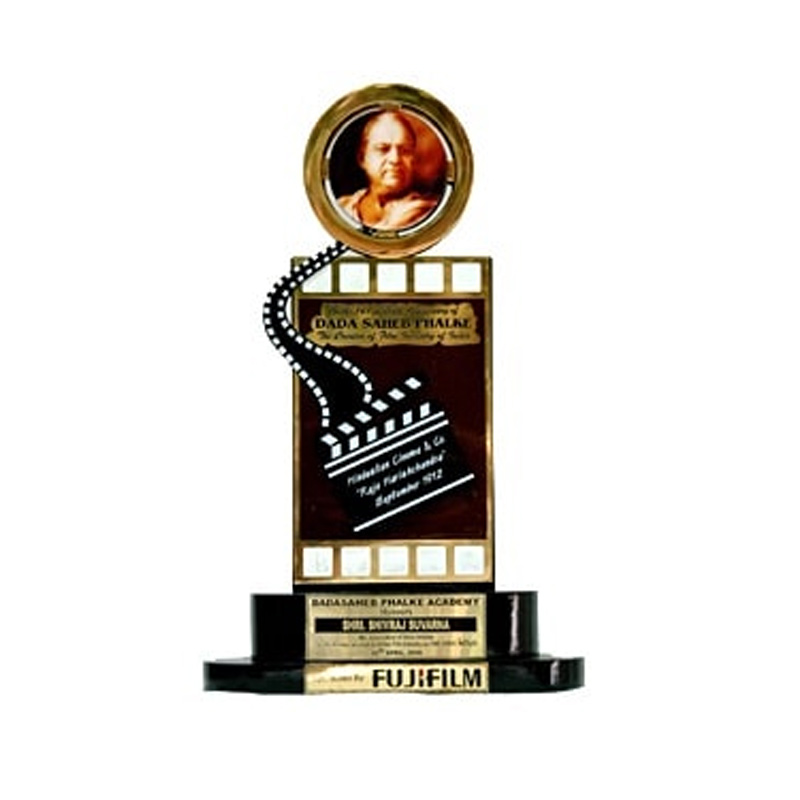
NEW DELHI: The Film Federation of India has urged the Government of India to present the next Dadasaheb Phalke Award, the highest national honour in Indian cinema, to veteran actor Pran.
FFI President Vinod K Lamba said the industry body had also sent the names of renowned actor Soumitra Chatterjee and senior producer Edida Nageswara Rao forwarded to the Information and Broadcasting Ministry.
Born on 12 February 1920 at Delhi, Pran Sikand started his career by learning photography in Lahore. A chance meeting with a film producer got him his first break in ‘Yamla Jat’ in 1940. Married in 1945 to Shukla, he has two sons Arvind and Sunil, and one daughter Pinky. At partition in 1947, Pran came to Mumbai and restarted his film career after a brief struggle. He has acted in over 400 films and in each one has a new mannerism and a different style, holding the audience spellbound by his versatile and dynamic acting.

As a villain, in films like ‘Ram Aur shyam’ people shuddered with fear and hated him, and yet loved him as the good, unforgettable ‘Mangal chacha’ in ‘Upkar’. His film career spanned six decades.
His favourite hobbies now are watching sports (football, hockey, cricket), reading and looking after his pet dogs. He has five grand children and two great grand children.
Soumitra Chatterjee (born 19 January 1935) is an iconic Bengali actor known among other things for his frequent collaborations with Satyajit Ray. Soumitra‘s film debut came in 1959 in Satyajit Ray‘s Apur Sansar. As noted on the official website for Ray, “At that time, Soumitra Chatterjee was a radio announcer and had only played a small role in a Bengali stage production.” Soumitra would eventually collaborate with Ray on fourteen films.”
Chatterjee was cast in diverse roles by Ray and some of the stories and screenplays that Ray wrote were said to be written with him in mind. Soumitra featured as Feluda/Pradosh Chandra Mitter, the famous private investigator from Calcutta in Ray‘s Feluda series of books, in two films in the 1970s Sonar Kella and Joy Baba Felunath. Ghare Baire, an adaptation of Rabindranath Tagore‘s novel of the same name and one of Ray‘s major ventures of the 1980s, featured Chatterjee in a leading role in the character of a radical revolutionary in a love triangle with his friend‘s wife. These roles showcased Chatterjee‘s versatility in playing diverse characters, especially in an urban setting. In Shakha Proshakha, Chatterjee turns out a moving performance in the role of a mentally handicapped son of an aging patriarch on his deathbed and the only source of his father‘s solace, as his siblings squabble.
Telugu producer Edida Nageswara Rao owns the 30-year old film production house Poornodaya Movie Creations in Tollywood. He has produced films with a classical touch in the 1970s and 80s. He was born to Sattiraju Naidu, in a Telugu Naidu family. He was involved in some of the most memorable movies in Telugu film history like Shankarabharana, Swathi Muthyam, and Swayamkrushi.
Most of the movies produced by him won the National Film Award for best feature film in Telugu category, Nandi Awards and were screened in several international film festivals. These films were also dubbed and released in the Russian language. He started his career as a theatre actor, film actor, dubbing artist and then ventured into film producing. After getting retired from the film production, he has also worked as Telugu Film producer‘s Council Secretary, Nandi Awards Committee Chairman and National Film Awards Committee member.



Hindi
Remembering Gyan Sahay, the lens behind film, television and advertising
From a puppet rabbit selling poppadums to Hindi cinema, he framed it all.
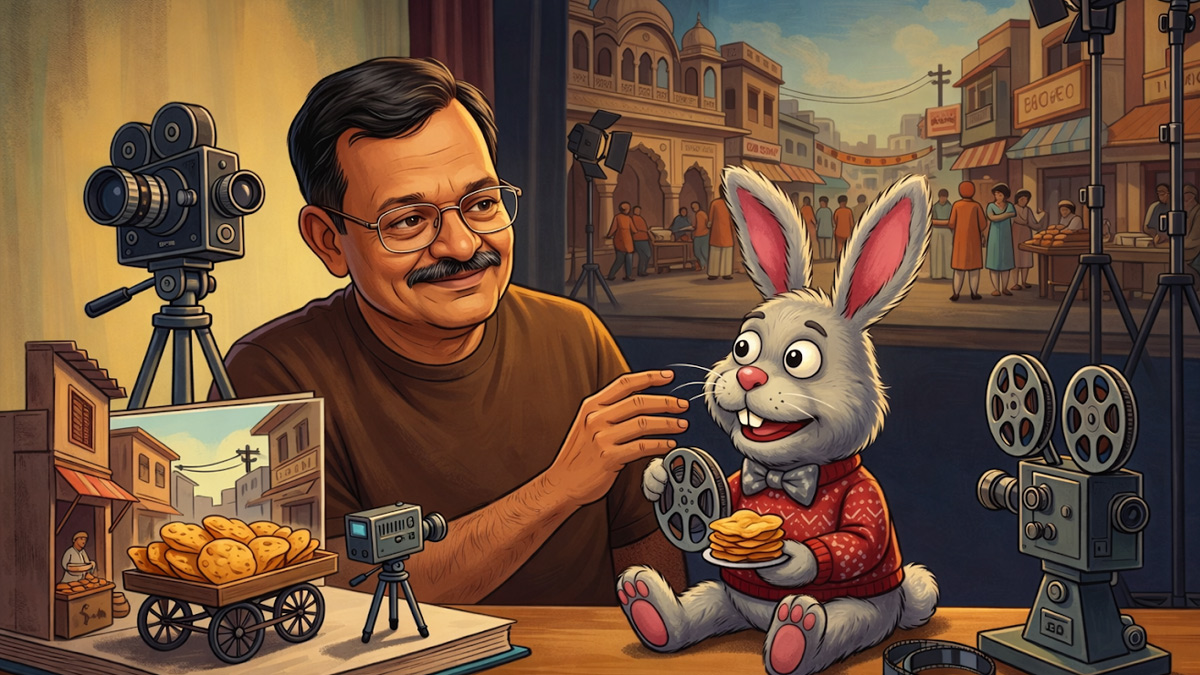
MUMBAI: There are careers, and then there are canvases. Gyan Sahay, the veteran cinematographer, director, and producer who passed away on 10 March 2026 in Mumbai, had one of the latter. Over several decades in the Indian film and television industry, he turned lenses, lights, and the occasional puppet rabbit into something approaching art.
A graduate of the Film and Television Institute of India (FTII) in Pune, Sahay built his reputation as a director of photography across a career that stretched from the early 1970s all the way to the digital age. He was the kind of craftsman who understood that a well-composed shot is not merely a technical achievement but a quiet act of storytelling.
For most Indians of a certain age, however, Sahay will forever be the man behind the rabbit. His direction of the iconic long-running television commercial for Lijjat Papad, featuring its now-legendary puppet bunny, gave the country one of its most cheerfully persistent advertising images. It was the sort of work that sneaks into the national subconscious and takes up permanent residence.
His big-screen credits as cinematographer include Anokhi Pehchan (1972), Pagli (1974), Pas de Deux (1981), and Hum Farishte Nahin (1988). In 1999, he stepped behind a different kind of camera altogether, making his directorial debut with Sar Ankhon Par, a drama that featured Vikas Bhalla and Shruti Ulfat, with a cameo by Shah Rukh Khan for good measure.
On television, Sahay was particularly prized for his command of multi-camera production setups, a skill that made him a go-to technician for large-scale shows and reality programmes. In an industry that has never been especially patient with complexity, he was the calm hand on the rig.
In later life, Sahay turned teacher. He participated regularly in masterclasses and Digi-Talks, often hosted by organisations such as Bharatiya Chitra Sadhna, sharing hard-won wisdom on cinematography, the comedy of timing in a shot, and the sweeping changes brought by the shift from celluloid to digital. He was also said to have been involved in a project concerning a biographical film on Infosys co-founder N.R. Narayana Murthy.
Tributes from the film industry poured in following the news of his passing, with colleagues remembering him as a senior cameraman who served as a rare bridge between two entirely different eras of Indian cinema. That is, perhaps, the finest thing one can say of any craftsman: he kept up, and he brought others along with him.







