I&B Ministry
Prakash Javadekar meets with Digital News Publishers Association

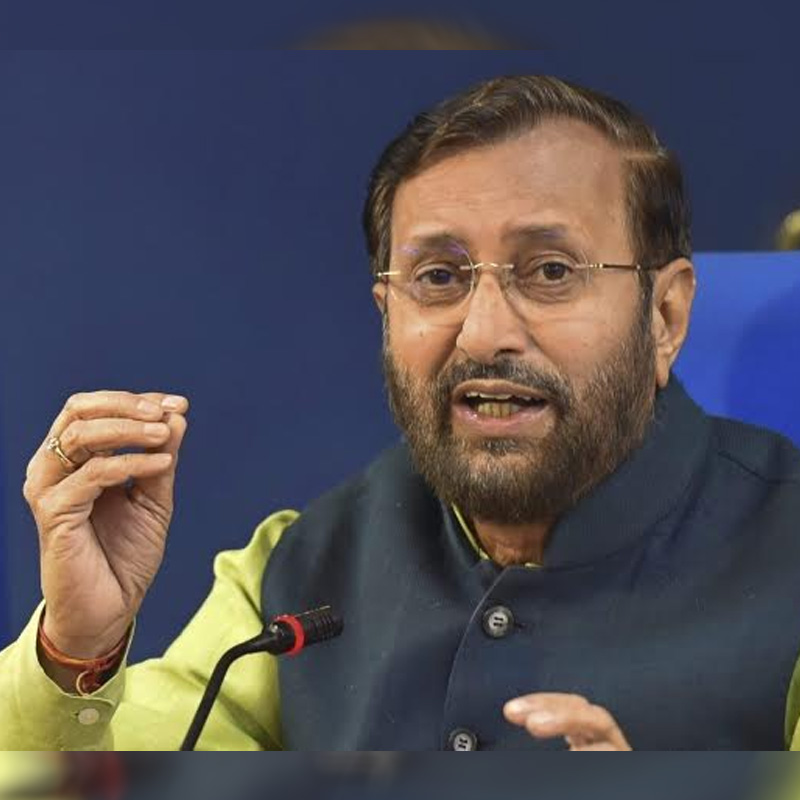
KOLKATA: Information and broadcasting minister Prakash Javadekar on Thursday held a meeting with the Digital News Publishers Association (DNPA) to discuss new rules for digital media.
“In a follow up to meeting with OTT platforms, held an interaction with Digital News Publishers Association today. Discussed new rules for digital media. They welcomed the new rules and offered few suggestions which I have noted (sic),” the minister tweeted.
According to an official statement released post the interaction, Javadekar informed the association that the new rules placed certain responsibilities on digital news publishers. These include adherence to Code of Ethics such as the norms of journalistic conduct framed by the Press Council of India and the Programme Code under the Cable Television Network Act. Further, to redress grievances of citizens the rules have provided for a three-tier grievance redressal mechanism of which the first and second tier would be of the digital news publishers and self-regulatory bodies constituted by them.

Digital news publishers would also be required to furnish some basic information to the ministry of information and broadcasting in a simple form which is being finalised and periodically they would be required to place in public domain the grievance redressal undertaken by them, the statement added.
Javadekar said that print media and TV channels have digital versions whose content is almost the same as that on the traditional platforms. However, there are contents which appear exclusively on the digital platform. Apart from this, there are several entities which are only on the digital platform. Accordingly, the rules seek to cover the news on digital media so as to bring them at par with the traditional media.
The participants, while welcoming the new rules, stated that TV and news print media have been following the laid down norms of the Cable Television Network Act and the Press Council Act for a very long time. Moreover, for publishing the digital versions of their publications, the publishers do follow the existing norms of the traditional platforms. They felt that they should be treated differently than those news publishers who are only on the digital platform.
Javadekar thanked the participants for expressing their views and stated that the government will take note of the same and continue with this consultative process for overall growth of the media industry.





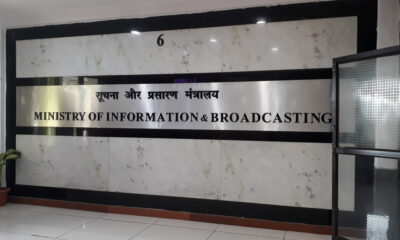


MUMBAI: When the numbers go silent, the noise on screen gets a little harder to measure. Ministry of Information and Broadcasting has extended the suspension of television rating data for news channels, directing Broadcast Audience Research Council (BARC) to withhold TRPs for another four weeks. The latest order, issued on March 31, 2026, builds on an earlier directive from March 6 that had paused ratings for a month. The ministry has clarified that the blackout will continue for four weeks or until further instructions are issued whichever comes earlier keeping the industry in a prolonged state of data drought.
The reasoning, officials suggest, lies far beyond domestic screens. With geopolitical tensions in West Asia continuing to escalate, the government has flagged concerns over how such developments could influence news consumption and presentation. The move is aimed at curbing excessive sensationalism and speculative coverage during what it describes as a sensitive global moment.
For the broadcast ecosystem, the absence of Television Rating Points (TRPs) is more than symbolic, it removes the industry’s primary scorecard. Ratings dictate advertising flows, shape editorial strategies and fuel the competitive pecking order among news channels. Without them, broadcasters are effectively operating without a public performance benchmark.
The timing only adds to the complexity. Amid a high-intensity global news cycle, channels must now navigate audience engagement without the weekly feedback loop that typically drives programming decisions. Advertisers, too, are left recalibrating, leaning on proxies such as brand strength, reach and distribution instead of hard viewership data.
While framed as a temporary regulatory intervention tied to maintaining public order, the extended suspension underscores a broader unease about the tone and direction of news coverage. For now, the ratings race is on pause but the battle for attention continues, just without a scoreboard.






