Fiction
Pradeep Dwivedi gives further insights into Eros-STX flagoff

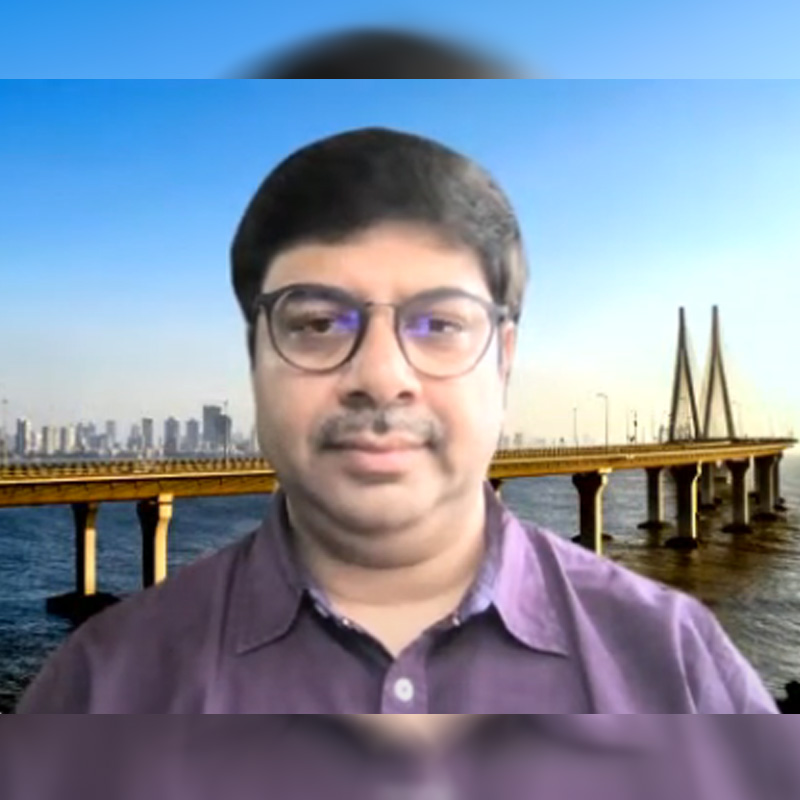
The pragmatic and cheerful boss of Eros International’s (Eros STX Global corporation) Indian operation had come on board at a very crucial time. Within a few months after his joining in January 2020, the big merger of Eros International and US-based STX Entertainment was announced. While a corporate merger comes with its own challenges, the SARS COV2 induced crisis has just multiplied it. Despite the obstacles, the efforts are underway for smooth integration. Eros International Media Ltd India CEO Pradeep Dwivedi gleams with the hope of making an Indian studio that will be recognised globally.
Other than typical profit and loss benefits, Dwivedi believes the merged entity should be able to build the first compelling Indian studio that will capture worldwide attention both in terms of theatrical and streaming business. Starting 23 September Eros International will be known by its new corporate name Eros STX Global Corporation. The brand is launching a new website along with it. Against this backdrop, the media veteran spoke elaborately on the ongoing integration efforts, possible outcomes of the merger, digital business during a virtual fireside chat with Indiantelevision.com founder, CEO and editor-in-chief Anil Wanvari.
Edited excerpts follow:

Read more news on Eros International
Have the companies started working together?
We are working very closely ever since we started the merger. There is a segmented approach to our business. We have streaming, theatrical, cable and satellite distribution business. We are trying to harmonise these areas to figure out a significant cost synergy to ensure that the combined entity is operating far more efficiently than the two companies were working individually. The logical assumption would be that many companies go for massive headcount reduction. However, the beauty of our merger is that we have very lean and organized teams on both sides. The combined company is of little over 500 people which is not a big number. Moreover, the kind of market focus and talents Eros has is very distinct from the ones that STX brings to the table. The companies are complementing each other. We are working very closely and integration efforts are going on.
You said you are streamlining your businesses. How are you finding synergies in distribution and syndication in the Chinese market?
We have been working more on the distribution of Bollywood movies to the Chinese market, STX has been leveraging financing, ideas to create content out of China. I know the tension against China is extremely high currently. There are nationalistic sentiments on accounts of border disputes. In the US, there are nationalistic sentiments around trade disputes. My sense is both are genuinely well-placed concerns. But I think the human spirit will overcome some of these geopolitical issues and we will find a way forward to recommence the business.
Watch more fireside chats with industry veterans
How the merger is changing your thought process overall?
The idea is really that when you combine both there’s a global play that is coming out. The kind of storylines that are emerging and amalgamating across the world can be universally played out. With the rise of OTT, the audience has also become global in a way. Indians are very happily following Turkish, Korean, and Mexican content. In terms of technology, we are making sure the audience who does not understand Hindi slate is able to get subtitles, language conversion which is where our partnership with Microsoft Azure comes into play. We are investing in AI technologies to be able to create consumer access at the most basic level.
We have 125 million dollars of capital commitment as part of equity capitalization. We are also very choosy about what kind of money we are taking in. As our CEO often says it is not about money, it is about the quality of the money.
Recently you had to face impairment charges which have led to a negative sentiment overall. Your share price is also going down…
The movie production side is a long lead side. You invest in talents, directors, stories, and stars. If everything is well, you will have a movie production after nine months. You also have scenarios where producers and directors have gone to such a state that content is not coming out even after three years. Obviously, you have made those advances, there is no way you can monetise half of the content. If you get delayed in content coming out, you take impairment but that does not mean you have taken a cash loss on that. At some point of time, when the content gets produced, when you get the movie out, you can drive back the money as well. The reason for the impairment was taken not due to any losses.
Over the last year or so, we were very unfairly targeted by short-sellers. They don’t pick a large share but target short-mid cap companies. India does not have this problem as much as the US has. They will also typically target a foreign private issuer because promoters are not based in the US but only listed there for market access. When you start hammering them with all kinds of innuendo, stockholders get distressed and they would possibly try to sell or exit the stock to recover the money they have invested in. Hence, the short sellers would be able to buy it out cheap and would be able to recover huge amounts of money on that. While it is not illegal, it is an orchestrated strategy in the marketplace. We have taken the bulls by the horn. We have filed litigations against all of these short sellers. Hearings are going on in multiple courts. I can’t share more as it is subjudice now. But I can say, we have been proven right on every single front. When they have challenged our finances, operations, we have been proven correct. Governance is the cornerstone of what we do.
Read more coverage on Pradeep Dwivedi
How has the work progressed in the last six months?
The pandemic has allowed us to do two things very distinctively. Firstly, the mundane stuff including IT system, mail system, technology, digital assets management, reporting standards, IFRS versus US GAAP, all of those are being addressed. At the content level, where productions have been stopped, there are two subsets of works that are happening. One is of course post-production. The other interesting part is the whole creative part of the work. Just cut to six months before the pandemic did not start. There was a mad rush to put out content. This bit of a pause has given time to writers to think through innovative content. Some of the ideas we are getting now are very interesting, the kind of stories are very compelling. My sense is that once we are moving out of the pandemic, you will see some amazing stories coming out.
Have your shoots started?
Our shootings have started but in a very small way. I won’t say it is full-fledged. There are two projects on the floor, and both are outdoors. We are not doing anything in Bombay right now. There is work happening in Himachal, Uttaranchal, and north Karnataka.
You were supposed to launch Eros Now Prime in June. Have you changed the plan?
It is still in work for launch. We have readiness because we took Comcast NBC content and there will be content from STX library also. It will have British, American, and southeast Asian content. Eros Now Prime is essentially a premium English service at phase I. There will be some old popular TV shows along with brand new shows. As we move forward, we will put English translation, subtitles.
You have a fabulous catalogue of music. Has that moved?
It comes on two levels. One is Eros Music as a label. We are looking at investing more in that label, getting new talents both in film and non-film music. The other is the whole YouTube partnership which is largely to drive the traffic and traction around Eros Now as well. It is a bundled package. We are a strong believer in b2b2c which essentially means we will do partnerships with large players who deal with large consumer ecosystems. We will provide value for them to build stickiness for their own consumption. In return, they will allow us a large consumer base access.
Where do you see Eros STX in three years?
As a company, I believe we should be able to build the first compelling Indian studio that has captured worldwide attention both in terms of theatrical outcome and streaming. It's about doing more than business and creating great content & good stories.






Fiction
Banijay merges with All3Media in $6.65 billion deal
Marco Bassetti will lead the combined company as CEO
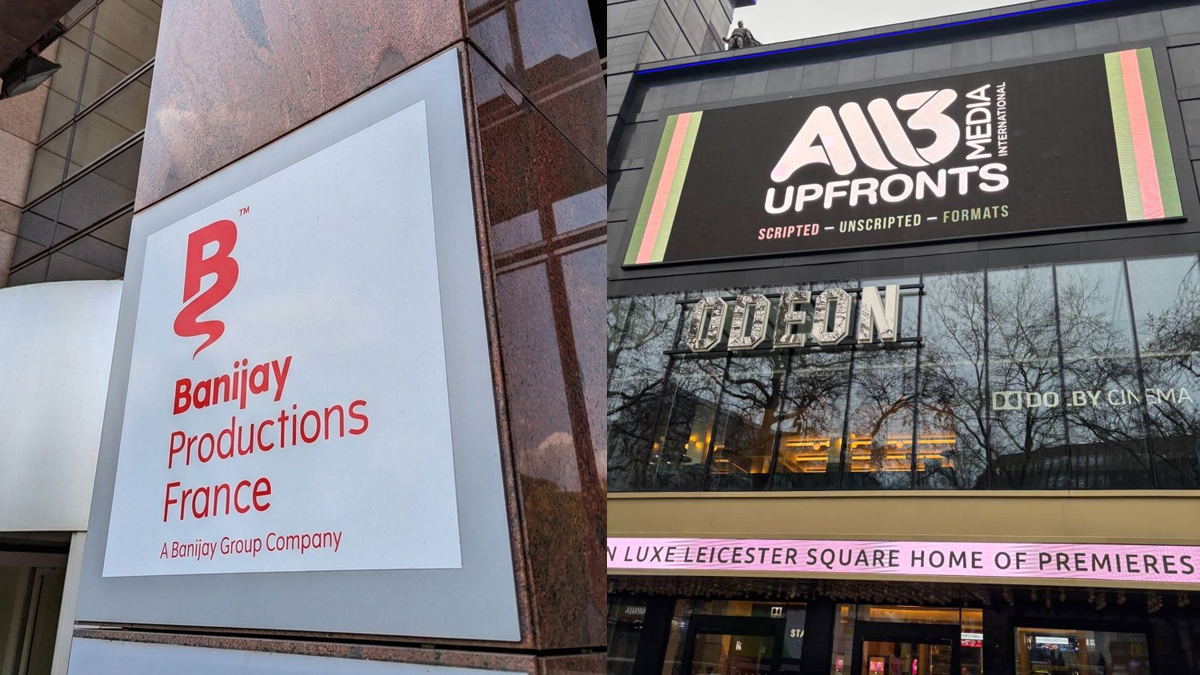
PARIS: Six years after acquiring Endemol Shine at the height of the pandemic, Banijay has struck again. The European production heavyweight is merging with All3Media in a deal that will create a television titan with $6.65 billion in revenue and redraw the contours of a fast-consolidating market.
The combined company will trade under the Banijay name and be owned 50 per cent each by Banijay Group and RedBird IMI, which acquired All3Media in 2024. The transaction is expected to close by autumn, subject to regulatory approvals.
Banijay Entertainment CEO Marco Bassetti, will take the top job at the enlarged group. All3Media CEO Jane Turton becomes deputy CEO. RedBird IMI CEO Jeff Zucker will serve as chairman.
The logic is scale. Broadcasters are commissioning less, streamers are tightening budgets and global buyers are fewer but bigger. Against that backdrop, heft matters. The merged entity will generate roughly $6.65 billion in revenues based on 2024 figures, giving it sharper elbows in rights negotiations and deeper pockets for franchise-building.
“Entrepreneurialism, ambition and creativity” remain core to Banijay’s DNA, Bassetti said, flagging plans to invest more heavily in new intellectual property, live events and emerging platforms. Turton struck a similarly bullish note, pointing to All3Media’s journey from a 2003 start-up to a global supplier of hit formats and high-end drama.
Between them, the two groups control a formidable slate. Banijay’s catalogue spans MasterChef, Big Brother, Survivor, Black Mirror, Peaky Blinders and Deal or No Deal. All3Media’s labels include Studio Lambert, producer of The Traitors and Squid Game: The Challenge; Two Brothers, behind The Tourist; and Neal Street, currently producing the forthcoming Beatles biopics directed by Sam Mendes for Sony.
The back catalogue is equally muscular. Banijay Rights holds some 220,000 hours, while All3Media International adds around 35,000 hours, forming one of the industry’s largest libraries.
Banijay, controlled by French entrepreneur Stéphane Courbit and listed in Amsterdam, counts more than 130 production companies across 25 territories. All3Media operates over 40 labels, with strong positions in the UK, US and Germany. The enlarged group will also lean into live entertainment, building on Banijay’s Balich Wonder Studio, which produced the opening ceremony of the Milan-Cortina Winter Olympics, and the Independents.
The deal marks a shift in tone. As recently as October, Bassetti suggested that mergers and acquisitions were not a priority. But the drumbeat of consolidation has grown louder. Mediawan has moved for Peter Chernin’s North Road. David Ellison’s Paramount has agreed to a $110 billion takeover of Warner Bros, with plans to combine HBO Max and Paramount plus. ITV has explored selling its media and entertainment arm to Comcast-owned Sky, though talks have reportedly slowed.






