News Broadcasting
‘Potential to undermine media freedom’: Editors Guild on new IT rules

NEW DELHI: The Editors Guild of India has raised concerns about the Indian government’s new Information Technology rules, saying they will “fundamentally alter” and put “unreasonable restrictions” on digital media.
On 25 February, the Centre notified the Information Technology (Intermediary Guidelines and Digital Media Ethics Code) Rules 2021, under the Information Technology Act. The rules are framed to regulate social media companies, streaming and digital news content, virtually bringing them under the ambit of government supervision.
Online platforms will now have to be much more responsive to complaints about posts on their networks, including giving the government details about the “originator” of content – effectively breaking end-to-end encryption – as well as setting up verification systems that could have a major impact on individual privacy.

The Editors Guild said the government cannot “overwhelm India’s constitutional safeguards” for free media in the name of controlling an “unfettered social media”.
“The rules, issued under the Information Technology Act, 2000, fundamentally alter how publishers of news operate over the Internet,” the association said. “They empower the Union government to block, delete, or modify published news anywhere in the country without any judicial oversight and mandate all publishers to establish a grievance redressal mechanism. Various provisions in these rules can place unreasonable restrictions on digital news media, and consequently media at large.”
The Editors Guild of India is concerned about the notification of Information Technology (Intermediary Guidelines and Digital Media Ethics Code) Rules 2021. pic.twitter.com/7J2fFnZ5De
— Editors Guild of India (@IndEditorsGuild) March 6, 2021
The Editors Guild added that the rules have potential to “seriously undermine” media freedom in India. It expressed concern over the fact that the government did not consult all stakeholders before notifying the “far-reaching rules”.
The association urged the government to suspend the rules and hold a meaningful consultation with the stakeholders.
Meanwhile on Friday, the Supreme Court noted that the rules to regulate streaming platforms “lacked teeth” as there was no provision to punish violators. It made the observation while granting interim protection from arrest to Amazon Prime Video’s India content head Aparna Purohit in the criminal complaints lodged against her in connection with the web series Tandav.
Solicitor general Tushar Mehta, appearing for the Centre, said he will submit a draft legislation to the court.
On Thursday, minister of information and broadcasting Prakash Javadekar had clarified that OTT platforms will not have to register with the ministry and that a self-regulating body under the new digital rules would have no members appointed by the government. Javadekar claimed that the rules focused on self-classification of content instead of imposing any form of censorship.




News Broadcasting
CNN-News18 to host Fury in the Gulf conclave on West Asia crisis
Three-hour summit to unpack geopolitical fallout and impact on India
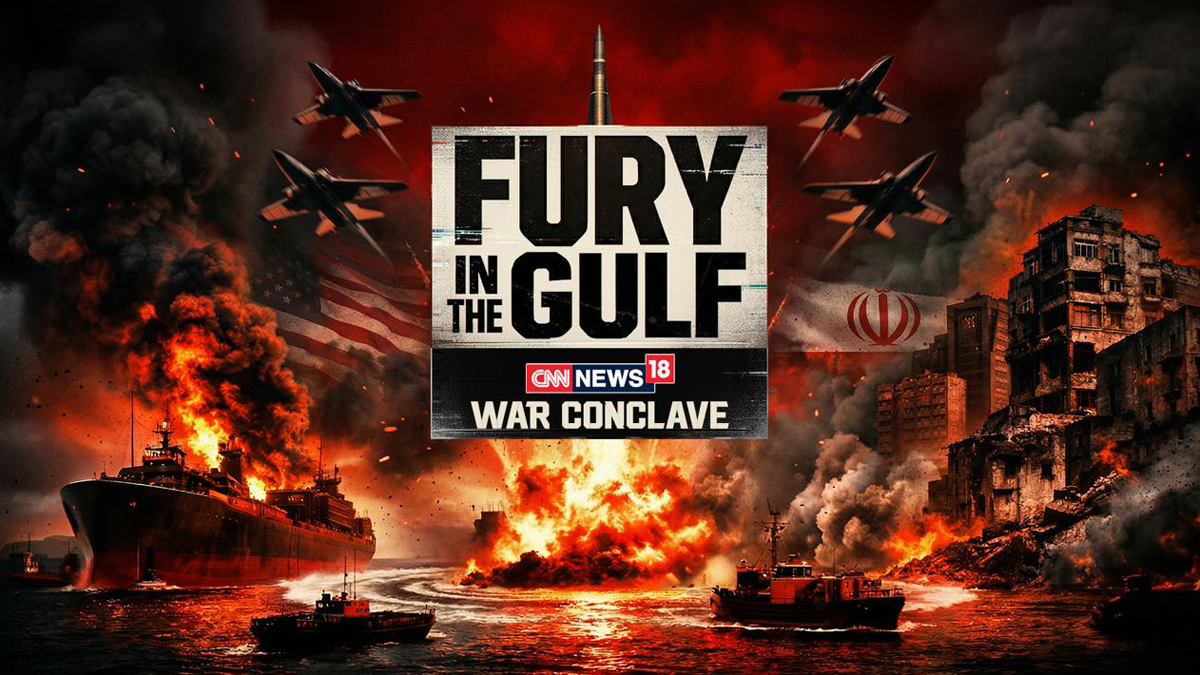
MUMBAI: CNN-News18 is set to host a special three-hour broadcast, Fury in the Gulf – War Conclave, on April 7, aiming to decode the escalating West Asia crisis and its far-reaching implications for India.
Scheduled from 4:00 PM to 7:00 PM, the conclave comes at a time when tensions between Iran and the United States are reshaping global geopolitics and triggering economic uncertainty. With India’s deep energy ties, trade links and large diaspora in the Gulf, the developments carry significant domestic relevance.
Built around the theme ‘Conflict, Consequences, and The Future,’ the programme will feature six curated sessions combining one-on-one interviews and panel discussions. The focus is to cut through the clutter and offer viewers a clearer understanding of the fast-evolving situation.
Key sessions include ‘Diplomacy in Times of War’ featuring Shashi Tharoor, and ‘World After the Iran Conflict’ with voices such as Ram Madhav, Reuven Azar, representatives from the European Union and the Iranian Deputy Envoy. Another session titled ‘Another Dunkirk?’ will bring together K. J. S. Dhillon and Jitin Prasada among others.
CNN-News18 editorial affairs director Rahul Shivshankar said, “In times of war, clarity becomes the most powerful tool. Fury in the Gulf – War Conclave brings together credible voices to address the questions and confusion that arise amid an overwhelming influx of information.”
He added that the initiative is aimed at delivering “facts, perspective, and insight” at a time when misinformation can easily cloud public understanding.
Echoing the sentiment, CNN-News18 CEO– English and business news Smriti Mehra said the conflict marks a defining global moment, with consequences that extend well beyond the region. She noted that the conclave seeks to present the crisis with “depth, nuance and responsibility” so audiences can better grasp its real-world impact.
As geopolitical tensions continue to dominate headlines, the conclave positions itself as an attempt to bring order to the noise, offering viewers a structured, insight-led look at a complex and rapidly shifting global situation.






