News Broadcasting
Polls in mind, Dikshit opposes CAS

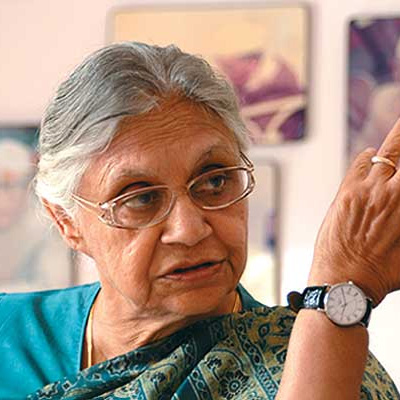
MUMBAI: The political tango around the introduction of conditional access in India just refuses to simer down. The Delhi Government on Saturday opposed the implementation of Conditional Access System (CAS) from 14 July, saying confusion prevailed over the new system and claiming that the consumer was not given any alternative.
“There is still confusion in the minds of the people about the new system. No one knows where the set-top box is available and what is the cost of the box and the services to be provided,” Delhi chief minister Sheila Dikshit was quoted by Press Trust of India as saying after addressing a party rally in the capital.
Claiming there was something “fishy” in the entire deal, Dikshit said implementing CAS without giving any alternative to the consumer would only put an additional burden on the general public.
As in Mumbai, where the ruling coalition at the Centre’s constituent and ideological ally of the BJP, the Shiv Sena, opposes CAS, it is politics that is at play here as well. With Assembly elections round the corner, the Congress-ruled Delhi government is eyeing the controversy as a perfect issue to attack its major rival in the capital, the BJP.

They have said DTH would be operational within three to four months. Once that happens, CAS will almost become redundant, said the chief minister. She added that in other countries, the set-top box is in-built into the TV. Despite the sops offered by the Centre, she wondered where was the need for introducing a separate set-top box in India.
There seemed to be a political link working even in Saturday’s announcement by Zee Group cable arm SitiCable boss (also Zee tele’s additional vice chairman) Jawahar Goel that the MSO was giving “introductory” offer for all pay channels it provided to its CAS-enabled subscribers. At Rs 128 (excluding local taxes that are levied on last mile operators) + Rs 72 (excluding local taxes) for about 60 free to air channels that was cheaper than what other cable ops were offering – Rs 222 plus taxes.
Goel had said, “The introductory offer is likely to be valid till the (state) elections.” Delhi and some other Indian states are going to polls later this year in October-November.





News Broadcasting
CNBC India unveils new logo, rolls out refreshed identity across network
Debuted at IBLA, the redesign signals a sharper, digital-first future

MUMBAI: CNBC has unveiled a refreshed brand identity across its India network, introducing a new logo and visual system that reflects a more modern, digital-first direction.
The rebrand was officially revealed at the India Business Leader Awards held in Mumbai on March 14, marking the first public showcase of the updated design at one of the network’s most prominent platforms.
The overhaul is among the most visible brand updates for CNBC in recent years, aimed at aligning its look and feel with evolving audience habits and a growing multi-platform presence.
At the centre of the refresh is a redesigned logo that moves away from the network’s long-standing multi-coloured peacock motif, opting instead for a cleaner and more minimalist aesthetic. A key visual cue is a blue upward-pointing arrow embedded within the letter ‘N’, symbolising forward momentum, growth and a focus on the future.
The new identity is being rolled out across the entire CNBC cluster in India, including CNBC-TV18, CNBC-TV18 Prime, CNBCTV18.com, CNBC Awaaz and CNBC Bajar. The move brings a more cohesive and contemporary design language across television and digital platforms alike.
The rollout began on March 30, with the network aiming to create a unified viewer experience regardless of how audiences access its content, be it on broadcast, online or connected devices.
With this refresh, CNBC is signalling its next phase of growth in India, blending legacy credibility with a sharper, forward-looking identity designed for an increasingly digital news ecosystem.









