News Broadcasting
PM to media cos: Go global

NEW DELHI: Giving a call to the Indian media companies to go out and straddle the globe, Prime Minister Manmohan Singh today said that India should have its own CNNs and BBCs that not only carry the country’s viewpoint to a global audience, but also inform and educate NRIs.
“I do believe that Indian media must now go global. We need our own CNNs and BBCs! A global Indian channel with a global perspective and reaching out to a global audience. I also think Indian print media must now think global,” Singh said while addressing a distinguished gathering here on the occasion of completion of five years of CNBC TV18 and launch of Awaaz, a consumer channel.
Pointing out that the country has seen several international news organizations seeking permission to enter the Indian market, he bemoaned, “But, what I do not find as yet is an Indian media company wanting to go global. In fact, very few of our media organizations are as yet willing to invest in foreign correspondents in important capitals of the world. We cannot continue for long with the present state of affairs wherein only one media organization has a full-time correspondent stationed in Beijing.

“Our media’s coverage of our own region, South Asia, is inadequate. All this must change. I am glad that TV18 has taken the first steps in this direction (reference to the launch of South Asia World).
Lauding TV-18 promoter Raghav Bahl and team for having launched a global channel for overseas viewers, the PM said that he is heartened to know the Indian diaspora, a vast pool of talent and energy, wanting to come back and participate in the economic growth processes.
“I hope your new channel will not be aimed at the overseas Indian community alone, but also at the international community. The world must know what is happening in India,” Singh said.
He added that recently when Doordarshan launched its Direct-to-Home service, it was urged to recapture its role as a public service broadcaster.
“I am conscious of the fact that private channels have to be more concerned about market compulsions since advertising revenue is your only source of income. I am, therefore, encouraged by the fact that you see market opportunities in launching a Hindi business channel and in going global.
“Our non-English speaking citizens are increasingly participating in our market economy and deserve to have the same access to information that English speaking Indians have. I hope there will be more Indian language business channels and publications so that more of our people understand the dynamics of the contemporary world,” the PM said.
The PM, however, cautioned the electronic medium to live up to its responsibilities and not transmit images that can assault the Indian sensibilities in any way.
Boom in media
According to Singh, the past decade or so has witnessed a boom in Indian media, which has given many young women and men the opportunity to exhibit their talent and creativity. Never before has the Indian media scene been as exciting a place to work in as it is now.
“There has been an exponential growth both in the number of consumers of news and of its suppliers. In 1990 we had only one television channel and a limited business media. Today, there are scores of TV channels and several business channels vying with one another for the viewer’s attention and the advertiser’s budget,” he said, making it clear that he’s quite clued in to the happenings in the media.
Pointing out that the new turn in economic policy that we took in 1991 and the increase in demand for information have clearly played an important role in this process, the PM said the quantitative growth of media has also helped in its qualitative development. “Competition has, quite understandably, contributed to greater creativity,” he added.
There is, of course, some understandable concern that has been expressed about some of the values and images we are transmitting through television, Singh said, adding, “I think media managers must pay attention to these concerns. There must be commitment to both quality and values in your programming. The media has an important developmental role to play, especially the business media.”
Media’s role as a watchdog
The PM also took this occasion to highlight some other economic issues and the role that the Indian media should play.
Pointing out that the country is on a new path of growth and development where the government is committed to increasing the rate of investment and in creating an environment conducive to meeting this objective, the PM said that the country is “rapidly integrating itself with the world outside.”
“We want to see our share of world trade and investment flows increase rapidly. We want more foreign investment in India and we want Indians to invest abroad. We would like to see easier regimes for the movement of skilled people and we want to encourage inbound tourism in India,” he said without dwelling on the fact whether the media sector too would be opened for further foreign investment.
“The time has come for India to make bold and rapid strides. I urge all of you to think BIG. At the recent meetings of the Council on Trade and Industry and of the Manufacturing Competitiveness Council, I was heartened to see that many of our business leaders shared this sense of urgency. They agreed with me that we must think big and think boldly about the future of our country,” he said.
Singh added: “The challenge before us – in economic policy, in social policy, in education policy, in foreign policy – is to `think out of the box’. We must think anew, afresh and ahead.”
Paying tribute to the media in the context of the tsunami tragedy because it was an early report on a television news channel that had first alerted him to the tragedy, Singh said that “an alert and energetic media can play a constructive role in helping people in such times of crisis.”
The business media also has an obligation to play the role of an early warning system in the market place as it has to draw the attention of both investors and government to what is happening in the markets at home and abroad, in firms large and small, and in the government, PM said.
“It was the media that alerted us to the stock market scam of 1992. You must be the guardians of the interests of ordinary investors so that we can create wealth for all and not just for a few. Wealth that endures and that is productively utilized,” he concluded.


News Broadcasting
CNN-News18 to host Fury in the Gulf conclave on West Asia crisis
Three-hour summit to unpack geopolitical fallout and impact on India
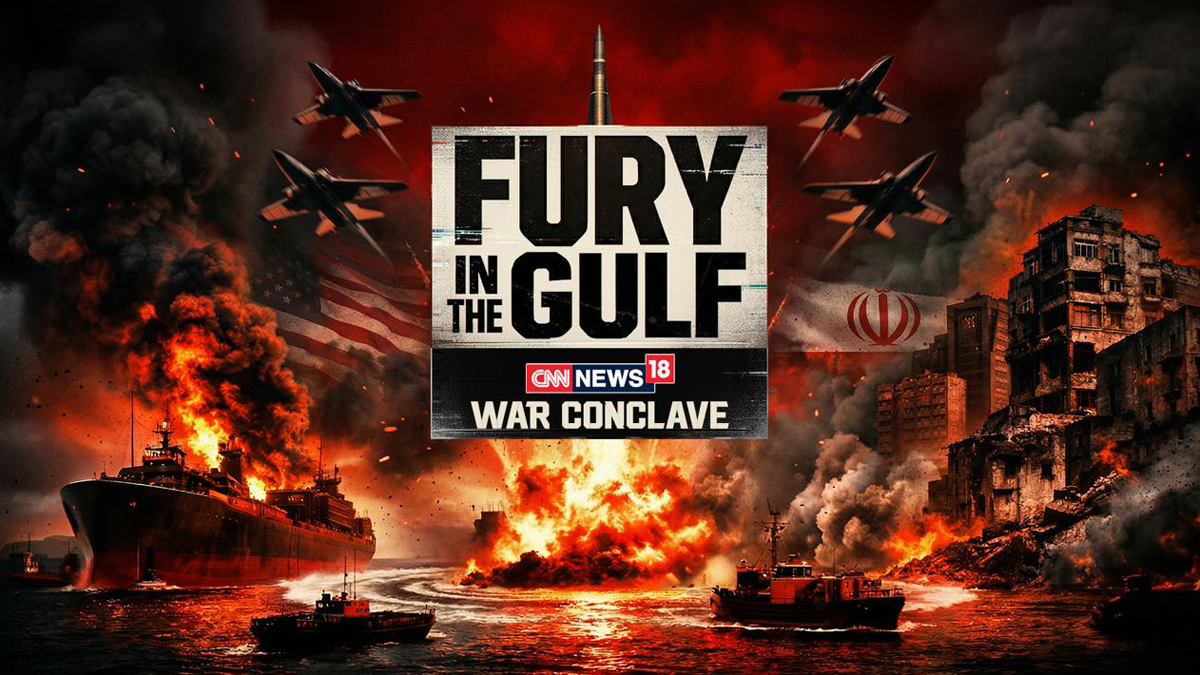
MUMBAI: CNN-News18 is set to host a special three-hour broadcast, Fury in the Gulf – War Conclave, on April 7, aiming to decode the escalating West Asia crisis and its far-reaching implications for India.
Scheduled from 4:00 PM to 7:00 PM, the conclave comes at a time when tensions between Iran and the United States are reshaping global geopolitics and triggering economic uncertainty. With India’s deep energy ties, trade links and large diaspora in the Gulf, the developments carry significant domestic relevance.
Built around the theme ‘Conflict, Consequences, and The Future,’ the programme will feature six curated sessions combining one-on-one interviews and panel discussions. The focus is to cut through the clutter and offer viewers a clearer understanding of the fast-evolving situation.
Key sessions include ‘Diplomacy in Times of War’ featuring Shashi Tharoor, and ‘World After the Iran Conflict’ with voices such as Ram Madhav, Reuven Azar, representatives from the European Union and the Iranian Deputy Envoy. Another session titled ‘Another Dunkirk?’ will bring together K. J. S. Dhillon and Jitin Prasada among others.
CNN-News18 editorial affairs director Rahul Shivshankar said, “In times of war, clarity becomes the most powerful tool. Fury in the Gulf – War Conclave brings together credible voices to address the questions and confusion that arise amid an overwhelming influx of information.”
He added that the initiative is aimed at delivering “facts, perspective, and insight” at a time when misinformation can easily cloud public understanding.
Echoing the sentiment, CNN-News18 CEO– English and business news Smriti Mehra said the conflict marks a defining global moment, with consequences that extend well beyond the region. She noted that the conclave seeks to present the crisis with “depth, nuance and responsibility” so audiences can better grasp its real-world impact.
As geopolitical tensions continue to dominate headlines, the conclave positions itself as an attempt to bring order to the noise, offering viewers a structured, insight-led look at a complex and rapidly shifting global situation.






