iWorld
Pleased with India progress, says Netflix’s Reed Hastings

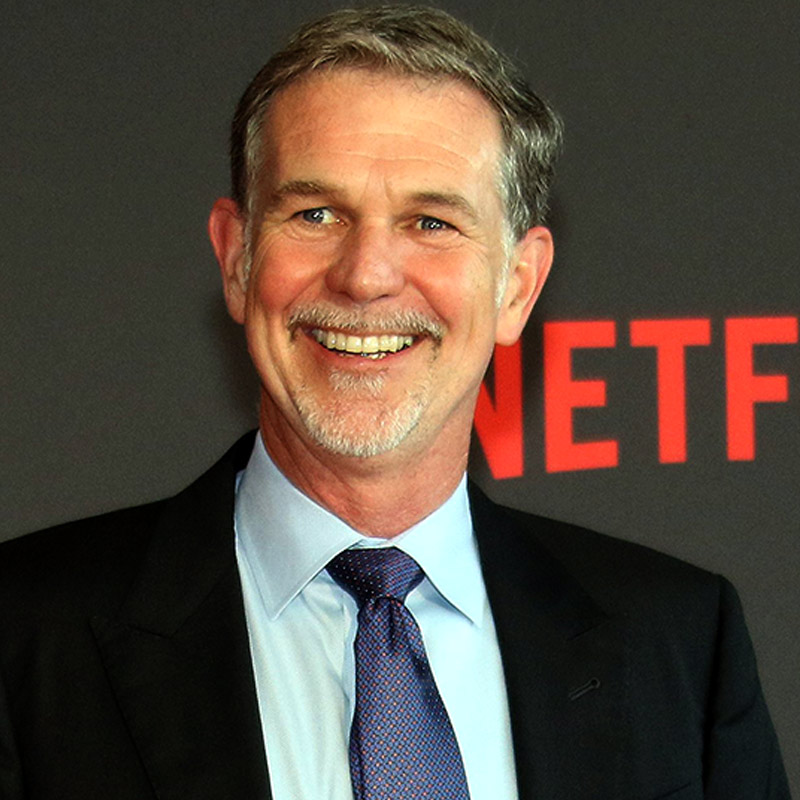
MUMBAI: Netflix CEO Reed Hastings today announced that he was pleased with the progress his streaming powerhouse was making in India. Speaking to Sanford C Bernstein senior research analyst Todd Michael Juenger during a Q4 2017 earnings interview, Hastings said, “We are very pleased with the progress that we’re making in India, throughout Southeast Asia and Japan. So, really, all across the board, we’re seeing growth penetrations that look like the first couple of years of Latin America, which, as you know, has worked out very well for us.”
Estimates are that Netflix has anywhere between 700,000 to a million paying subs in India. At that level–with the average subscription being Rs 600–the streaming giant is currently turning over anywhere between Rs 42 crore and Rs 60 crore a month, giving it annual revenue of Rs 504 crore to Rs 720 crore. As compared to that, estimates are that Star Plus alone tots up Rs 2,100 crore in revenue.
“That’s pretty good going for such a new service,” says a media observer. “You can’t forget that it is an international service offering with very limited localisation so far.”

The company announced that it had registered net global additions of 8.3 million–the highest quarter growth numbers in its history, up 18 per cent compared to 2016’s high of 7.05 million net adds. Netflix’s average paid streaming memberships rose by 25 per cent year on year in Q4. Combined with a 9 per cent increase in ASP, global streaming revenue growth amounted to 35 per cent. Operating income of $245 million (7.5 per cent margin) vis-a-vis $154 million in the prior year (6.2 per cent margin) was slightly above the firm’s $238 million forecast. Operating margin for FY17 was 7.2 per cent, on target with the firm’s goal at the beginning of this year.
Internationally, Netflix added 6.36 million memberships (compared with the firm’s earlier guidance of 5.05 million), a new record for quarterly net adds for this segment. Excluding a foreign impact of more than $43 million, international revenue and ASP grew by 59 per cent and 12 per cent year over year, respectively. The increase in ASP reflects price adjustments in a wide variety of Netflix’s markets over the course of 2017. With contribution profit of $227 million in 2017 (4.5 per cent contribution margin), the international segment delivered its first full year of positive contribution profit in the firm’s history.
For Q1, the firm has projected global net adds of 6.35 million (against 5.0 million in the year ago quarter) with 1.45 million in the US and 4.90 million internationally. On the whole, the company has upped its content budget to $7.5-$8 billion for 2018.
Its original content slate from India should start rolling out sometime later this year. In the earnings press release, the company said, “We’re finding continued success with international originals. High-quality content can travel globally, irrespective of language…we will expand this initiative with over 30 international original series this year, including projects from France, Poland, India, Korea and Japan.”
In India, the firm has been striking partnerships with platforms such as Videocon d2h and Airtel wherein the Netflix app has been embedded in an easy-to-view user interface. It has been extending this partnership to cable TV MSOs. Said the company: “We are partnering with a growing number of MVPDs and ISPs across the world to the benefit of our mutual customers. These partnerships make it easier for consumers to sign up, enjoy and pay for Netflix while our service allows our partners to deepen their relationships with these subscribers. “
Hastings revealed that he did not expect Disney’s proposed acquisition of Fox’s India assets, including Hotstar, to impact it any differently than it used to in the past year. “Not particularly. I mean, YouTube gets the most streaming in India, but Hotstar gets the second most. So it’s not a wildly different landscape. So that wouldn’t particularly change our view in India. Hotstar’s a great competitor, and sometimes collaborator now, and I’m sure they would continue to be under Disney,” he said.







iWorld
Bill Ackman’s Pershing Square makes $64 billion bid to acquire Universal Music Group
Ackman pitches NYSE relisting plan as UMG board weighs unsolicited offer

The hedge fund has proposed a business combination that values UMG at €30.40 per share, representing a hefty 78 per cent premium to its current trading price. The offer includes €9.4 billion in cash alongside stock in a newly formed entity, with shareholders set to receive €5.05 per share in cash and 0.77 shares in the new company for each UMG share they hold.
Under the proposal, UMG would merge with Pershing Square SPARC Holdings Ltd and re-emerge as a Nevada-based entity listed on the New York Stock Exchange. The move is designed to boost investor visibility and potentially secure inclusion in major indices such as the S&P 500.
Pershing Square Capital Management ceo Bill Ackman argued that while UMG’s operational performance remains strong, its market valuation has lagged due to external factors. “UMG’s stock price has languished due to a combination of issues that are unrelated to the performance of its music business,” Ackman said, pointing to concerns ranging from shareholder overhang to delayed US listing plans.
Ackman also flagged what he sees as untapped potential in UMG’s balance sheet and a lack of clear capital allocation strategy. He added that the market has not fully recognised the value of UMG’s €2.7 billion stake in Spotify, alongside gaps in investor communication.
The proposed transaction would also result in the cancellation of around 17 per cent of UMG’s outstanding shares, while maintaining its investment-grade balance sheet. Pershing Square has said it will fully backstop the equity financing, with debt commitments secured at signing. The deal is targeted for completion by the end of the year.
UMG, however, has struck a measured tone. The company confirmed that its board has received the non-binding proposal and will review it with advisers. It reiterated confidence in its current strategy and leadership under Lucian Grainge, signalling no immediate shift in stance.
The proposal comes at a time when global music companies are navigating evolving investor expectations, streaming economics and capital allocation pressures. For Pershing Square, the bet is clear: sharpen the financial story, relist in the US, and let the music play louder in the markets.
Whether UMG’s board is ready to change the tune remains to be seen, but the spotlight on its valuation just got a lot brighter.






