GECs
Plea for promoting inter-state tourism through films: Locations 2003


MUMBAI: Locations 2003, the world’s first film tourism event, which brought together the Indian film industry and global Locations organisations to promote film tourism, concluded yesterday in Mumbai.
The morning session commenced with a panel discussion on domestic tourism and the role of regional cinema and the Indian states in promoting it via subsidised film production. The panel comprised India Tourism Development Cooperation (ITDC) general manager Kuldeep Verma, Chhattisgarh Tourism Board managing directo Dr A Jayathilak and film maker Dr Jabbar Patel.
“Tourism is a smokeless industry and the revenue it can generate is very high. Employment opportunities are also very high compared to any other industry,” said Verma. “Last year, compared to the 205 million foreign tourists, there were 210 million domestic tourists in India. So the idea emerged that why not do something within the country rather than on foreign locations,” he said.

Bollywood has played a pivotal role in flaunting locales from Europe and down under, which helps in boosting the tourism industry of these countries. The panel opined that if films are shot in and around Indian states it could do wonders to the overall tourism trade in the country.
Jayathilak stressed on the point that interstate tourism is not well-documented in our country. “Regional cinema here still has language barriers, so the onus lies on the Hindi film fraternity to shoot movies all over India,” he said.
Jayathilak added, “The Jammu and Kashmir government gives a subsidy of Rs 10 million to film producers, if 100 per cent of a film is being shot in the state. Likewise, the UP and Goa governments gives a subsidy of Rs 7.5 million and Rs 2.5 million respectively, if 50 per cent of their film is shot in these states. This, however, cannot be implemented in Maharashtra as most movies are shot here and the subsidy amount would go up to hundreds of millions of rupees.”
Film marketing consultant Shanjoy Bhattacharjii said, “Maharashtra has to offer good benefits to producers otherwise they will go to other cities or even to foreign countries because they offer good incentives.” Speaking about foreign countries he said, “The Singapore tourism board offers free stay and free tickets to film producers so as to lure them to come more often to their country. They have realised that such attractive offers can account for a boom in the tourism trade of their country.”
Bhattacharjii also said, “Although the film industry has been declared an ‘industry’ in our country, it hasn’t been given that much of importance vis-a-vis industries like textiles, IT, electronics, steel etc.” He said there should be a provision of the best infrastructure and streamlining of things by implementing the ‘single window’ system.
The countries that participated in Locations 2003 were Australia, New Zealand, Malaysia and Germany.





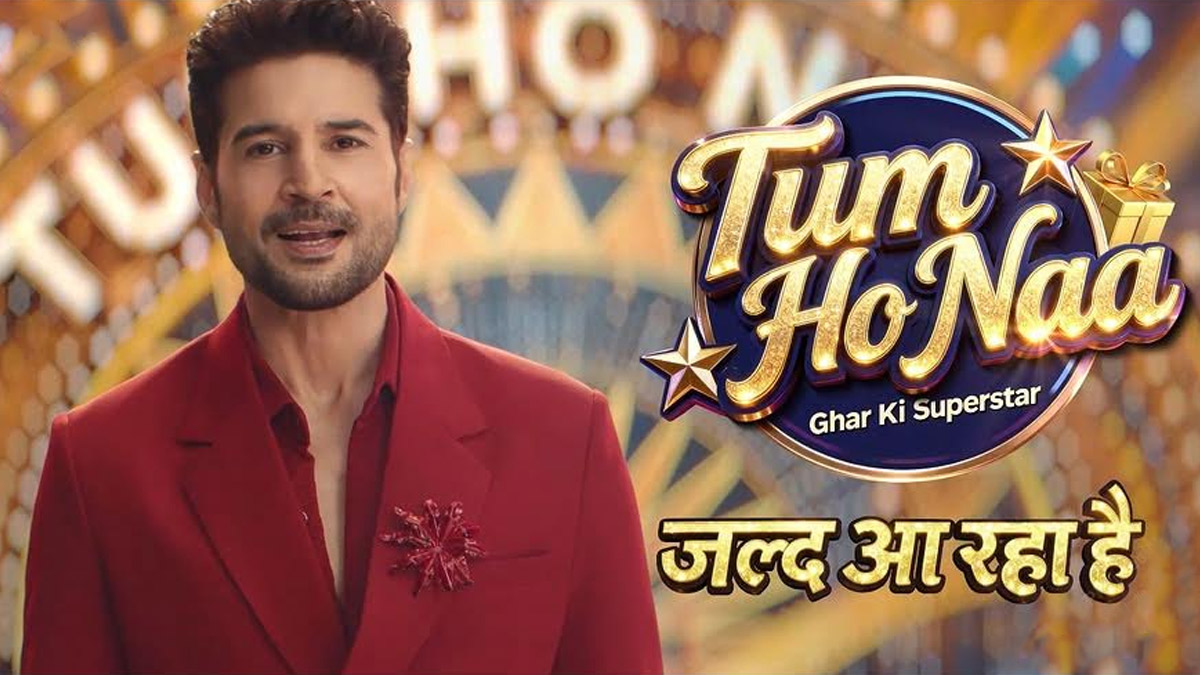
MUMBAI: Lights, camera… connection because this time, the game isn’t just about winning, it’s about who’s with you. Sony Pictures Networks India is gearing up to launch a new reality game show, Tum Ho Naa, expanding its unscripted slate with a format that promises both emotion and engagement.
The show will premiere soon on Sony Entertainment Television and stream on Sony LIV, with Rajeev Khandelwal stepping in as host. Known for his measured screen presence and selective choices, Khandelwal’s return to television adds a layer of familiarity and credibility to the upcoming format.
While specific details of the gameplay remain under wraps, the positioning suggests a reality format that leans as much on emotional resonance as it does on competition, an increasingly popular blend in Indian television, where audiences are gravitating towards content that offers both stakes and storytelling.
Khandelwal, reflecting on his return, noted that his choices have often been guided by instinct rather than convention, describing Tum Ho Naa as a project that feels “close to the heart”. His association also signals Sony’s continued focus on anchoring new formats with recognisable faces who bring both relatability and depth.
The launch comes at a time when broadcasters are doubling down on original non-fiction formats to drive appointment viewing, even as digital platforms expand parallel reach. By placing the show across both linear television and OTT, Sony appears to be aiming for a dual-audience strategy capturing traditional viewers while engaging digital-first consumers.
As the countdown to premiere begins, Tum Ho Naa positions itself not just as another game show, but as a reminder that sometimes, the biggest prize on screen isn’t the jackpot, it’s the journey shared along the way.







