News Broadcasting
PIB under deluge over photoshopped image of Modi’s Chennai aerial survey

NEW DELHI: Deluged by Twitter and other social media websites, the Government today apologised for the mistake in the picture of Prime Minister Narendra Modi’s aerial survey over flooded Chennai caused by what it called “photoshopping” by merging two pictures “due to error of judgement.”
The photo had shown Modi looking out of the helicopter at very clear view of flooded houses in residential areas, which was not possible from a helicopter at the height at which it was said to be flying over the southern metro that has seen the worst rainfall since 1918.

The photograph was removed as soon as the error was realised, a senior official of the Press Information Bureau told Indiantelevision.com.
The photo was one of seven, which had been released on the PIB Twitter handle and PIB’s website last evening.
“PIB regrets the release of the picture. Inconvenience caused is regretted,” a post on the PIB website said.
Modi had made an aerial survey of the flood-hit areas of Chennai, its suburbs and Kanchipuram and Tiruvallur districts. He arrived from Delhi at naval working station INS Rajali in Arakkonam, about 60 km from Chennai.
In fact, the photoshopped image is still appearing on many Twitter handles, raising several questions since private media is often not allowed to accompany the PM on such aerial surveys.
The faux pas led to a large number of comments and cast a shadow on the reliability of official media.



News Broadcasting
News18 India launches Command Centre war explainer with Arya
New show shifts from debates to decoding global conflicts and impacts
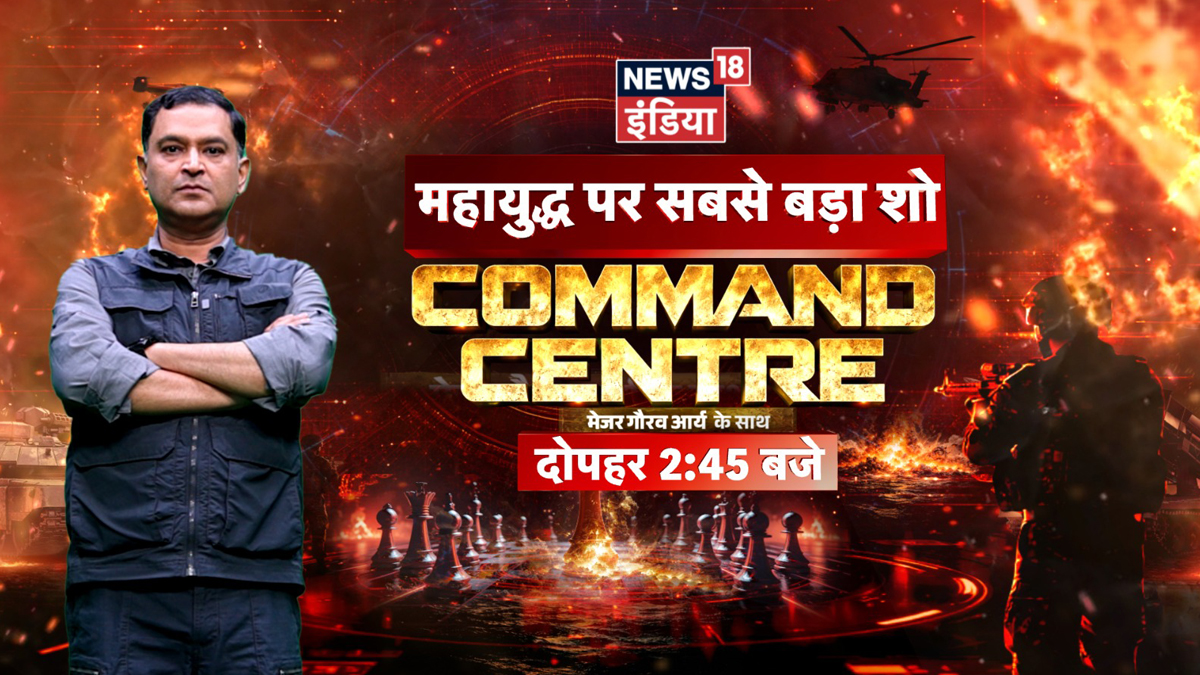
MUMBAI: News18 India has rolled out a new war-focused programme, Command Centre, featuring Gaurav Arya, as it looks to offer viewers a sharper, more grounded take on global conflicts amid rising tensions in West Asia.
Positioned as an “insider war room”, the show moves away from conventional panel debates and instead focuses on explaining military developments, decoding strategy and connecting global events to their everyday impact, from fuel prices to economic shifts.
The format leans heavily on visuals and data. The studio has been designed like a command hub, complete with large LED war maps, real-time graphics and an alert system to track developments as they unfold.
At the centre of it all is Arya, who brings his military background to simplify complex war strategies for viewers. His signature line, “Seedhi baat samjhiye”, anchors the show’s promise of clarity over noise.
News18 India managing editor Jyoti Kamal said, “Command Centre, featuring Major Gaurav Arya is designed to deliver accurate insights and a clear perspective on how evolving conflicts impact everyday life, from household budgets to national security. With expert voices analysing every development in real time, the show goes beyond headlines to decode what’s happening now, what it means, and what could come next.”
Echoing the intent, Gaurav Arya added, “In times of war, confusion is the biggest threat. With News18 India’s Command Centre, we are bringing viewers inside the war room, decoding strategies, tracking every escalation, and explaining, in the simplest terms, what it means for India and for every household. Seedhi baat samjhiye, this is where you understand not just what is happening, but what happens next.”
The weekday show will air in the afternoon slot and will also feature Gaurav Shukla, adding to its editorial depth.
With its mix of analysis, visuals and a clear focus on impact, the show reflects a broader shift in news consumption. Viewers are no longer just watching events unfold, they are looking to understand what those events mean for them.






