Animation
Pentamedia declares good Q1 performance, targets children’s channel launch in Q2


Animation major Pentamedia Graphics has announced positive results for the quarter ended 30 June 2001. The company posted a 38 per cent rise in net profit to Rs 417.2 million compared to RS 308.3 million the previous year, an official release states. Sales increased to RS 1580.9 million from RS 1144.9 million in June 2000.
The growth in turnover, operating profit and profit after tax is 38 per cent, 54 per cent and 35 per cent respectively, the release states. Revenue contributed by animation, special effects, web entertainment and other multimedia services were 55 per cent, 15 per cent, 10 per cent and 20 per cent respectively.
The company is planning to launch a new children’s entertainment television channel “Splash” on the Asiasat satellite. Pentamedia subsidiary Intelivision Ltd is responsible for the channel launch and is looking at an investment of about RS 120 million with revenues of RS 140 million from advertising and other rights in the first year.

Intelivision has secured permission from the information and broadcasting ministry for uplinking the channel through VSNL (the government-owned internet gateway provider). A teleport at Kelambakkam in Chennai is envisaged in the near future.
Test transmission is scheduled to begin by 1 August via ST teleport, Singapore. Intelivision has decided to uplink through Singapore as it is cheaper. Once the teleport at Kelambakkam becomes operational, the uplink service will be shifted to Chennai. The programme grid for the initial two months of on air presentation has been finalised, the release says.
The future projects of Intelivision include a bouquet of Indian satellite channels to be broadcast through KU Band from an Indian platform to ethnic Indian populations in US, Europe, Middle East and South Africa.
PENTAMEDIA, FILM ROMAN REACH SETTLEMENT: On 9 July, Pentamedia and Film Roman closed the chapter on what has been a PR disaster for the media major. The $15 million buyout plan for 60 per cent stock in Film Roman never materialised and after a number of modifications Pentamedia called off the whole thing. A settlement agreement was reached where Pentamedia paid Film Roman $350,000 to release it from all possible liabilities arising out of Pentamedia’s failure to keep to the schedule of payment.
And at a meeting held on 13 July the company board approved the allotment of 12.7 million Global Depositary Receipts (GDRs) at the rate of $1.50 per GDR for cash to investors as advised by Investment Banking Division of Amas Bank, Geneva. The allotments raised $19.05 million and diluted the firm’s equity by 2.3 per cent. The listing agents for the GDRs are M/S. Deutsche Bank Luxemburg SA and the legal Counsel is M/S Jones Day, London. These GDRs along with the existing GDRs of Pentamedia Graphics Ltd, will be traded at the Luxembourg Stock Exchange.







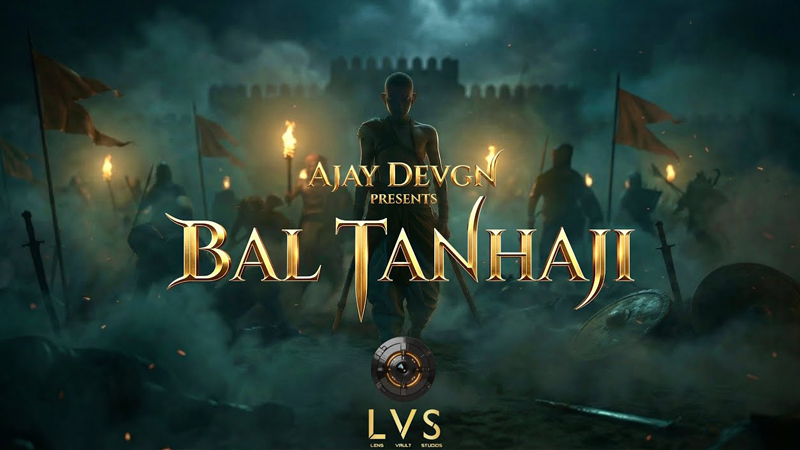
MUMBAI: History is getting a fresh rewrite this time with code, creativity and a longer arc in mind. Lens Vault Studios has announced its first original production, Bal Tanhaji, marking the official entry of the newly launched, tech-driven studio into India’s evolving entertainment landscape.
Arriving six years after the box-office success of Tanhaji: The Unsung Warrior, the new project expands the universe rather than revisiting familiar ground. Bal Tanhaji explores uncharted narrative territory, signalling a clear shift from one-off cinematic spectacles to long-format, world-building storytelling designed for digital-first audiences.
At the heart of this ambition is Prismix Studios, the in-house generative AI and technology arm powering the creative engine behind the show. The studio’s approach blends storytelling with next-generation tools, aiming to reimagine how Indian IPs are created, scaled and sustained beyond theatrical releases.
For Lens Vault Studios chairman Ajay Devgn the new venture represents a deliberate step beyond traditional cinema. The focus is firmly on building long-form intellectual properties across fiction and non-fiction, tailored to changing viewing habits and platform-led consumption. He said the studio intends to explore formats that remain largely untapped, while drawing on the team’s experience with large-scale cinematic storytelling.
Lens Vault Studios founder and CEO Danish Devgn echoed that sentiment, describing Bal Tanhaji as the studio’s first generative-AI-led IP and the starting point of a broader vision. The aim, he noted, is to carry forward the legacy of the Tanhaji universe while connecting with younger audiences through a blend of powerful narratives and emerging technologies.
With Bal Tanhaji, Lens Vault Studios is planting its flag early not just launching a show, but signalling a larger play for cinematic universes that live, grow and evolve across platforms. If this debut is any indication, the future of Indian storytelling may be as much about imagination as it is about innovation.







