Cable TV
Pay-TV in vital stage; service providers must innovate: Study


SINGAPORE: Pay-TV has entered a period of significant change. Competition is set to increase dramatically, and, in order to grow, service providers will have to innovate strongly.
Nagra, a Kudelski Group (SIX:KUD.S) company and the world’s leading independent provider of content protection and multi-screen television solutions, in partnership with MTM, has published the global learnings from the Pay-TV Innovation Forum. Findings from the Asia Pacific leg of the programme were released last month.
According to the global findings, industry participants strongly believe that pay-TV, while still growing worldwide, has entered a period of significant change, creating both challenges and opportunities. 83% of executives stated that competition is set to increase dramatically and 78% agreed that in order to grow, service providers will have to innovate strongly over the next five years. However, the state of innovation varies by region. North American pay-TV service providers are notable for their innovation capabilities, offering the most advanced and diversified product and service portfolios. In comparison, pay-TV markets in Asia Pacific are much more fragmented, with market characteristics and service-providers’ innovation capabilities varying substantially by territory.
Looking forward, executives cited strengthening their core pay-TV platform by going beyond traditional services as their main area of opportunity by focusing on multiscreen/TV everywhere services (76 per cent), new types of content (74 per cent), and new content pricing and packaging strategies (73 per cent). Just over half of executives also see opportunities in advance advertising and data (54 per cent), as well as standalone OTT services (53 per cent).

Identifying opportunities for innovation globally, the research notes that many service providers have already started investing in new growth areas. North American providers, for example, see a significant commercial opportunity in new forms of content that appeal to Millennials and Generation Z such as digital-first short-form content, on-boarding of third-party OTT services, virtual reality, and gaming. Some European and Asia Pacific pay-TV service providers also see value in providing OTT or gaming services on their pay-TV platforms, particularly through partnerships. Only a smaller number of large scale operators currently address business adjacencies such as advanced advertising and Internet of Things (IoT).
The research also identifies four major innovation success factors for the industry including strong customer and market insight, having the right platforms and processes, as well as strategic and collaborative partnerships with best-of-breed technology suppliers and content companies.
“As broadband becomes more ubiquitous in several markets, competition from streaming media platforms intensifies and consumer TV and video journeys evolve, it is clear that the industry needs to innovate at a faster pace to satisfy its customers and remain relevant,” said Simon Trudelle, Senior Product Marketing Director for NAGRA. “Thanks to the work of the Pay-TV Innovation Forum, we now have a global view of the state of innovation around the world and a foundation of key learnings to ensure future success and growth for pay-TV service providers.”
“The pay-TV industry is a global success story,” said Jon Watts, Managing Partner at MTM. “Despite some regional differences, the majority of executives expect to continue innovating around their core pay-TV services, improving user experience and developing new ways to price and package content, bringing new kinds of content onto their TV platforms, and continuing to invest in multiscreen offerings. The research programme also shows that successful service providers have focused strongly on developing their innovation capabilities, enabling them to adapt to new market conditions.”







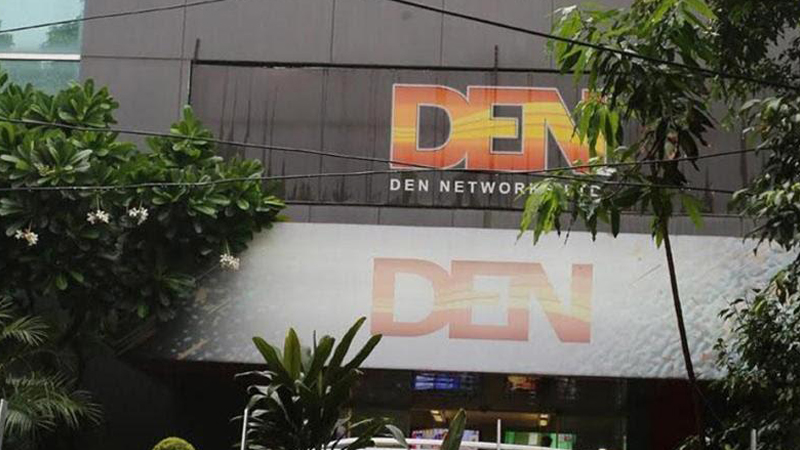
MUMBAI: When margins wobble, liquidity talks and in Q3 FY25-26, cash did most of the talking. Den Networks Limited closed the December quarter with consolidated revenue of Rs.251 crore, marginally higher than the previous quarter but down 4 per cent year-on-year, even as profitability stayed resilient on the back of strong cash reserves and disciplined cost control.
Subscription income softened to Rs.98 crore, slipping 3 per cent sequentially and 14 per cent from last year, while placement and marketing income offered some cheer, rising 15 per cent quarter-on-quarter to Rs.148 crore. Total costs climbed faster than revenue, up 7 per cent QoQ to Rs.238 crore, driven largely by higher content costs and operating expenses. As a result, EBITDA dropped sharply to Rs.13 crore from Rs.19 crore in Q2 and Rs.28 crore a year ago, pulling margins down to 5 per cent.
Yet, the bottom line refused to blink. Profit after tax stood at Rs.40 crore, up 15 per cent sequentially and only marginally lower than last year’s Rs.42 crore. A healthy Rs.57 crore in other income helped cushion operating pressure, keeping profit before tax at Rs.48 crore, broadly stable quarter-on-quarter despite the tougher cost environment.
The real headline-grabber, however, sits on the balance sheet. The company remains debt-free, with cash and cash equivalents swelling to Rs.3,279 crore as of December 31, 2025. Net worth rose to Rs.3,748 crore, while online collections accounted for 97 per cent of total receipts, underscoring strong cash discipline across operations, including subsidiaries.
In short, while Q3 showed signs of operating strain, the financial backbone remains solid. With zero gross debt, steady profits and a formidable cash war chest, the company enters the next quarter with flexibility firmly on its side proving that in uncertain markets, balance sheet strength can be the best growth strategy.






