Hindi
Panchami Ghavri challenges stereotypes: ‘Women can work together’ in ‘The Crew’

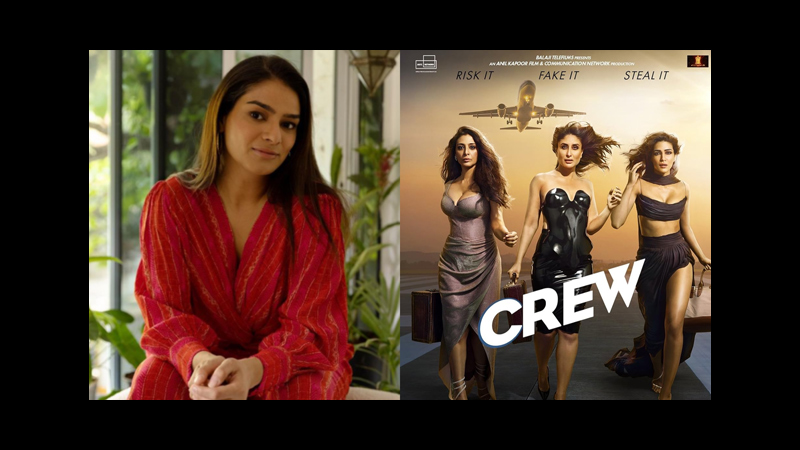
Mumbai: In an industry often dominated by male-centric narratives, casting director Panchami Ghavri stands as a beacon of change, spearheading projects that celebrate the strength and complexity of female characters. Ghavri’s upcoming project, “The Crew,” promises to be a game-changer, boasting a stellar cast led by powerhouse actresses Tabu, Kareena Kapoor, and Kriti Sanon. Now, Panchami opens up about the importance of female-centric films, the evolving preferences of the audience, and her hopes for the impact of such projects.
“I think there always has been a disparity in the kind of box office openings female-led films take as compared to male,” Ghavri reflects candidly. “Our male-to-women ratio is not the best in general. However, I haven’t seen this much excitement about a female-led film in a long, long time. Everyone I meet is excited about ‘The Crew.’ It’s also a really exciting cast; we haven’t seen such a strong female cast in a long time.”
Ghavri’s enthusiasm for the project is palpable, fueled by the prospect of challenging age-old norms and stereotypes. “First of all, to break the age-old norm that women can’t work together. Whoever said this was a man,” she quips with a smile. “I think women have really interesting stories to tell, and through a different lens. Rhea [Kapoor] herself is always looking for scripts that have a strong female voice in them. I think in India, we’re still a long way to go, but we’re getting there for sure!”

Indeed, the landscape of Indian cinema is witnessing a gradual but significant shift, as audiences increasingly gravitate towards narratives centered on women. Ghavri acknowledges this trend, noting, “The audience is changing their preferences when it comes to female-led films. I’m a woman, and I love strong narratives of women. At the end of the day, women are able to hustle at work, handle kids, run a home, manage family expectations—all of it simultaneously.”
With “The Crew,” Ghavri and her team are poised to make a significant impact, not only in challenging gender stereotypes but also in amplifying the voices of women in cinema. “Then often you hear of men needing help with getting appointments for themselves,” Ghavri remarks with a laugh. “It’s funny, but it’s true. So I think the stronger our voice, the more we will be heard. Things are changing for sure!”
As the film industry continues to evolve, Ghavri remains committed to championing stories that resonate with authenticity and depth. With “The Crew,” she hopes to inspire a new generation of filmmakers and audiences alike, proving that women-led narratives are not only relevant but essential in shaping the cultural landscape of Indian cinema.
On the work front, Panchami Ghavri is making waves with her exciting lineup of upcoming projects and recent releases. With “The Crew” and “Mr and Mrs Mahi” on the horizon, Ghavri is poised to showcase her knack for assembling stellar casts and championing compelling narratives. These projects promise to captivate audiences with their diverse storytelling and dynamic characters. Meanwhile, Ghavri’s recent releases, including “Murder Mubarak,” “Yodha,” “Karmma Calling,” and “Showtime,” have garnered praise for their innovative approach and engaging storytelling. As a casting director with an eye for talent and a commitment to pushing boundaries, Ghavri continues to leave an indelible mark on the Indian film industry.





Hindi
Zee5 and Applause Entertainment team up for whodunnit ‘Everybody Loves Sohrab Handa’
Rajat Kapoor directs star-studded murder mystery streaming from 10 April.
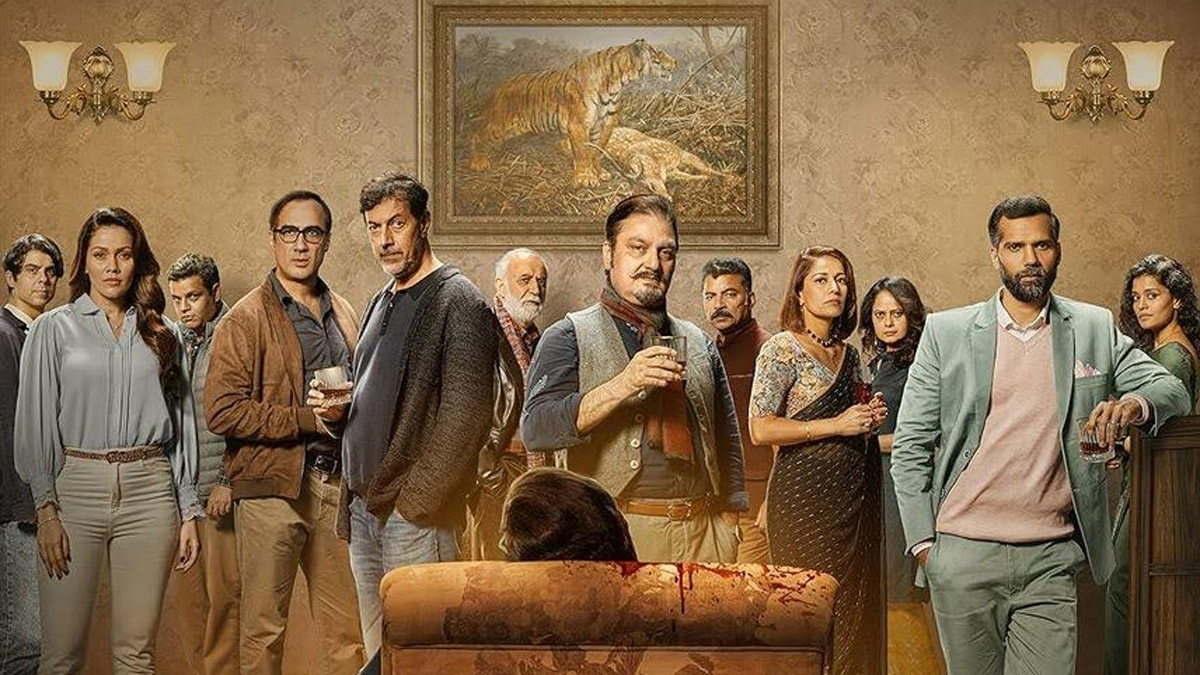
MUMBAI: Zee5 is serving up another killer collaboration and this time, the murder mystery comes with a generous side of dark humour and family dysfunction. The streaming platform has partnered with Applause Entertainment and Mithya Talkies to bring Everybody Loves Sohrab Handa, a fresh, twisted whodunnit written and directed by acclaimed filmmaker and actor Rajat Kapoor. The film will stream exclusively on Hindi Zee5 from 10 April.
The movie reimagines the classic murder mystery genre with a contemporary, darkly comic edge. It revolves around a group of friends and family who smile, drink, and celebrate together until the silence snaps and long-buried secrets spill out. The stellar ensemble cast includes Vinay Pathak, Ranvir Shorey, Waluscha De Sousa, Saurabh Shukla, Chandrachoor Rai, Neil Bhoopalam, Koel Purie, Palomi Ghosh, and Rajat Kapoor himself.
This latest offering continues the successful partnership between Zee5 and Applause Entertainment, which has previously delivered diverse hits such as Mithya, Bloody Brothers, and Jab Khuli Kitaab.
&TV Business Head of hindi Zee5 and chief channel officer Kaveri Das said, “Our collaboration with Applause Entertainment has consistently delivered distinct, high-impact storytelling. Everybody Loves Sohrab Handa is a natural progression, reinforcing our focus on genre-led content with a compelling whodunnit premise and a strong ensemble cast.”
Applause Entertainment business head for movies Sunil Chainani added, “This film adds yet another compelling layer to our slate with Rajat Kapoor’s unmistakable voice.”
Rajat Kapoor shared, “What interested me was not just the mechanics of a whodunnit, but the emotional violence that precedes physical violence. These are people who smile at each other, but there’s so much that is not said.”
The film promises razor-sharp writing, layered performances, and simmering tension, inviting viewers not just to solve the crime but to unravel the complex relationships at its heart.
If you love a good murder mystery served with wit and emotional depth, Everybody Loves Sohrab Handa looks set to be your next addictive watch. Mark your calendars, the whodunnit drops on Hindi Zee5 from 10 April.






