News Broadcasting
Pakistan in talks with Hughes for satellite deal


Pakistan is negotiating a satellite deal with European and US operators to buy two satellites, one to occupy the 38 E orbital slot allotted to the country, and the other as a back up option in the same slot.
Reports in the national newspaper Dawn say Pakistan has sent a high-level delegation to Germany to negotiate with Hughes Global Services for the Anatolia 1 satellite. The satellite, which started life as Palapa C1, is a series 601 satellite, built by Boeing, which was resold to Hughes in January 1999. It was first launched on 31 January, 1996, using an Atlas 2AS booster and was slotted at 150 degrees East after launching from Kourou in French Guiana. Quoting Federal Minister for Science and Technology Dr Atta-ur-Rehman, the Dawn says Turkey, which currently has the satellite in its 50 E orbital slot, has expressed its inability to do frequency coordination for the satellite.
Meanwhile, the Daily Jang says that Pakistan’s ministry of science and technology has invited internationally recognised consultants to assist in developing the country’s PAKSAT satellite project to “enhance the country’s communications as well as strategic capabilities.” The newspaper says the orbital slot allocated to Pakistan by the International Telecommunication Union at 38 deg E would lapse in April 2003 unless the country has a satellite in place with transponders switched on and international approval is obtained for ownership of the slot.






News Broadcasting
News18 India launches Command Centre war explainer with Arya
New show shifts from debates to decoding global conflicts and impacts
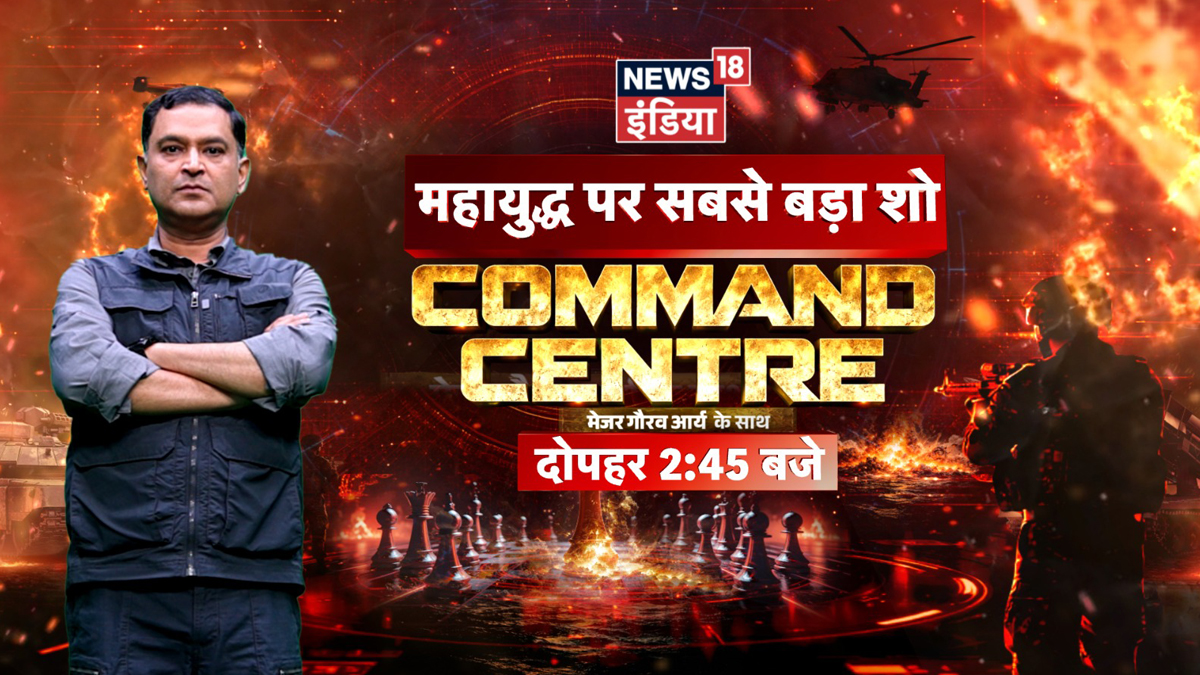
MUMBAI: News18 India has rolled out a new war-focused programme, Command Centre, featuring Gaurav Arya, as it looks to offer viewers a sharper, more grounded take on global conflicts amid rising tensions in West Asia.
Positioned as an “insider war room”, the show moves away from conventional panel debates and instead focuses on explaining military developments, decoding strategy and connecting global events to their everyday impact, from fuel prices to economic shifts.
The format leans heavily on visuals and data. The studio has been designed like a command hub, complete with large LED war maps, real-time graphics and an alert system to track developments as they unfold.
At the centre of it all is Arya, who brings his military background to simplify complex war strategies for viewers. His signature line, “Seedhi baat samjhiye”, anchors the show’s promise of clarity over noise.
News18 India managing editor Jyoti Kamal said, “Command Centre, featuring Major Gaurav Arya is designed to deliver accurate insights and a clear perspective on how evolving conflicts impact everyday life, from household budgets to national security. With expert voices analysing every development in real time, the show goes beyond headlines to decode what’s happening now, what it means, and what could come next.”
Echoing the intent, Gaurav Arya added, “In times of war, confusion is the biggest threat. With News18 India’s Command Centre, we are bringing viewers inside the war room, decoding strategies, tracking every escalation, and explaining, in the simplest terms, what it means for India and for every household. Seedhi baat samjhiye, this is where you understand not just what is happening, but what happens next.”
The weekday show will air in the afternoon slot and will also feature Gaurav Shukla, adding to its editorial depth.
With its mix of analysis, visuals and a clear focus on impact, the show reflects a broader shift in news consumption. Viewers are no longer just watching events unfold, they are looking to understand what those events mean for them.