iWorld
OTT video can bring about cord-cutting in India sooner than expected


MUMBAI: Despite the popularity and endless love for movies and catch-up content among Indian consumers, original content is emerging as an important category for online video viewers. However, traditional content categories like movies and related content like catch-up TV content dominate the current consumption trend on online video viewing probably due to limited supply of originals in contrast to library content.
In a report by Eros Now and KPMG India based on a survey carried out among 1458 OTT users in 16 cities of India, it has been revealed that 10 per cent of respondents prefer watching original content online given the current availability of the category standing at less than one per cent of overall content. Moreover, the preference for original content was consistent among all age groups proving that the category is no longer limited to millennial audience. The survey also revealed that 30 per cent of respondents prefer original content while 22 per cent prefer catch-up content.
“If you look at television, there are hundreds of channels, there are 8-10 Hindi GECs and in each language there are multiple GECs, each channel targeting same consumers. In a situation like that, there isn't any major differentiation in the content being offered. The question at this stage of evolution of digital platform is that you need to differentiate against other platforms or TV. Right now the effort is to take time away from TV to OTT because the consumer has a limited time available on hand,” KPMG India media and entertainment partner and head Girish Menon commented in a press meet.

“It came out in the survey that most consumers are using these platforms to consume catch-up content. Therefore the same level of brand awarness that exists between TV channels is existing between the platforms at this point because majority of the content is library content. If you see the content that is being consumed other than movies it is TV content, sports and original content. Original and exclusive content will trigger cord-cutting also,” he added.
The study also emphasised on the fact that freshness and uniqueness of content are the key determining factors for installation and uninstallation of apps along with respondents subscribing to platforms as nearly 87 per cent of the respondents install an app considering the quality of content.
30 per cent of the respondents prefer watching content in languages other than Hindi and English. The preference for content consumption is significant in the native languages across large parts of the country, with South India observed to be the most loyal to their native tongue.
Online video platforms are truly going mass as the Indian OTT viewer spends approximately 70 mins per day on online video platforms, with a consumption frequency of 12.5 times a week i.e. more than once a day. Viewers are also accessing ~2.5 platforms at a given time. While the customer sets are fairly heterogeneous, there is a trend of homogeneity that was observed in terms of consumption frequency and duration across age groups, income levels and genders.
The report also revealed that OTT video could usher in cord cutting sooner than expected. While 38 per cent of the respondents could consider cord-cutting in the future as they responded to their entertainment needs being fully met online, 14 per cent of the respondents considered subscription to online video platforms as an alternative to TV subscription.
“Cord-cutting because of regulator set up, quality of content, VAS, that transition in India will potentially jump the curve in the US,” Eros Now COO Ali Hussein said in the press meet.
The importance of telco platforms for the distribution of online video content has again been proved in the survey as three out of ten respondents viewed online video on telco platforms. Jio TV emerged as the platform with the highest usage with Airtel TV being a distant second. The report also added that integrated telco billing is one of the factors that is likely to help drive VOD subscriptions in the future despite the fact that SVOD users preferred dire usage of specific platforms.
"It benefits immensely. I am getting subscriber, money, time-spent, viewership. 80-85 per cent of this country will continue to be bundled market because of the price consciousness," Hussein added.
OTT is increasingly becoming anywhere-anytime phenomenon as nearly 87 per cent of the respondents consumed content on their mobile phones, with nearly 28 per cent of the respondents consuming content during the traditional office hours of 10 am-6 pm.







iWorld
OpenAI hits back at Elon Musk’s lawsuit ahead of trial
Company calls claims “baseless” and accuses Musk of trying to disrupt a rival.
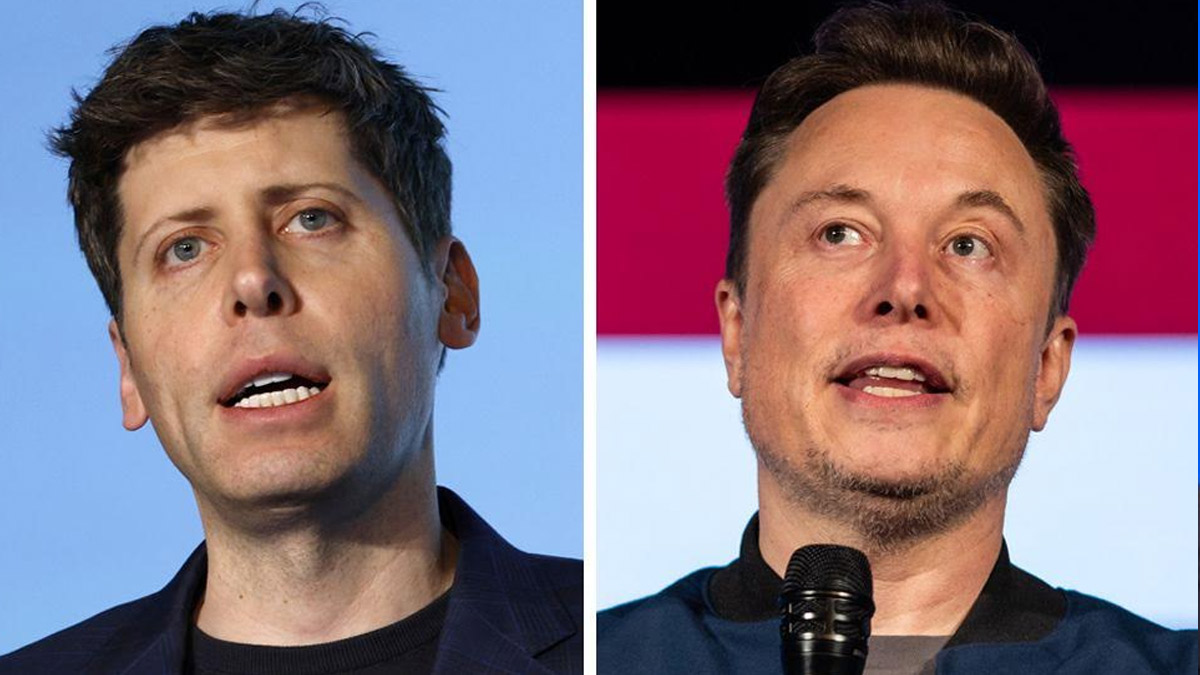
MUMBAI: When the stakes are measured in billions and egos are involved, even Silicon Valley titans can turn a courtroom into a battlefield. OpenAI has issued a sharp public response to Elon Musk’s ongoing lawsuit, accusing the billionaire of filing the case to harass a competitor rather than address genuine concerns. In a strongly worded statement shared on its official X account, OpenAI described Musk’s allegations as “baseless” and suggested the lawsuit is an attempt to disrupt the company as the case heads toward trial later this month in Oakland, California.
The response comes after Musk’s legal team recently amended the complaint, proposing that any damages potentially exceeding $150 billion should go to OpenAI’s nonprofit entity rather than to Musk personally. OpenAI questioned the timing and motive behind this change, calling it a late-stage attempt to “pretend to change his tune” on the nonprofit structure.
The company further labelled the lawsuit a “harassment campaign”, arguing that Musk’s actions are driven by personal rivalry, ego, and a desire for greater control and financial upside.
At the heart of the dispute is Musk’s claim that OpenAI has abandoned its original nonprofit mission of developing artificial intelligence for the benefit of humanity. A co-founder who left in 2018, Musk is seeking governance changes, including the removal of CEO Sam Altman from the nonprofit board, and the return of certain financial gains linked to Altman and President Greg Brockman.
OpenAI has firmly rejected these allegations, maintaining that its current hybrid structure, a public-benefit corporation overseen by a nonprofit parent remains true to its long-term goals. The company has also previously accused Musk of anti-competitive behaviour aimed at weakening its leadership.
As the case prepares for a jury trial, this public exchange highlights the deepening rift between two of the most influential figures in the AI revolution and raises broader questions about governance, mission, and power in the fast-moving world of artificial intelligence.
In the high-stakes game of AI, it seems the real drama isn’t just inside the models, it’s playing out in courtrooms too.






