I&B Ministry
OTT platforms receive stringent warning over content compliance


MUMBAI: India’s ministry of information and broadcasting has issued a comprehensive advisory to over-the-top (OTT) streaming platforms following mounting complaints about inappropriate content from members of parliament, statutory organisations and public grievances.
The ministry has underscored that streaming platforms must rigorously comply with the Code of Ethics delineated in the Information Technology Rules of 2021. These regulations mandate precise age-appropriate content classification and robust access controls to prevent children from accessing adult-rated material.
In a significant development, self-regulatory bodies overseeing these platforms have been explicitly instructed to take proactive measures against violations. The advisory drew attention to several stringent laws, including the Indecent Representation of Women Act, the newly enacted Bhartiya Nyay Sanhita 2023, the Protection of Children from Sexual Offences (POCSO) Act, and the Information Technology Act, which collectively make the publication of obscene or pornographic content a punishable offence.

The directive particularly emphasised the implementation of a more rigorous age-based content classification system and reminded platforms of the three-tier grievance redressal mechanism established under the IT Rules. This mechanism has been designed to address and resolve complaints related to content violations effectively.
The ministry’s intervention comes at a time when there is increasing public discourse about the alleged proliferation of objectionable content across streaming platforms and social media. The move signals a tightening of regulatory oversight in India’s rapidly expanding digital entertainment sector.
The advisory serves as a stark reminder to OTT platforms that they must exercise heightened discretion and due diligence while publishing content, ensuring it aligns with both legal requirements and ethical standards prescribed under Indian law.






I&B Ministry
Chanchal Kumar appointed MIB secretary
1992-batch officer shifts from DoNER as Sanjay Jaju heads the north-east ministry

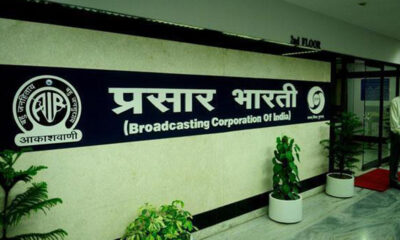
New Delhi: The government has rejigged its top bureaucracy, appointing Chanchal Kumar as secretary in the Ministry of Information and Broadcasting, replacing Sanjay Kumar Jaju in a swift senior-level switch.
Kumar, a 1992-batch IAS officer of the Bihar cadre, moves from the Ministry of Development of North Eastern Region (DoNER), where he had been serving as secretary. He steps into MIB as Jaju exits to take charge as secretary, DoNER.
Kumar is no stranger to handling multiple mandates. In December 2025, while at DoNER, he briefly held additional charge as secretary in the Department of Telecommunications during Neeraj Mittal’s leave from December 12 to December 21, ensuring continuity at a critical time.
Jaju, a 1992-batch IAS officer of the Telangana cadre, had taken over as secretary, MIB in February 2024, succeeding Apurva Chandra, who moved to the Ministry of Health and Family Welfare. His tenure combined administrative continuity with a sharper policy pitch on trust in India’s fast-evolving media and advertising landscape.
Speaking at the AdTrust Summit 2026 organised by the Advertising Standards Council of India, Jaju warned that misleading promotions risk eroding public trust even as digital platforms expand reach for businesses, startups and creators. He flagged rising threats from financial scams, deceptive investment schemes and fraudulent job advertisements targeting vulnerable users.
While noting that commercial speech is protected under freedom of expression, Jaju argued that misleading advertising must face regulatory scrutiny. He pushed for a shift in industry priorities—from scale to credibility, authenticity and transparency—especially in disclosures and sponsored content. Truthfulness, accountability and safeguards for vulnerable audiences, he said, must anchor the ecosystem.
Jaju’s move to DoNER and Kumar’s arrival at MIB signal a calibrated reshuffle at the top—continuity in governance, but with a clear message: credibility is the new currency.