iWorld
Online video to take lion’s share of video biz revenue in the Gulf by 2025: MPA

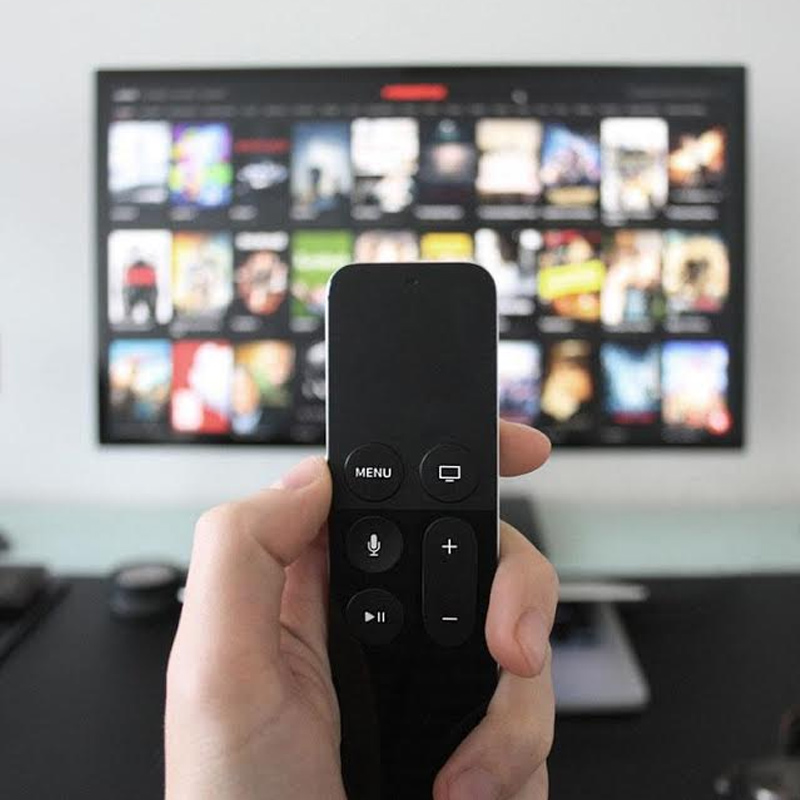
KOLKATA: As more people shift to alternative entertainment options, online video business is going to surpass pay-TV in next five-ten years worldwide. A report by Media Partners Asia (MPA) has projected that online video will account for the lion’s share of total video industry revenue by 2025, with both pay-TV and free TV in six Gulf Cooperation Council (GCC) countries. Within the region, the Kingdom of Saudi Arabia (KSA), and the United Arab Emirates (UAE) will continue to contribute over 70 per cent pay-TV and online video revenues in aggregate by 2025.
According to MPA, the GCC video industry – comprising free TV, pay-TV and online video – will generate revenues of $1.6 billion in 2020, representing a 13 per cent year-on-year contraction with deep declines in TV advertising and subscription, only partially offset by the significant growth of online video. Covid2019 related macro issues have exacerbated headwinds across the TV sector. A rebound is expected in 2022 but the TV industry will face difficulties in the long term. Overall, GCC video industry revenues are forecast by MPA to increase to $2 billion by 2025, a CAGR of 5 per cent from 2020.
MPA vice president Aravind Venugopal said: “The GCC’s vibrant and highly competitive video ecosystem has seen some significant changes in the past few years. Online video services continue to grow, driven by: low-cost pricing; telco partnerships, including hard bundles; and the availability of premium local and global content online, including increased investment into exclusive originals.”

Even with telco partnerships, which help to broaden the customer funnel, the longer-term success of OTT platforms will rest on their ability to retain customers, manage subscriber acquisition costs (SAC) and increase lifetime value (LTV).
“Over the next five years, the focus will move to the acquisition of high LTV subscribers via D2C. Market consolidation is also likely as the GCC region will be unable to support 15+ platforms with many competing in the same customer segments. New entrants into the market such as Disney+ Hotstar and HBO Max, could provide further impetus to industry growth, competitive intensity and consolidation,” he added.
Venugopal also noted that the slow pace of innovation by pay-TV operators combined with high prices of subscription based video services, and the proliferation of broadband have contributed to the decline of pay-TV. IPTV has maintained subscriber growth, driven primarily by hard bundled triple-play services. However, as telcos re-examine their cost structures and investments in content and platforms, there remains an impending threat of the breaking of the hard bundle, which could further endanger pay-TV, he surmised.
The report further states that within the GCC online video sector, three business models have emerged in recent years: freemium operators, led by MBC-owned Shahid, PCCW-owned Viu and Zee’s Weyyak; SVoD operators, led by Netflix, Amazon Prime Video, STARZPLAY, Jawwy TV, Watch iT and OSN Streaming; and AVoD operators, including YouTube and TikTok.
Given the diverse demographics and large expat population in the region, several services targeted at specific language/ethnic groups have also launched in recent years. These include the Indian and South Asian segment, which are key audiences for Zee5, SonyLIV, Eros Now and YuppTV. As platforms seek to further expand their customer base and drive consumption, investment in Arabic originals has become a key battleground. While the Covid2019 pandemic and the economic-political crises in the region have impacted production activities, MPA has forecast that productions will return to normalcy by Q1 2021 as economies recover.
In the telecoms sector, fixed broadband has been relatively insulated from economic woes given its utility-status in UAE and low penetration in KSA. However, mobile services, particularly prepaid, have experienced subscriber declines. The UAE and Qatar leads the region, both in terms of fibre connectivity and penetration with over 90 per cent of homes having access to fixed wired services via fibre. From a mobile perspective, the GCC is well connected, with a highly competitive environment (ex-UAE) keeping retail prices relatively affordable. Data consumption remains fairly high, driven primarily by video services. There remains further scope for growth, especially in markets with low fixed broadband penetration.







iWorld
Samay Raina returns with Still Alive, confronts 2025 controversy in bold comeback special
Comeback set tackles controversy, blending humour with raw storytelling
MUMBAI: Samay Raina is set to release his new stand-up comedy special, Still Alive, on YouTube on April 7, 2026, marking a high-profile return following a turbulent year.
The trailer for the special dropped on April 5, offering a glimpse into what Raina describes as a raw and unfiltered set that leans as much on honesty as it does on humour.
Positioned as a comeback of sorts, Still Alive draws heavily from the controversy surrounding his show India’s Got Latent in early 2025. The episode led to legal trouble, multiple FIRs, and a lengthy six-hour interrogation by the Maharashtra Cyber Cell, placing the comedian at the centre of intense public scrutiny.
Rather than sidestep the episode, Raina leans into it. The special reflects on the fallout and his personal journey through it, blending observational comedy with moments of emotional candour. Early audience feedback from live performances suggests the tone is less about rapid-fire punchlines and more about storytelling with bite.
The special was filmed during his global Still Alive & Unfiltered tour, which ran from August 2025 to early 2026. The tour saw Raina perform across major international venues, including the Madison Square Garden Theatre in New York, a milestone that places him among the youngest Indian comedians to take that stage.
The title itself signals resilience. “Still Alive” is a nod to navigating both legal and public backlash while choosing to remain unapologetically authentic, a theme that appears to anchor the set.
With the special set to premiere online, all eyes are now on how audiences respond to a performance that promises equal parts reflection and wit. For Raina, the message is clear. He is not just back, he is ready to be heard on his own terms.






