News Headline
One CAS deadline gone, will the next go the same way?

NEW DELHI: 15 July. Today could have been the day when the CAS sun shone in the four metros of India. But, as in many parts of Delhi, Kolkata and Mumbai, it has turned out to be a cloudy day.
Perhaps symptomatic of things to come as well as what has transpired till today, when addressability was originally mandated by the government to have been rolled out.
CAS, aka conditional access system, has got many an expanded form. Considering the various twists in the tale — a la hankie wetting serials in Hindi that some of the satellite channels air — the latest is that it stands for Chaos and Stress.
It is not much off the mark as is evident from the tussle that is still continuing. An example: two press conferences being held today in Delhi, barely a few kilometers from each other, by two sections of the cable industry; one by those who support the phased rollout and the price of the basic tier of free to air channels at Rs 72 per month and the other by those MSOs and cable ops who don’t support the FTA price.
But if one goes back in the past, the genesis of CAS owes itself to the continued tussle that the cable industry had with the broadcasters, the frequency of the face-offs increasing as more and more free to air channels — something that is unique to the Indian market — turned pay where the cable operator had to pay the broadcasters a certain amount of money for redistributing the channels to their subscriber base.
Almost a year back, the idea of addressability or CAS was mooted at Shastri Bhawan in Delhi that houses India’s information and broadcasting ministry and was being lorded over by a lady minister called Sushma Swaraj whose penchant for mothering `new’ ideas is legendary. (In her latest role as the country’s health minister, she is reported to have preached that abstinence from sex is a better way to avoid risking AIDS rather than using condoms.)
Egged on by a section of the cable industry, which thought CAS was a good stick to discipline the broadcasters with, Swaraj last year steam-rolled through both Houses of Parliament the amendments to the Cable TV (Network) Regulation Act. This brought about the legislation mandating CAS in the four metros of Delhi, Mumbai, Kolkata and Chennai in the first phase to be followed by other cities later.
This steam-rolling of the amendments in the relevant Act was in the face of stiff opposition from the Opposition parties, especially the Left-oriented ones who thought a more thorough debate on addressability was needed before such ideas are implemented in a country like India where politics takes precedence over good governance and good economics. But Swaraj would hear nothing of such critics and in her own words, “CAS would revolutionize Indian TV industry.” A phrase that possibly cannot be termed famous last words.
Having got the policy-makers’ nod to go ahead with CAS, all in the name of having a legislation to benefit the consumers (read the vote bank), Swaraj also saw to it that a notification was issued on 15 January that stated that six months from the time of its issuance, CAS would be rolled out in the four metros.
After having done that and set up a task force on CAS to facilitate its implementation within six-month timeline, Swaraj exited from the I&B ministry early 2003 amidst speculation that her removal from the high-profile ministry was an indicator of her dipping popularity within the Bharatiya Janata Party (BJP) that leads the multi-party coalition federal government in India.
Swaraj was replaced by Ravi Shankar Prasad, a junior minister and a rising politician in the BJP whose antecedents were perfect — Prasad hailed from one of the poorest states of India, Bihar, and is the son of a man who is credited with having established the BJP’s mother organisation in his home state.
But, contrary to expectations and aspirations, Prasad found himself almost out of his depth from the first day in the I&B ministry, considered the graveyard for some of the best politicians of the country, including former Prime Minister Indira Gandhi.
With the Indian economy opening up, various sectors have been increasingly seeing invasion from foreign business and media was no exception. Not only did Prasad have to, and still does, contend with businessmen like Rupert Murdoch, dubbed a corporate marauder globally, but also his Indian bete noire, the wily home-grown Subhash Chandra. While foreign broadcasters, led by Murdoch’s Star, were not in favour of CAS, Chandra with his then floundering-now-in-consolidation-mode Zee Telefilms came out all in support of addressability as he saw an opportunity in increased subscription revenue over a period of time. Especially when Zee’s cable arm, Sitcable Networks, is the largest multi-system operator (MSO) in the country.
In between the desi and videshi sandwich was the cable fraternity and independent cable operators who added spice to the CAS dish.
Caught between the so-called stakeholders of the industry and their divergent interests, the government (read the CAS force) blundered along, lurching from one meeting to another, from February to April when things started sizzling with the pay broadcasters realising the government was serious on CAS and that it may become an inevitability.
It’s around this time that lobbying for and against CAS started with the players deciding to come out from under their varied camouflages. The split among the ranks was highlighted at a presentation made by the Indian Broadcasting Foundation, the apex body of broadcasters operating in India, to a parliamentary committee. The president of the body (Prasar Bharati’s CEO KS Sarma) differed with the pay broadcaster lobby on a one-city rollout of CAS in Chennai, the metro that contributes the least to the advertising kitty.
With the game of tennis being played as the cable and the broadcasting fraternity kept bouncing the CAS ball back and forth, the umpire, the government, suddenly found itself at sea because politicians of various hues, cutting across party lines, had jumped onto the CAS bandwagon.
Starting mid-May, CAS had become a political tool and by mid-June everybody who was somebody was on board — from Shiv Sena’s Bal Thackeray to Delhi chief minister Sheila Dixit to former Delhi CM Madan Lal Khurana to the West Bengal chief secretary, down the line even to some little known consumer groups — all dishing out half-baked truths about CAS. Again all in the name of consumer.
The shrill reached such a pitch that from end-June the Prime Minister’s Office had to step in with an effort to bring some semblance of order in the chaotic scenario. That the consumer groups who had threatened to move court against CAS rollout have not done so yet, that the broadcasters are yet to announce their a la carte consumer-friendly prices, that the government has no inkling of the set-top boxes presently in the country and that Prasad is still harping on a smooth rollout of CAS are all indicators to the fact that in the last six months, not much headway had been made with everybody thinking a magic wand would be waved and things would fall in place.
Issuance of various notifications notwithstanding — the compromise formula being hammered out entails area-wise rollout in the metros from 1 September with riders from the broadcasters being promptly rejected by cable ops — it is clear that the government has made a hash of CAS.
Consider the fact that there are precedents in other countries where addressability was brought about naturally by market forces with least government interference. The question that could be asked is was all this sound and fury that has yielded so little by way of ground developments necessary at all?
But if the Indian government and the bureaucracy followed the example of other countries (India is still waiting for set-top boxes priced at Rs 1,500 made in Chandni Chowk in Delhi), it would not have been India. Because we Indians love to do things differently. That a by-product of this may be complete confusion is another matter altogether.






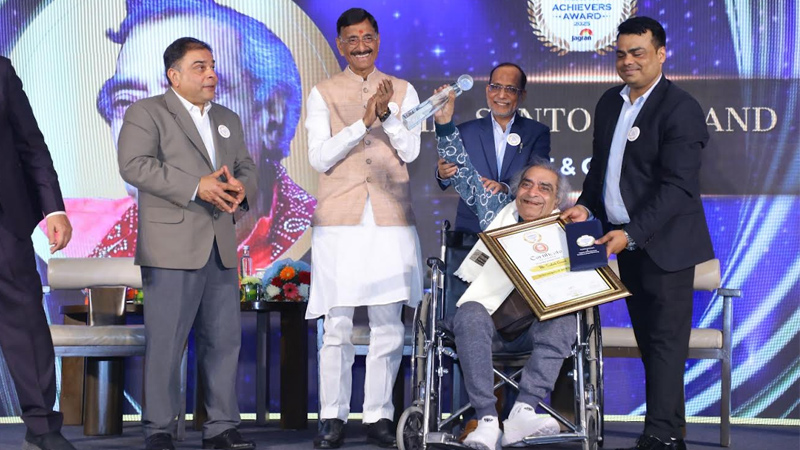
NEW DELHI: Hamdard Laboratories gathered a cross-section of India’s achievers in New Delhi on Friday, handing out the Hakeem Abdul Hameed Excellence Awards to figures who have left their mark across healthcare, education, sport, public service and the arts.
The ceremony, attended by minister of state for defence Sanjay Seth and senior officials from the ministry of Ayush, celebrated individuals whose work blends professional success with a sense of public purpose. It was as much a roll call of achievement as it was a reminder that influence is not measured only in profits or podiums, but in people reached and lives improved.
Among the headline awardees was Alakh Pandey, founder and chief executive of PhysicsWallah, recognised for turning affordable digital learning into a mass movement. On the sporting front, Arjuna Awardee and kabaddi player Sakshi Puniya was honoured for her contribution to the game and for pushing women’s participation onto bigger stages.

The cultural spotlight fell on veteran lyricist and poet Santosh Anand, whose songs have echoed across generations of Hindi cinema. At 97, Anand accepted the honour with characteristic humility, reflecting on a life shaped by perseverance and hope.
Healthcare honours spanned both modern and traditional systems. Manoj N. Nesari was recognised for strengthening Ayurveda’s place in national and global health frameworks. Padma shri Mohammed Abdul Waheed was honoured for his research-backed work in Unani medicine, while padma shri Mohsin Wali received recognition for his long-standing contribution to patient-centred care.
Education and social development also featured prominently. Padma shri Zahir Ishaq Kazi was honoured for decades of work in education, while former Meghalaya superintendent of Police T. C. Chacko was recognised for public service. Goonj founder Anshu Gupta received an award for his dignity-centred rural development initiatives, and the Hunar Shakti Foundation was honoured for empowering women and young girls through skill development.
The Lifetime Achievement Award went to former IAS officer Shailaja Chandra for her long career in public healthcare and governance, particularly in the traditional systems under Ayush.
Speaking at the event, Hamdard chairman Abdul Majeed said the awards were a tribute to those who combine excellence with empathy. “These awardees reflect Hakeem Sahib’s belief that healthcare, education and public service must ultimately serve humanity,” he said.
Minister Seth struck a forward-looking note, saying India’s young population gives the country a unique opportunity to become a global destination for learning, health and wellness by 2047.
The ceremony also featured the trailer launch of Unani Ki Kahaani, an upcoming documentary starring actor Jim Sarbh, set to premiere on Discovery on 11 February.
Instituted in memory of Unani scholar and educationist Hakeem Abdul Hameed, the awards have grown into a national platform that celebrates those building a more inclusive and resilient India. For one evening at least, the spotlight was not just on success, but on service with substance.








