News Headline
NTO 2.0 will affect viability of pay TV industry: IBF


MUMBAI: The broadcast sector has expressed its shock and dismay with the latest notification from TRAI issued on 1 January 2020, amending the new tariff order (NTO) and interconnection regulations. Indian Broadcasting Foundation (IBF) believes that both the amendments will severely impair broadcasters' ability to compete with other unregulated platforms and adversely affect the viability of the pay TV industry.
"IBF is disappointed at the lack of understanding shown by the regulator. It will strategise its future course of action, including evaluating legal options, based on feedback from its member channels and networks," said the body.
The association in its response to TRAI's consultation paper had pleaded with the regulator to adopt a "soft touch" and allow the industry to come to terms with the NTO before making further changes. "In fact, TRAI itself had acknowledged this need by proposing a two year moratorium on further regulation. It appears all IBF's pleas have been ignored. Unfortunately, in this exercise, content creators and owners have been disempowered and the entire authority has shifted to the middlemen," expressed IBF.

IBF has conveyed that these changes will have very significant and industry growth-hampering ramifications for the broadcast sector. At a time when the economic environment is tough, this tariff order will force a lot of channels to shut down and will lead to unemployment in the sector. While the government is looking at ramping up growth, these changes will have the opposite effect for the broadcast sector just recovering from the twin shocks of NTO in the first half of 2019 and the ad slowdown business.
IBF said that it has always believed that consumers pay for the value of the content. Post NTO, the ecosystem had just settled down with about 200 million consumers choosing their favourite channels. "We have to allow the changes to fully settle down and the market forces to prevail while resisting the temptation to continuously tinker with the regulation. The Regulator’s intent was to address infirmities in the NTO, however, it has been done solely at the cost of the broadcasting fraternity," said IBF.
In the last 15 years of regulating the broadcast sector TRAI has issued more than 36 tariff orders and ancillary regulations in an attempt to micromanage what is arguably the cheapest form of news and entertainment in the world. This goes contrary to the government's stated position of ensuring the "ease of doing business". While TRAI claims the amendments are in the consumers’ interest, it appears to have conveniently forsworn the interest of broadcasters. This change will only benefit the DPOs as they have been allowed to charge as much as Rs 160 for the channels that are supposed to be ‘FREE’.
"As per the new amendments, TRAI has reduced the cap on the MRP of individual channels, which can form part of any bouquet, to Rs 12 per month, from the earlier cap of Rs 19. Less than a year ago, TRAI itself determined that the price per channel can be Rs 19, which has now been reduced to Rs 12 without giving any logical reason. Thus making the change totally arbitrary," said IBF.
It also said, "Over-regulation, inconsistency and frequent changes in the regulations by the regulator has already cost the broadcast sector 10-12 million TV subscribers as per various industry estimates in 2019. These amendments will compound the problem further."







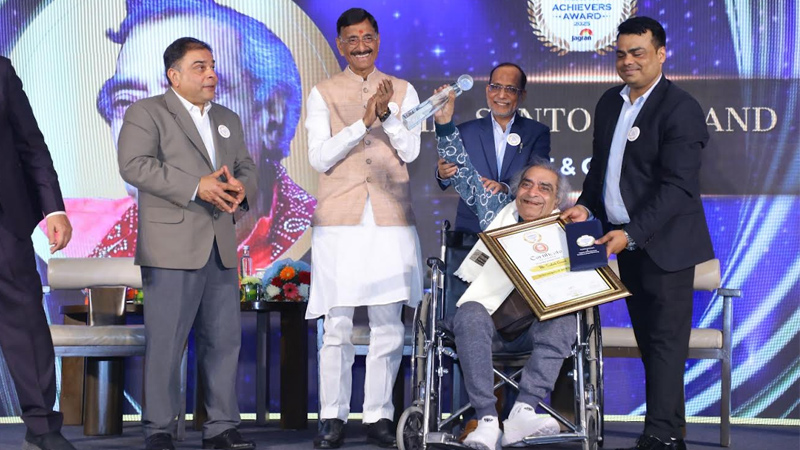
NEW DELHI: Hamdard Laboratories gathered a cross-section of India’s achievers in New Delhi on Friday, handing out the Hakeem Abdul Hameed Excellence Awards to figures who have left their mark across healthcare, education, sport, public service and the arts.
The ceremony, attended by minister of state for defence Sanjay Seth and senior officials from the ministry of Ayush, celebrated individuals whose work blends professional success with a sense of public purpose. It was as much a roll call of achievement as it was a reminder that influence is not measured only in profits or podiums, but in people reached and lives improved.
Among the headline awardees was Alakh Pandey, founder and chief executive of PhysicsWallah, recognised for turning affordable digital learning into a mass movement. On the sporting front, Arjuna Awardee and kabaddi player Sakshi Puniya was honoured for her contribution to the game and for pushing women’s participation onto bigger stages.
The cultural spotlight fell on veteran lyricist and poet Santosh Anand, whose songs have echoed across generations of Hindi cinema. At 97, Anand accepted the honour with characteristic humility, reflecting on a life shaped by perseverance and hope.
Healthcare honours spanned both modern and traditional systems. Manoj N. Nesari was recognised for strengthening Ayurveda’s place in national and global health frameworks. Padma shri Mohammed Abdul Waheed was honoured for his research-backed work in Unani medicine, while padma shri Mohsin Wali received recognition for his long-standing contribution to patient-centred care.
Education and social development also featured prominently. Padma shri Zahir Ishaq Kazi was honoured for decades of work in education, while former Meghalaya superintendent of Police T. C. Chacko was recognised for public service. Goonj founder Anshu Gupta received an award for his dignity-centred rural development initiatives, and the Hunar Shakti Foundation was honoured for empowering women and young girls through skill development.
The Lifetime Achievement Award went to former IAS officer Shailaja Chandra for her long career in public healthcare and governance, particularly in the traditional systems under Ayush.
Speaking at the event, Hamdard chairman Abdul Majeed said the awards were a tribute to those who combine excellence with empathy. “These awardees reflect Hakeem Sahib’s belief that healthcare, education and public service must ultimately serve humanity,” he said.
Minister Seth struck a forward-looking note, saying India’s young population gives the country a unique opportunity to become a global destination for learning, health and wellness by 2047.
The ceremony also featured the trailer launch of Unani Ki Kahaani, an upcoming documentary starring actor Jim Sarbh, set to premiere on Discovery on 11 February.
Instituted in memory of Unani scholar and educationist Hakeem Abdul Hameed, the awards have grown into a national platform that celebrates those building a more inclusive and resilient India. For one evening at least, the spotlight was not just on success, but on service with substance.






