News Headline
NTO 2.0 verdict: Who wins what?

KOLKATA: One of the major issues that has dominated the pay TV ecosystem in India is in constant conflict between stakeholders and the sector regulator, the Telecom Regulatory Authority of India (Trai). With the Bombay high court pronouncing its verdict on the amended new tariff order matter, one of the long-fought battles between the two may have come to an end. It upheld the constitutional validity of Trai’s NTO 2.0 but set aside the second clause of twin pricing conditions. The court’s decision is receiving mixed reviews from senior industry executives.
On Wednesday, the division bench of Justices Amjad Sayyed and Anuja Prabhudessai passed judgement on several petitions filed by broadcasters and industry bodies like the Indian Broadcasting Foundation (IBF). The bench stated that the challenge to the constitutional validity of the 2020 rules and regulations of Trai does not hold any water. At the same time, it termed one of the twin conditions arbitrary according to which the maximum retail price of an a-la-carte channel could not be more than one third of the maximum rate of a channel in the bouquet.
“We welcome this verdict of the honourable Bombay high court on amendment in tariff regulation. The full implementation of the amendment will bring more transparency in industry and give more choices and power to the customer. We are hopeful that this will get implemented soon. It is good for all stakeholders in the industry value chain,” GTPL Hathway cable TV head & chief strategy officer Piyush Pankaj said.

Others in the business are not so sure because they believe it will definitely lead to a decline in subscription revenues. Considerably, major broadcasters have not already witnessed a fall in subscription revenue after partial implementation of NTO 2.0. But they fear that after this verdict, there will be a faster movement towards a-la-carte from bouquets thus leading to lower ARPUs.
One of the senior executives with a leading broadcaster said squashing the second twin condition can be looked at as a big win for broadcasters. This clause had the potential to effectively hamper broadcasters from packaging their channels as they had to bundle similarly priced offerings together as part of the bouquet.
However, the grounds that it has been struck down on are not very solid, another senior executive added. This battle was unnecessary and a fight for power, he noted, especially given the cost. Moreover, very few broadcasters were looking at pushing high pricing for channels anyway. Even these broadcasters also cannot go for high pricing now due to changed market dynamics in the last one year due to pandemic. As Trai still has substantive grounds to reclaim whatever has been lost, they might look at rechallenging it, the executive noted.
“We believe there is a high likelihood of this being contested in the supreme court by Trai as the entire reasoning of getting the NTO 2.0 was to cap discount and move to selective viewing which the NTO 1.0 did not fulfil,” Elara Capital VP research analyst (media) Karan Taurani said in a note.
“We continue to believe that the negative impact of NTO 2.0 is highest for Star whose bouquet prices have a higher discount factor and lowest for Sun TV whose discounting of bouquet vs ala carte is already at very low levels, which will lead to continued outperformance for Sun TV on subs revenue front despite NTO 2.0. On the other hand, this order is low to moderately negative for Zee,” stated Taurani.
Back in 2018, Madras high court had also set aside the capping of discounts to 15 per cent mentioned in the Tariff Order and Interconnection Regulations of 2017. However, the battle reached the supreme court where the regulator won the case. Within a year of implementation of the regulation, the authority brought changes which irked broadcasters starting the second battle. Now are we in for the third?







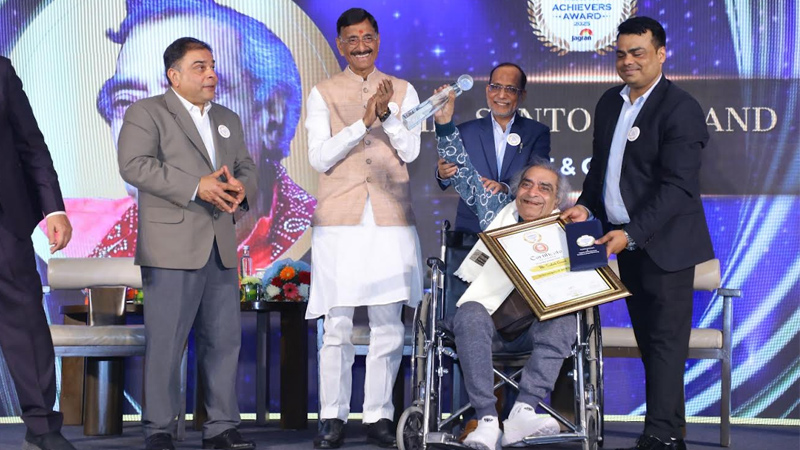
NEW DELHI: Hamdard Laboratories gathered a cross-section of India’s achievers in New Delhi on Friday, handing out the Hakeem Abdul Hameed Excellence Awards to figures who have left their mark across healthcare, education, sport, public service and the arts.
The ceremony, attended by minister of state for defence Sanjay Seth and senior officials from the ministry of Ayush, celebrated individuals whose work blends professional success with a sense of public purpose. It was as much a roll call of achievement as it was a reminder that influence is not measured only in profits or podiums, but in people reached and lives improved.
Among the headline awardees was Alakh Pandey, founder and chief executive of PhysicsWallah, recognised for turning affordable digital learning into a mass movement. On the sporting front, Arjuna Awardee and kabaddi player Sakshi Puniya was honoured for her contribution to the game and for pushing women’s participation onto bigger stages.
The cultural spotlight fell on veteran lyricist and poet Santosh Anand, whose songs have echoed across generations of Hindi cinema. At 97, Anand accepted the honour with characteristic humility, reflecting on a life shaped by perseverance and hope.
Healthcare honours spanned both modern and traditional systems. Manoj N. Nesari was recognised for strengthening Ayurveda’s place in national and global health frameworks. Padma shri Mohammed Abdul Waheed was honoured for his research-backed work in Unani medicine, while padma shri Mohsin Wali received recognition for his long-standing contribution to patient-centred care.
Education and social development also featured prominently. Padma shri Zahir Ishaq Kazi was honoured for decades of work in education, while former Meghalaya superintendent of Police T. C. Chacko was recognised for public service. Goonj founder Anshu Gupta received an award for his dignity-centred rural development initiatives, and the Hunar Shakti Foundation was honoured for empowering women and young girls through skill development.
The Lifetime Achievement Award went to former IAS officer Shailaja Chandra for her long career in public healthcare and governance, particularly in the traditional systems under Ayush.
Speaking at the event, Hamdard chairman Abdul Majeed said the awards were a tribute to those who combine excellence with empathy. “These awardees reflect Hakeem Sahib’s belief that healthcare, education and public service must ultimately serve humanity,” he said.
Minister Seth struck a forward-looking note, saying India’s young population gives the country a unique opportunity to become a global destination for learning, health and wellness by 2047.
The ceremony also featured the trailer launch of Unani Ki Kahaani, an upcoming documentary starring actor Jim Sarbh, set to premiere on Discovery on 11 February.
Instituted in memory of Unani scholar and educationist Hakeem Abdul Hameed, the awards have grown into a national platform that celebrates those building a more inclusive and resilient India. For one evening at least, the spotlight was not just on success, but on service with substance.