iWorld
No such thing as historical accuracy: ‘Vikings’ creator Michael Hirst

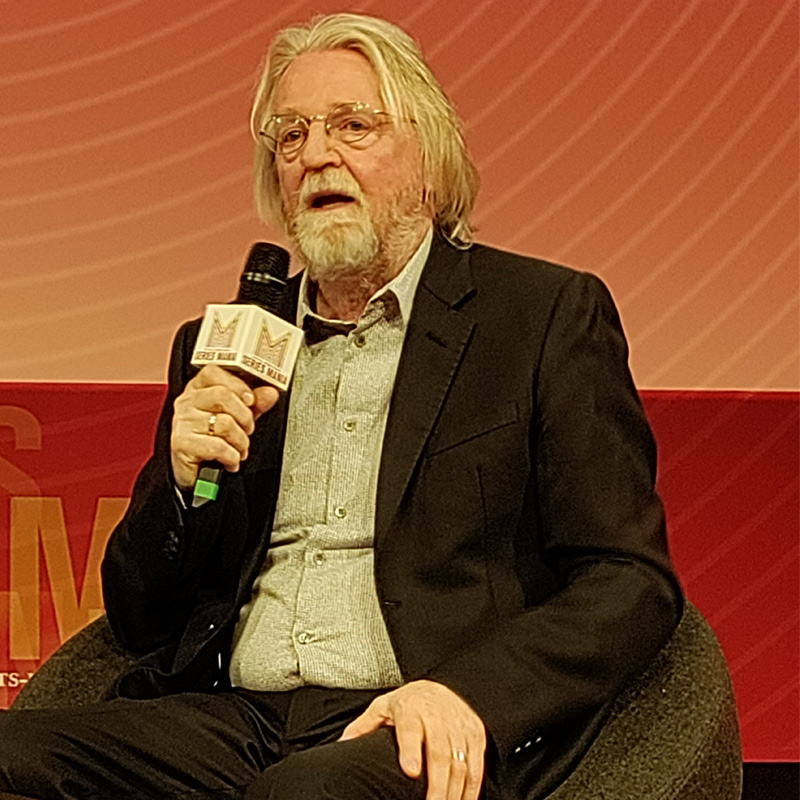
With international successes and critically acclaimed hits such as “The Tudors,” “Vikings” and the hotly anticipated forthcoming series “Billy the Kid,” English screenwriter and producer Michael Hirst’s talent for capturing an era, a specific atmosphere, and singular characters are well established. Hirst is also the owner of Green Pavilion Entertainment, a production company he launched in 2017.
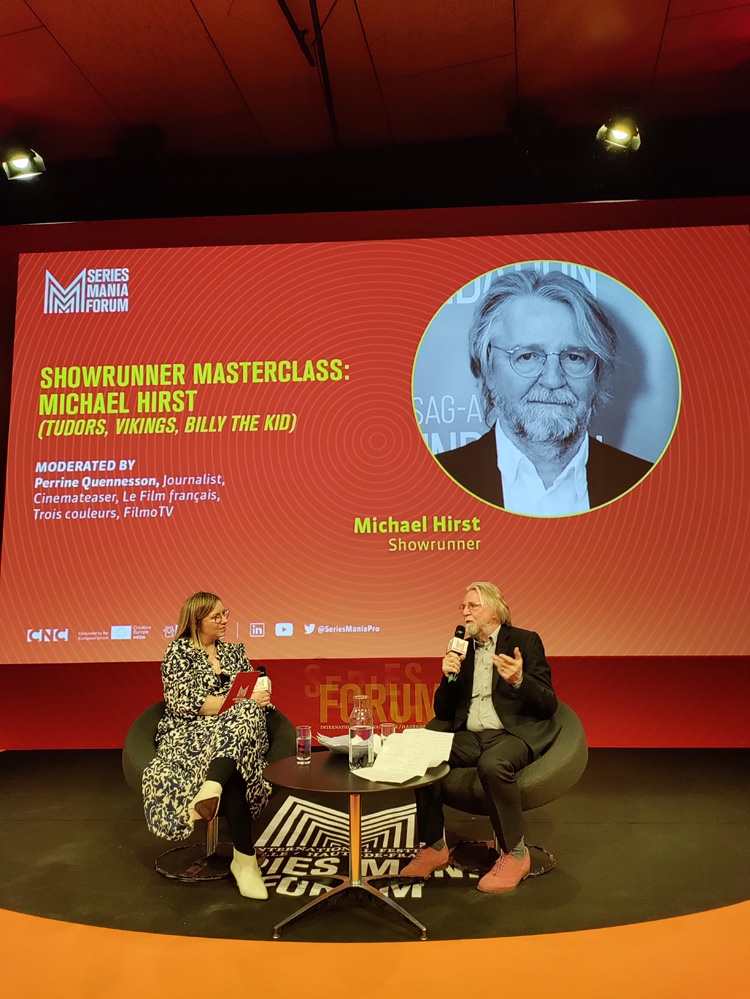
At the Series Mania Forum 2022, Hirst revealed his writing secret, his beliefs as well as the method and madness to recreating the historical universe on-screen through serialised dramas. In a session moderated by journalist Perrine Quennesson, he talked about the joy of writing for TV, owning his characters, and his next – the Epix/MGM project “Billy the Kid” which he described as a ‘new kind of western.’ The show had its world premiere in the Series Mania International Competition.
Is authenticity your golden rule when scripting a show?

It is, pretty much, but also emotional truth… If someone would come up to me and say, ‘I have been reading a book (“Vikings”) and they did or said this; why are you not showing it’? I would say I am not making a documentary; it’s a drama.
It all begins for me with the thought and the research. Then I would start to write and shape the material. Creating drama is about shaping material. Life has no shape, but drama has to have a shape. There are always gaps in the narrative. I always say to myself and my advisor, because we both know there is no such thing as historical accuracy… ‘Is it plausible,’ ‘is it authentic,’ and ‘in your opinion is it true,’ or ‘does it feel true.’ If he assures me, then I can go ahead and tell my stories.
One of the characters I am most proud of in “Vikings” is Lagertha. The History Channel, who commissioned the show is a male-skewed studio, so it obviously felt that it would appeal to their male viewers. But I wanted a female lead as well, and I wanted someone who is persuasive in that role. Katheryn Winnick, who I finally chose is a black belt, so I had all reason to believe she could carry it off, which she did incredibly well. Last we were making “Vikings” there was a new discovery. There’s a skeleton, I believe, in a museum in Sweden of an iconic warrior Viking. It was buried with all these weapons. They had brought a new curator, who looked at it and said ‘that’s not a man, it’s a woman skeleton’. So the iconic warrior figure of the Swedish Vikings was a woman. I felt totally vindicated (laughs).
I am happy to say that by the end of the series, the audience was 50:50 male and female. That, for a show called “Vikings” which everyone thought will just be about male violence.
Looking at those scenes in “Vikings” and “Tudors,” I was just wondering about your relationship with budgets…
The accountant would often ask me if I had any relationship with reality. I do believe that if you start dreaming with economics in mind, then you are repressing a part of your imagination. You shouldn’t do that. What you should do, is leave it to others to figure out how they work around it. The very first show I did “The Tudors”… literally the beginning of “Tudors” was one exterior of the palace, two studio-built rooms, and a boat disappearing into the distance with the help of some special effects.
Similarly, for “Vikings,” I was doing some more research. I came upon this fact that when the Vikings were prevented from sailing by the enemy by putting some obstacle in the river, they would dismantle the boats and hold them physically over the mountains, and put them down on the other side of the obstruction. I got very excited about it and told the production design team. They said, ‘it’s wonderful, but we can’t do it.’ I asked if we could do something like it. Though I didn’t know then what ‘like it’ would look like.
But in actual fact, two months later when we were shooting in Wicklow mountains, we got the cast to hold a Viking ship up a huge cliff, and then hold it back down the other side. We had permission from the landowner to cut some trees down by the side. So they just found a way of doing it. That’s what I mean about giving people the opportunity to figure it out.
Why do you prefer being the only writer on every series that you are working on?
I was a film writer. When I started nobody wanted to work in TV. It was cheap. It was about soap operas. Everyone wanted to do movies. I too wanted to do movies. But after “Elizabeth,” a young American executive came to me in London and said, ‘do you think you can turn this into an American soap opera’. I said show me some shows for me to see the sort of standard. He sent me lot’s of them and they were all…The point was ‘you got to be entertaining, but you can also talk, write about serious things.’
So I began to write, and I just didn’t stop. It was good. The joy was that in movies you reveal characters. You don’t have the time to develop them, which is something that long-form TV dramas give. In TV, you can have characters with contradictions; you can dive a little deeper. I was having a good time. You have to work very hard in TV. Do four scenes a day. But I enjoyed the pressure. It was magical to see how it all worked. So, I really didn’t want to stop.
When I started doing “Vikings,” if anyone had told me that this is going to be 89 hours of TV…I mean, who knew. They often cancel the show after the first season if it’s not working, if it doesn’t have enough audience. So with every season we did, we didn’t know it’s going to be picked up again. By that stage the characters were friends. And I didn’t want anyone else to take my friends and characters away.
How do you know when it’s time to end a show? If “Vikings” ended at season 5 would it be the same end?
No No, I knew how I wanted it to end, but I had to get there.
How do you pick your cast? What was it like for “Billy the Kid”?
It’s very rare to find a resemblance to the real person or character. In this case, Tom Blyth (“The Gilded Age”) seemed to have strong empathy for Billy. We had to go through the process. We were looking in many countries including America, but he kept coming back into our consciousness. I kept throwing stones in his path and he kept responding. I told him that Billy sang and played musical instruments. The next thing I get from Tom is a tape of him singing and playing guitar. He is perfect for the role.
Billy is a very special drama for me, much more intimate than the other dramas we have been working on for the last 15 years. It’s lean, lyrical, and character-driven. It’s about big issues as well – immigration, corruption, formation of the west, Dutch Americans kicking out the Mexicans. It’s a real and edgy human story and Billy is at the core of it. It’s a new kind of western; pre-western that starts just before the west as we have seen in movies was actually created.
People think they know Billy, just like they thought they knew about Vikings, but they actually don’t. They don’t know him as an immigrant, as a very sensitive guy, as someone who got his moral compass from his mother…she taught him to read, and more. I have loved Billy since I was seven, so I have redeemed my childhood with this show.



iWorld
Meta warns 200 users after fake Whatsapp spyware attack
Italy-targeted campaign used unofficial app to deploy surveillance spyware.
MUMBAI: It looked like a message, but it behaved like a mole. Meta has warned around 200 users most of them in Italy after uncovering a targeted spyware campaign that weaponised a fake version of WhatsApp to infiltrate devices. The attack, first reported by Agenzia Nazionale Stampa Associata, relied on classic social engineering with a modern twist: persuading users to download an unofficial WhatsApp clone embedded with surveillance software. The malicious application, believed to be developed by Italian firm SIO through its subsidiary ASIGINT, was designed to mimic the real app closely enough to bypass suspicion.
Meta’s security teams identified roughly 200 individuals who may have installed the compromised version, triggering immediate countermeasures. Affected users were logged out of their accounts and issued alerts warning of potential privacy breaches, with the company describing the incident as a “targeted social engineering attempt” aimed at gaining device-level access.
The malicious app was not distributed via official app stores but circulated through third-party channels, where it was presented as a legitimate WhatsApp alternative. Once installed, it reportedly allowed external operators to access sensitive data stored on the device turning a simple download into a potential surveillance gateway.
According to Techcrunch, Meta is now preparing legal action against the spyware developers to curb further misuse. The company, however, has not disclosed details about the specific individuals targeted or the extent of data compromised.
A Whatsapp spokesperson reiterated that user safety remains the top priority, particularly for those misled into installing the fake iOS application. Meanwhile, reports from La Repubblica suggest the spyware may be linked to “Spyrtacus”, a strain previously associated with Android-based attacks that could intercept calls, activate microphones and even access cameras.
The episode underscores a growing reality in the digital age, the threat is no longer just what you download, but where you download it from. As unofficial apps become increasingly convincing, the line between communication tool and covert surveillance is getting harder to spot and far easier to exploit.






