News Broadcasting
No prima facie evidence against Arnab Goswami in abetment to suicide case: SC

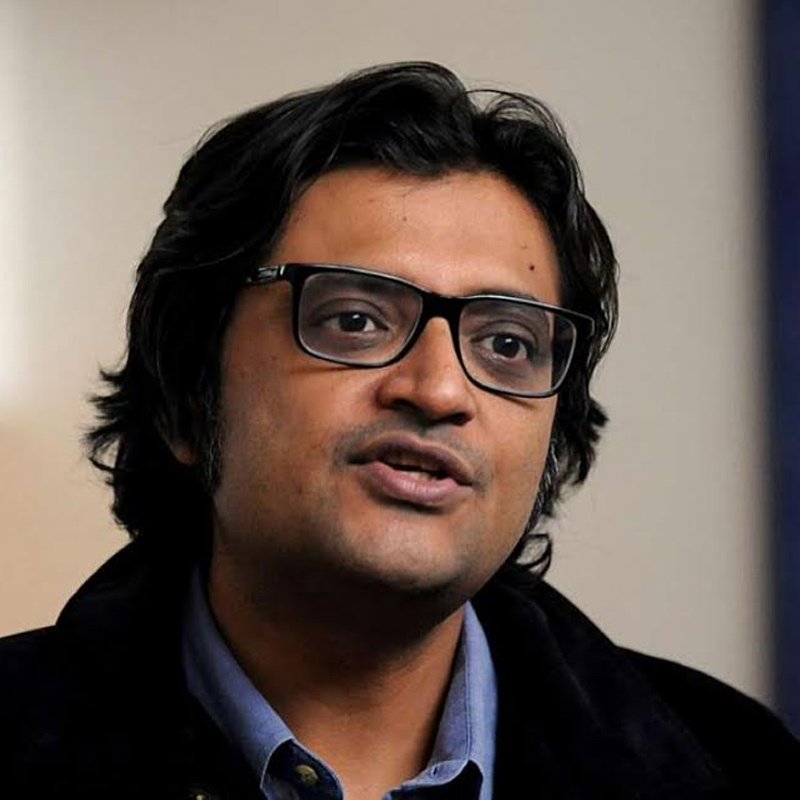
NEW DELHI: Detailing the reasons for granting interim bail to Republic TV editor-in-chief Arnab Goswami in its 11 November judgement, the Supreme Court highlighted that the bail will remain in force for four weeks, even after the Bombay high court decides on the journalist-cum-businessman’s plea to quash the FIR against him. The judgment was delivered by a bench of justices DY Chandrachud and Indira Banerjee.
Justice Chandrachud said that prima facie, it could not be held that Goswami had abetted the suicide of Anvay Naik.
The apex court also lamented the Bombay high court’s order in the matter. “The striking aspect of the impugned judgment of the high court spanning over fifty-six pages is the absence of any evaluation even prima facie of the most basic issue. The high court, in other words, failed to apply its mind to a fundamental issue which needed to be considered while dealing with a petition for quashing under Article 226 of the Constitution or section 482 of the CrPC.”

The bench upheld that the judiciary should stand as a bulwark against weaponizing criminal law for selective harassment. “Courts must be alive to the need to safeguard the public interest in ensuring that the due enforcement of criminal law is not obstructed. The fair investigation of crime is an aid to it. Equally, it is the duty of courts across the spectrum – the district judiciary, the high courts and the Supreme Court – to ensure that the criminal law does not become a weapon for the selective harassment of citizens."
Read our coverage in the suicide abetment case
Goswami had approached the SC after the Bombay high court refused to grant him bail. The top court gave a prima facie view that the preliminary evaluation of FIR did not establish any abetment to suicide charge and granted interim bail to Goswami, saying it will be a "travesty of justice" if personal liberty is curtailed.
The bench had also ordered the release of two others in the case — Neetish Sarda and Feroz Mohammad Shaikh — on a personal bond of Rs 50,000 each and directed that they shall not tamper with evidence and cooperate in the probe.
The accused were arrested by Alibaug police in Maharashtra’s Raigad district on 4 November in connection with the suicide of architect-interior designer Anvay Naik and his mother in 2018 over alleged non-payment of dues by companies of the accused.







News Broadcasting
News18 India launches Command Centre war explainer with Arya
New show shifts from debates to decoding global conflicts and impacts

MUMBAI: News18 India has rolled out a new war-focused programme, Command Centre, featuring Gaurav Arya, as it looks to offer viewers a sharper, more grounded take on global conflicts amid rising tensions in West Asia.
Positioned as an “insider war room”, the show moves away from conventional panel debates and instead focuses on explaining military developments, decoding strategy and connecting global events to their everyday impact, from fuel prices to economic shifts.
The format leans heavily on visuals and data. The studio has been designed like a command hub, complete with large LED war maps, real-time graphics and an alert system to track developments as they unfold.
At the centre of it all is Arya, who brings his military background to simplify complex war strategies for viewers. His signature line, “Seedhi baat samjhiye”, anchors the show’s promise of clarity over noise.
News18 India managing editor Jyoti Kamal said, “Command Centre, featuring Major Gaurav Arya is designed to deliver accurate insights and a clear perspective on how evolving conflicts impact everyday life, from household budgets to national security. With expert voices analysing every development in real time, the show goes beyond headlines to decode what’s happening now, what it means, and what could come next.”
Echoing the intent, Gaurav Arya added, “In times of war, confusion is the biggest threat. With News18 India’s Command Centre, we are bringing viewers inside the war room, decoding strategies, tracking every escalation, and explaining, in the simplest terms, what it means for India and for every household. Seedhi baat samjhiye, this is where you understand not just what is happening, but what happens next.”
The weekday show will air in the afternoon slot and will also feature Gaurav Shukla, adding to its editorial depth.
With its mix of analysis, visuals and a clear focus on impact, the show reflects a broader shift in news consumption. Viewers are no longer just watching events unfold, they are looking to understand what those events mean for them.







