News Broadcasting
Next stop Asia for NBC Universal?


MUMBAI: The birth Wednesday of a new media-entertainment titan NBC Universal that rivals the likes of Time Warner and News Corp offers possibilities that Asia might well see competition to Star TV on different fronts, including new channels.
With brands such as television networks NBC, Telemundo, USA Network, Sci-Fi Channel, Bravo, Trio, CNBC, and MSNBC (jointly owned with Microsoft); Universal Pictures film studio; television production studios and interests in theme parks, there are many possibilities that open up.
Indiantelevision.com put the poser to president and CEO, CNBC Asia Pacific Alexander “Sandy” Brown of what Asia could expect from the creation of the media behemoth and he said that while “there is no direct implication today” but there would be no waiting around on the issue. Using the synergies that the new entity brings on board to “significantly drive up toplines” would be an ‘A’ priority activity, avers Brown.

Brown would offer no timelines on when and how the action plan would be set forth except to assert that there was a great deal of urgency behind the effort.
The key synergies will come from the 4,000 strong film library that is available to NBC Universal added to the 40,000 television show archive, Brown said. The third link in the revenue chain would be provided by the theme park business with one already up and running in Osaka, Japan and a second sceduled to start operations in 2007 in Shanghai, China.
Questioned as to whether there was now scope for channels like Bravo, Trio, or Sci-Fi Channel launch in Asia, Brown, while not ruling it out, said another possibility was that the TV content that was available could also be mixed and matched to create wholly new channels customised to suit Asian preferences.
Giving some sense of the scale of the revenue ramp up that was possible, Brown pointed to NBC’s annual revenues from international business being in the “low 100s of millions of dollars” compared to Vivendi Universal’s $ 2.5 billion. The merger “gives NBC a whole new opportunity,” Brown said, adding that the fact that the network major was principally advertising driven while Universal was fees (subscription and ticket receipts) driven meant that the two complemented each other well.
Queried as to whether he would have an expanded role in the new dispensation, Brown said it was too early to tell as these decisions were still to be firmed up. “I will continue to focus my energies on CNBC Asia,” he said, of his near term scope of activity.
Asked about any initiatives or deals that CNBC had entered into in the last year, Brown said, “We launched a co-production initiative with Shanghai Media Group in April 2003 which has been very succesful.”
Another initiative that has happened on Brown’s watch is the launch of the MGM channel in three new territories – Hong Kong, Indonesia and Macau. MGM is available in India on the Zee Turner distribution platform co-branded as Zee MGM. Brown said two more announcements regarding MGM distribution deals would be made in the near future.





News Broadcasting
CNN-News18 rolls out Battle for the States ahead of key polls
Multi-format election coverage tracks voter mood across five battleground states
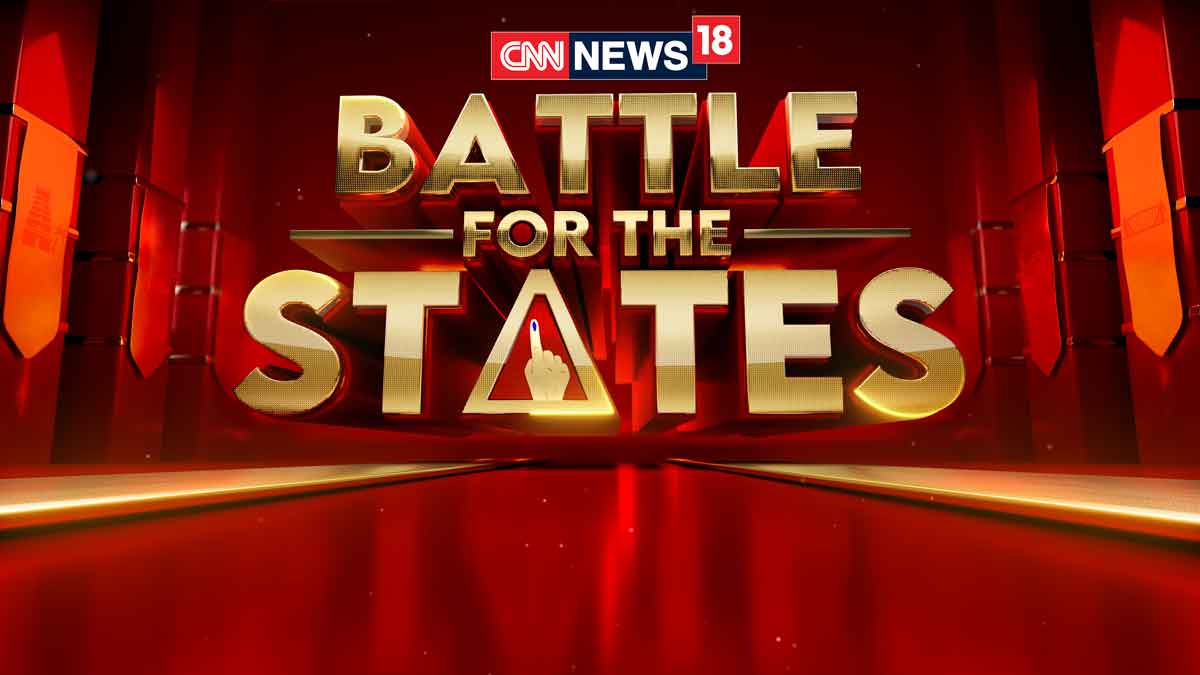
NEW DELHI: CNN-News18 has launched a special election programming initiative titled Battle for the States, as India gears up for high-stakes Assembly elections across West Bengal, Tamil Nadu, Kerala, Assam and Puducherry.
Built around the theme ‘Road to Power’, the multi-format coverage aims to follow the entire electoral journey, from campaigning and polling to results and government formation. The network is leaning into on-ground reportage and data-backed storytelling to decode voter sentiment across regions where local issues often shape the narrative.
The programming line-up includes ‘Vote Tracker’, a three-part series developed in collaboration with survey agency Vote Vibe. The show blends survey insights with expert commentary and field reporting, using augmented reality graphics to present complex electoral data such as vote share, seat projections and leadership preferences in a more accessible format. It will air every Monday evening until April 6.
Adding a cultural lens to political reporting is ‘So Saree!’, a ground-driven segment where women anchors travel across constituencies dressed in traditional handwoven sarees from each state. The format uses attire as a storytelling device, highlighting regional identity while capturing grassroots voices.
Meanwhile, ‘Unfiltered Kaapi’ and ‘Chai-Niti’ bring a more conversational tone, drawing inspiration from everyday political discussions in tea stalls and coffee corners. These segments aim to break down key issues through candid, fast-paced exchanges between anchors and reporters, tailored to regional sensibilities.
For viewers seeking deeper insights, the weekend docuseries ‘Reporters Project’ takes a longer view, with correspondents travelling across constituencies to map voter concerns and political shifts on the ground.
“Elections are about people, their aspirations, identities and the issues that matter to them, and every state tells a different story,” said CNN-News18 editorial affairs director Rahul Shivshankar. He added that the initiative focuses on understanding “the sentiment on the ground and what’s driving voter choices”.
Echoing the emphasis on credibility, Network18 CEO – English and business news Smriti Mehra said the network aims to combine on-ground reporting with data-led insights to deliver clear and timely coverage as the elections unfold.
With a mix of data, culture and grassroots reporting, CNN-News18 is positioning Battle for the States as a comprehensive window into one of India’s most closely watched electoral cycles, where every vote carries a story waiting to be told.